Sunday, August 13, 2017

Movie review: Thrissivaperur Kliptham: A different portrayal of Thrissur


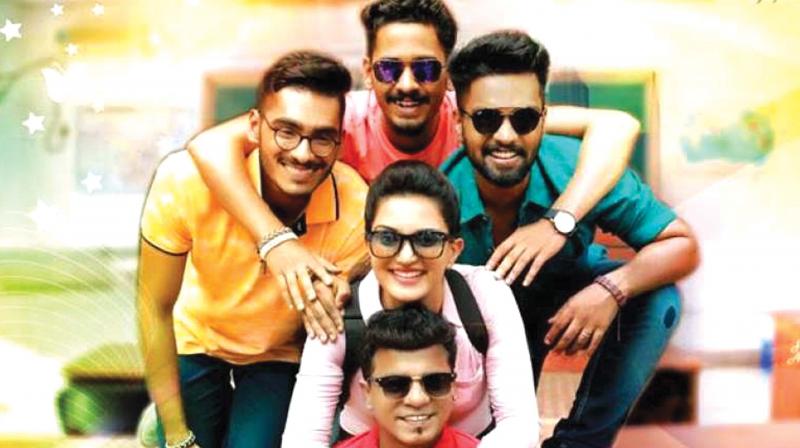
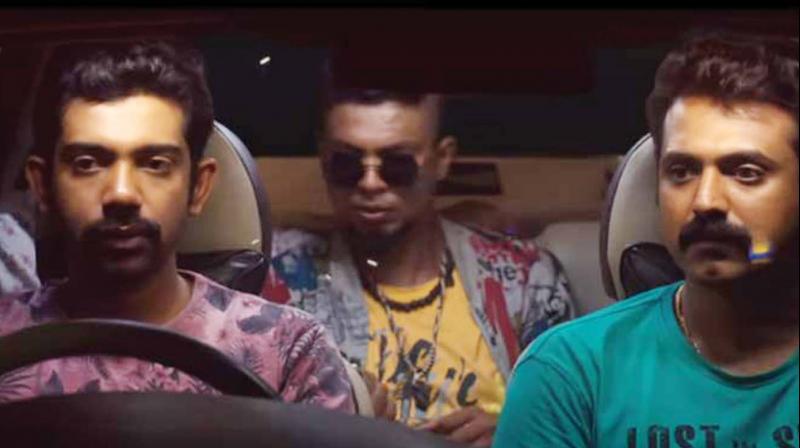
Set in Kerala’s cultural capital Thrissur, Thrissivaperur Kliptham begins on a promising note as the humourous opening credits roll, offering a peek into the entertainment package the makers have planned. The silly fights between the gangs of David Pauly (Chemban) and Chembadan Joy (Baburaj), who have been foes since schooldays, form the major plot. Members of the Joy gang, frontbenchers in school and after, become successful in their careers and always sneer at their rivals. The four-member team of backbenchers is envious of them and tries to belittle and insult them in every way possible. 

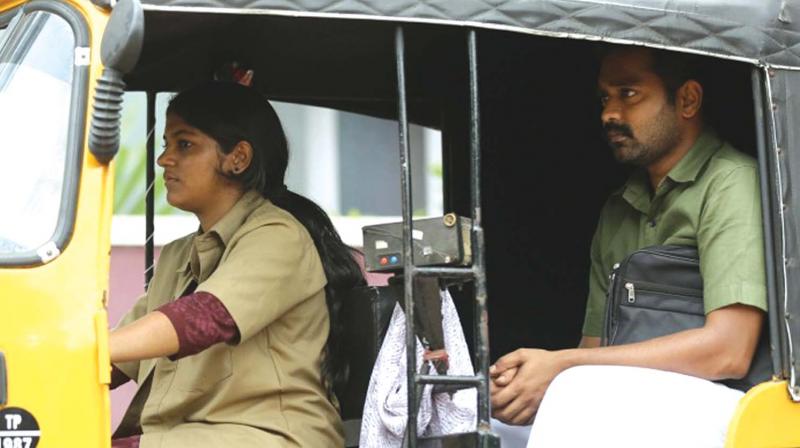
As the two teams engage in settling scores, the shy, ‘unmanly’, but crooked Girijavallabhan (Asif) joins the Pauly gang. In parallel runs the story of the strong-willed Bhageerathi (Aparna), an auto driver, who picks fights and fends for herself. After an interesting first half, the story drags its heels along no-brainer sequences and gets stuck at the point where logic breaks, loses grip and falls into the depths of predictability. 

Though there are plenty of loud dialogues, the makers have ensured dialogue rendition in near-to-perfection Thrissur slang by all the characters. The story, narration and style keep reminding one of Angamaly Diaries sans violence, Amen with plenty of toilet humour and many movies from the early 90s led by a combo cast. 

Though quirky, with funny dialogues scattered all over, writer P.S. Rafeeque couldn’t pull of his Amen magic as the script loses steam midway. However, Retheish proves that he has the skills and is someone to watch out for, if he works on it. The swap between the hero and heroine is fresh and commendable; it’s the heroine who gets an intro, fight scene and punch dialogues, whereas the hero appears coy, anxious and nervous. 

Bijibal’s compositions — the ‘Mangappoolu’ song and the ‘Kantha’ BGM — are impressive. Swaroop Philip’s camera turns to the less-celebrated parts of Thrissur – the markets, dark alleys and dingy rooms. 

Casting deserves a special mention, especially for the perfect choice of child actors. 

The real show stealers are Chemban, Asif and Aparna who essayed their roles with ease and charm. With his magnificent screen presence, Chemban has grown into a star from an actor. Asif adds one more feather to his cap; a bit more focus can take him to great heights. 

Aparna, in her best role till date, puts up an excellent show as the tough, stone-faced Bhagi. Underutilised talents — Irshad, Rony and Sreejith Ravi – were at their humourous best. Sunil Sukhada, T.G. Ravi and Abi too deserve kudos. 

With its humorous treatment, Thrissivaperur Kliptham will not be a disappointment if you walk in with no expectations, as promised by the trailer.

 Published in Deccan Chronicle on August 13, 2017


Thursday, August 10, 2017

A green makeover

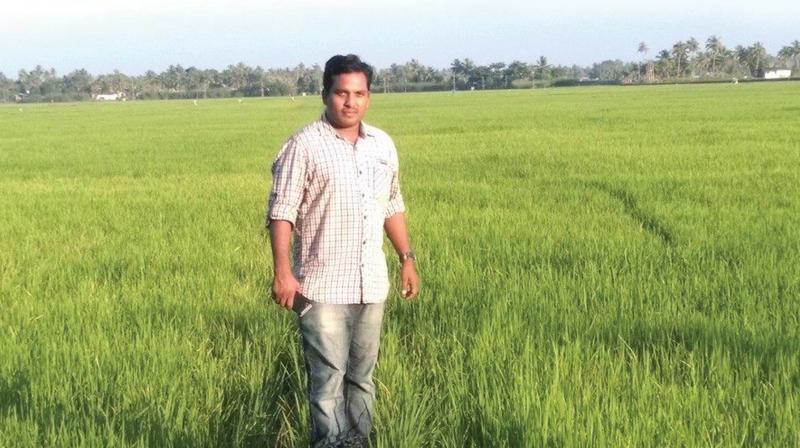
Suresh K.P., an agriculture officer, has started a green revolution in the villages he serves, by turning barren farmlands into organic havens, with the help of the villagers.


Everyone knows the story of Verghese Kurien, the father of White Revolution, whose Anand pattern of dairy cooperatives (in which small producers join hands for efficiency of a large scale business with no middlemen) empowered the dairy farmers of the country by making them self-sustainable and increasing their life standards. replicating that model, Suresh K.P., an agriculture officer, has started a green revolution in the villages he serves, by resurrecting the barren farmlands and initiating the farmers to the long-forgotten organic practices.

"It's not my work; it's a collective effort," he keeps saying, stressing the word 'we'. But for any progress to happen, there is always someone who takes the lead. Along with the villagers of Angadippuram in Malappuram, Suresh converted the barren lands to organic paddy farms which give good yields every year. The investment was made by the farmers and the profit was credited to their account.


"When I came to Angadippuram three years ago, most of the fields were lying barren for over a decade. Around 100 villagers coordinated and renovated a 3-km watershed and three lakes which acted as a storage system for reserve water. Last year, we sowed paddy in the 10-acre Chathanalloor field with shares invested by 100 farmers. We follow organic methods and the Krishi Bhavan provides the machinery and other facilities. This year, paddy was cultivated in 60 acres of land under the guidance of Ayyappan, Rasheed Chatholi, Kunjeev and Hussain Kunnanatt.

On the ridges we planted flowers, making it a pleasant sight. Though the weather was unfavourable, we tried everything to save the crops from withering. The harvest festival was conducted like a big celebration and yielded 120 tonnes of paddy," recalls Suresh, a native of Manjeri. State-run Supplyco procured 100 tonnes of paddy. Help came from unexpected quarters for distributing the rest of the produce. Suresh's school alumni — from Jawahar Navodaya Vidyalaya, Malappuram - came forward to distribute the 'Ponkathir' rice among themselves. all over the state by paying the market price that would go to the bank account of the farmers.

“That was a moving gesture. We never went for marketing, but children who were not even born when I had finished school were part of the 'Arivandi' campaign. They transported 3.5 tonnes of rice to the homes of those who ordered sacks. I was awestruck by their love and commitment,” he says. Equally happy are the villagers whose life was changed by this young man with bright dreams.

Suresh's office — the Angadippuram Krishi Bhavan- is unlike any other government office, with a vegetable garden and kara nellu cultivation in the courtyard welcoming the visitors. He has a theory for that, "Usually, a Krishi Bhavan is where people, mostly in bad mood, walk in seeking financial assistance or to file applications or complaints. The garden and the placards detailing farming practices lift their spirit and also earn us respect. What I learned from the fields is that agriculture is a continuous learning process, both for the farmers and the officers. This is what I tell my staff too." 

Earlier, he has worked as an agriculture officer in Wayanad and Keezhattur, where he showed people the organic way to successful farming. From the 250 acres of agricultural land, after Suresh took over, the agriculture has spread in 475 acres in Angadippuram village. He has also facilitated cultivation in land provided by mosques and MES Medical College. 

Apart from distributing vegetable seeds and providing training programmes in schools and households, he has introduced the villagers to coir pith composting unit, bio-pesticides, bio-fertilisers, plant health clinics, agro mechanisation and production of fruit fly trap. "We wanted to prove that paddy cultivation is profitable and I think we have succeeded in that. Our motto is to make every person a farmer and every land a farmland," he concludes.


Published in Deccan Chronicle on August 10, 2017

Sunday, August 6, 2017

Chunkzz movie review: Overdose of sexist jokes


Cast: Balu Varghese, Honey Rose, Ganapathy, Lal, Siddique, Visakh Nair, Dharmajan Bolgatty, Mareena Michael Kurishingal 

Director : Omar 

Chunkzz begins in a college where Romario (Balu), Judas (Visakh), Atmaram (Dharmajan) and Riyas (Ganapathy) — three former students of the mechanical engineering department — roam around the campus and canteen, teasing girls and teachers as well as envying the boys who have girls as classmates. In their “boring” college life enters Romario’s childhood friend Riya (Honey) who, her father (Siddique) fears, is a lesbian. What follows is a long sequence of dirty jokes, an illogical story, loud songs and far-fetched twists, making Chunkzz an annoying watch. Clearly, Omar hasn’t got over Happy Wedding. 

What begins as a campus story is neither a romantic entertainer nor a humorous movie. Every actor — from the lead ones to the family members of the hero and heroine — has more than enough vulgar dialogues that make one wonder how it got through the Censor Board. Chunkzz is the story of a bunch of youngsters who open their mouths to drink, smoke and utter sexist jokes. 

There are humorous moments, especially during the umpteen references to old movies and famous BGMs, thereby lifting a huge burden off Gopi Sundar’s shoulders. The songs can be left behind in the theatres, as you walk out with a throbbing headache. 

As the ‘Mech Rani’, Honey looks stylish and Balu repeats what he has been doing for long. The older chunks — actors Siddique and Lal — put up their best overreactions and push your tolerance limits. Dharmajan and Shammi Thilakan contribute to a few funny moments, whereas Visakh repeats his ‘Kuppi’ act from Aanandam. Ganapathy, like his character, puts up a poor show. The beautiful Mareena is wasted in a half-baked tomboyish role. 

Chunkzz may be a movie guys might enjoy with their friends. But girls, this might not be your cup of tea unless you have the guts to sit through embarrassing jokes. Forget taking your family; this is a strictly adult boys-only movie!

Published in Deccan Chronicle on August 6, 2017

Thursday, August 3, 2017

Kashmalans' plead for attention

Makers of Himalayathile Kashmalan are fighting an endless battle with exhibitors to get enough slots in theatres.


Every film personality has a tale to tell – of struggles, rejections, depressing thoughts and moments they almost gave up along the rough road to realise their dreams. But all those sink into oblivion once they taste success; hardly does any film personality come forward to support passionate newcomers who have no banner or godfather to boast of, but a good project which badly needs a little push. 

Himalayathile Kashmalan is one such movie produced by a bunch of 52 debutant cinephiles who put their whole heart, money and creativity to bring out the movie. Since its release last Saturday, the movie has been garnering excellent reviews. However, the makers are miffed by the exhibitors’ adamance to limit the screening to morning and noon shows despite the good response. 

The movie has been released in 38 theatres across Kerala. The premiere was screened to a packed house and the comedy entertainer received a lot of online publicity. But that was not enough. Sounding devastated, director Abhiram Suresh Unnithan, who has also co-produced the movie says, “The theatres refuse to give the movie a primetime slot however hard we plead; the most we could get was a 5pm slot in a multiplex in Kochi and a 6.45 pm show in a theatre in Thiruvananthapuram. Now, with one more day to go for the release of other movies, including big budget films, we are worried about the fate of our dream project.” 

Resonating similar views, Anand Radhakrishnan, a co-producer who has also played a small role in the movie, says, “The exhibitors make funny excuses – like the name of the movie lacked ‘punch’, a movie of debutantes can’t be a crowd-puller, so on.” Abhiram rues, “We don’t want a huge screening. Just a little consideration would be enough. How many people will watch a movie at the 10am or 10.30 am shows? Despite that, the movie is being watched and hailed much. I have lost hope in all associations. All the persons behind our movie are registered members of one or the other association. But the exhibitors deny us a chance. We too are filmmakers. It is just that we have no backing of a brand name. Even word of mouth publicity can’t be of help when there are no proper show times.”

 Published in Deccan Chronicle on August 3, 2017

Wednesday, August 2, 2017

He loves the stage

Sarath Kumar on his new app, acting with Mohanlal and learning how to drive.


Each screening of Angamaly Diaries ended with a series of ‘wows’ from the crowd — for the actors, especially for the towering screen presence of ‘Appani Ravi’. It is perhaps for the first time that an actor got a registered fans’ association after his debut movie. 

Sarath Kumar says it was not something made by him, but by a group of youngsters who came together impressed by his ‘Appani’ act. As you get to know him, more ‘wows’ follow, for Sarath bears no resemblance to the carefree, ruthless, no-nonsense ruffian from Angamaly. Overnight stardom has made this passionate actor all the more grounded. 

“I am very glad that ‘Appani’ happened. From a theatre student, I became a movie actor, got the opportunity to work with people I hadn’t even dreamt of meeting, made my parents proud, married my girlfriend, built my dream home and above all, received love from people all over the world. It’s all because of movies,” shares Sarath, speaking from the sets of Amala in Athirappilly. 

In the offbeat movie directed by Safeer Thailan, he plays a pivotal role along with Anandam-fame Anarkali Marikar. He has just finished Jijo Antony’s Pokkiri Simon and Laljose’s Velipadinte Pusthakam, in which he shares screen with Mohanlal. Also coming up are Odiyan and Pipein Chuvattile Pranayam, with Aju Varghese and Dhyan Sreenivasan, and a few other projects. 

‘Appani Ravi’ hasn’t got to stereotype Sarath. “You can see very different performance in all these movies. I was lucky enough to get diverse roles. 

“In Pokkiri Simon, I play Love Today Ganesh, an auto driver who is a hardcore Vijay fan. In Velipadinte Pusthakam, I play Franklin, a youngster who is a student during day and a fisherman during night. I act as Lalettan’s favourite student and have two get-ups in the movie. There are a lot of emotions, romance and humour. I have no words to explain the feeling of acting with Lalettan and watching his graceful movements and performance. I can’t still believe I could act with such a great legend,” he says. 

However, being busy hasn't made Sarath lose focus from theatre. “I haven't felt any lack of time. Theatre is what made me; I can never let it go,” says Sarath, who is also directing a play Nagothra. This is not his first; he has directed and acted in several mimes and plays, the notable ones being Cyclist, which went on to win the State Youth Welfare Board Award, and Narendra Prasad's Friday. 

Apart from composing music for a few plays, he has worked a lot with children's theatre too. Taking you along through his dreams and future plans, the humble Sarath says, “Many people advised me to start a business while doing movies, but I know nothing else other than acting. All I can do is my part towards theatre.” So, he decided to make the move. With a group of likeminded theatre enthusiasts, he is launching a mobile application — the first of its kind — on theatre named Theatrelife. 

“Theatrelife is an encyclopaedia on Kerala theatre. The app will have a list of all playwrights, actors, their works, photographs and also the theatres across the state. “We will update information on the ongoing plays being staged and are also planning to include facilities for booking stages. The app will also serve as a stress-buster by offering classes on children's theatre, meditation, kalarippayattu, kutiyattam, etc. Theatre is an excellent way to revive people who are looking for optimism and energy in life. Those registering on the app will be introduced to the classes at our space.” 

Speaking of space, Sarath reveals that he has plans to open an institute for performance, not just theatre, but dance” forms too. "My wife Reshma is a Bharatanatyam student at Sree Sankaracharya Sanksrit University, Kalady, whereI was a theatre student. Making use of her skills in Bharatnatyam, Mohiniyattom and Kuchippudi, we plan to develop the institute. My idea of a play is a visual treat which offers a movie experience to the audience," he adds. 

Asked where he was planning to build his institute, pat comes the reply, “Of course, somewhere near Angamaly!” During the shoot of Angamaly Diaries, Sarath did not know how to drive and it was his co-actor Tito Wilson, who played ‘U Clamp’ Rajan, who rode the truck. “I learned to drive after that. In Pokkiri Simon, I drove an auto rickshaw and in Velipadinte Pusthakam, I steered a boat to the mid-sea. I even did a car chase in a movie. I am confident enough to even fly an airplane now,” he laughs.

 Published in Deccan Chronicle on August 2

Sunday, July 30, 2017

I'm zero without my music: Subramaniam

L. Subramaniam was in Kerala as part of the Lakshminarayana Global Music Festival.


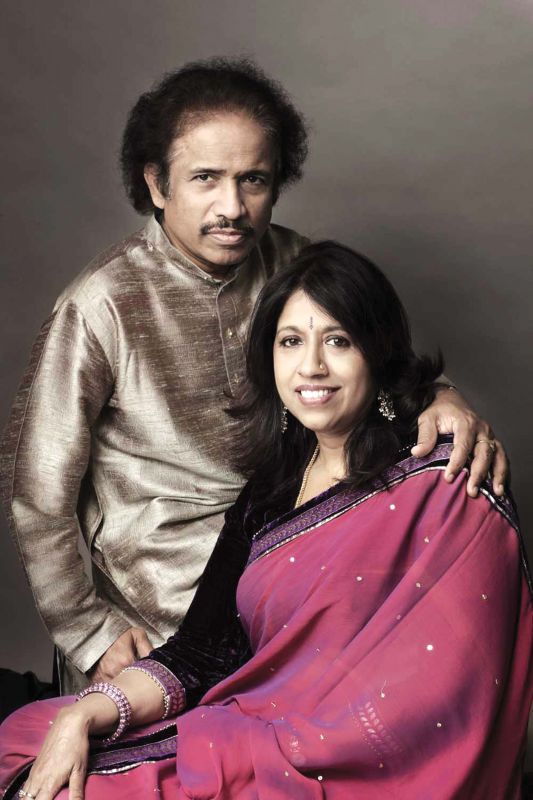
A conversation with L. Subramaniam is like a beautiful jugalbandi. He begins slowly and melodiously and as you get hooked to it, he shares with you his special moments in a memorable conversation — the best one you have ever had — and winds up leaving you yearning for more. The Padma Bhushan awardee and violin maestro was in Kerala for a concert in Alappuzha as part of the Lakshminarayana Global Music Festival named after his father, the legendary violinist who gave the violin a place of its own by separating it from the role of a mere accompaniment in Carnatic concerts. 


“It feels great to be back home,” begins Subramaniam. His father Lakshminarayana was from Alappuzha and his mother was from Tripunithura. “Kerala has a very high cultural literacy. Everyone knows something about music. It’s a pleasure to play for an appreciative audience,” he says. Subramaniam’s is a family of famous musicians — his parents, brothers L.Vaidyanathan and L. Shankar, wives the late Viji and Kavita Krishnamoorthy, children and grandchild. “Music has given me everything, even my family. I met Viji and Kavita due to this music. Now, my children Ambi and Bindu, and my granddaughter Mahati are carrying it forward. I’m zero without my music,” he says. Mahati, now six, performed with Subramaniam in Chicago at an opening concert when she was just three. 

The family is now on a five-continent tour as part of the Global Music Festival. The main segment of the show is Bharat Symphony, which marks 70 years of Indian Independence.


In Alappuzha, along with him, Kavita and Ambi are also performing. Kavita, who was a playback singer with 15,000 songs to her credit, explored her artistic realms after her marriage to Subramaniam. “She has completely expanded her realms to fusion, jazz and global fusion. It has been a pleasant musical journey together,” he says. 

Subramaniam keeps mentioning his father, his guru. “My father created a lot of solo techniques and redefined the approach to the violin. His efforts put all of us in the mainstream. In Sri Lanka, where he was a professor of music at Jaffna College, he took the popular tradition of nadaswaram — chinna melam and periya melam — to regular violin and vocal concerts with the likes of Rajarathnam Pillai and T.R. Mahalingam. His contribution to Sri Lankan music culture is immense. I have always felt that people need to know more about him,” he says. 

The worship was evident when Subramaniam decided to drop his medical career to pursue music and be like his father. “During my second year in MBBS, a German violinist spotted me playing and offered to take me to Germany. My father readily agreed, but my mother didn’t. She asked me to get a medical degree first. I was very disappointed then. Later I realised how insightful she was about the discipline of completion. With the degree, I could do my Masters and later a PhD in music. Also, back in college, I had the privilege of playing with Chembai Vaidyanatha Bhagavathar and Palghat Mani Iyer.” 

Chembai said Subramaniam wouldn’t make a single penny out of his medical career, but would be a Violin Chakravarthy, which he indeed became. Subramaniam has composed for hardly six movies, one among them being Ee Sneha Theerathu, a Malayalam movie. Why don’t we see more of his film compositions? “I am busy with my international commitments. Almost 95 per cent of my time is devoted to Carnatic music and global performances. In fact, my elder brother Vaidyanathan is good at composing for films,” he says. 

Apart from his international collaborations, there is the SAPA — Subramaniam Academy of Performing Arts in Bengaluru where 12,000 to 13,000 children, including foreigners, learn music. They have also developed a SAPA Baby Book that has practice lessons for children from the age of three. The school, run by his children, works in connection with orphanages and has also introduced music as a syllabus in regular schools.

Explaining his mission, Subramaniam says, “Every child should get exposed to music to increase their creativity and focus. The aalaapas, ragas, thanam and pallavi are all creative permutations and combinations of the seven notes. Hopefully, we can introduce music as a syllabus in schools in Kerala too.” 

Despite the increased burden to earn a professional degree, music still has takers among the younger generation. “There are always takers for classical music. People still play Bach, Beethoven, Thyagaraja, Shyama Sasthri and Swathi Thirunal. Whatever happens, once they experience the pleasure and contentment of pure music, it will stay. Music will never die,” he assures. 

Asked to pick his memorable show, Subramaniam gives a laugh. He has hundreds to pick from and a lot memorable ones — the UN performance with Yehudi Menuhin, the recording with Stéphane Grappelli, a few projects with his family, jugalbandi with Bismillah Khan, Peace Concert with Stevie Wonder, show with Pandit Jasraj, the one with his granddaughter, so on. You listen to him as if in a trance, keep on yearning for more and more.

 Published in Deccan Chronicle on July 30, 2017

Saturday, July 29, 2017

A Polish admirer in Mollywood

 Bartosz Czarnotta's reviews of Malayalam films have many takers online.


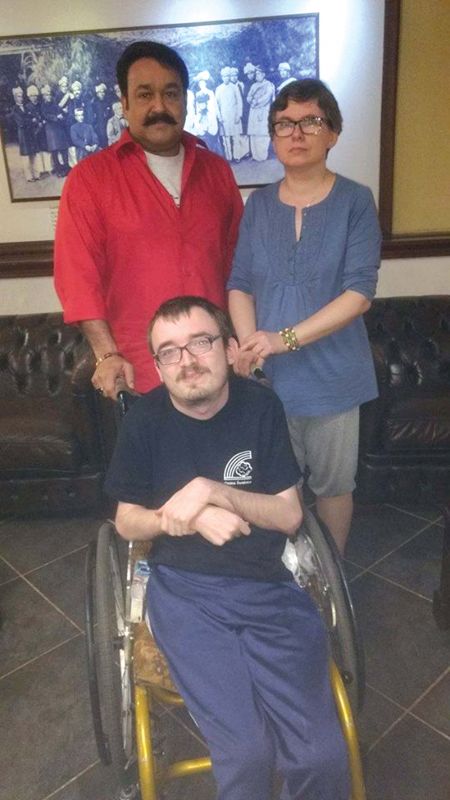
Poland, for all Malayalees, is a word that brings a wide grin to their faces, thanks to the famous question Polandil enthu sambhavichu? (What happened in Poland?) from the movie Sandesham. Likewise, for Bartosz Czarnotta, a Pole, Malayalam is a word that makes him happy. “Keralite by heart” is how this cinephile describes himself. A specialist in south Indian movies, especially Malayalam, Czarnotta writes film reviews on the Malayalam movies he watches and has quite a huge fan base on social media. From Prem Nazir to Nivin Pauly, MGR to Vijay Sethupathi, Czarnotta knows every actor and posts birthday messages for them on his Facebook wall. He is so much in love with Malayalam that despite being bound to a wheelchair due to cerebral palsy, he has flown to Kochi twice — in December 2015 and January this year — along with his mother. 

Talking about how it all began, Czarnotta says, “Five years ago, I faced some personal issues and it was MGR who came to my rescue! I immersed myself in Tamil cinema. Its complex links with politics and MGR’s larger-than-life persona helped me overcome the crisis.” Always on his desk is a photograph of his hero — MGR. His tryst with Malayalam happened through MGR, whose biographical movie Iruvar introduced him to Mohanlal. “Lalettan blew me away with his performance as Anandan. The first Malayalam movie I watched was Pranayam. Then came Namukku Parkkan Munthirithoppukal, Dasaratham and so on,” says the young Pole, who also got the opportunity to enjoy the actor’s hospitality in Kochi. “I was lucky to meet Lalettan twice. He is so simple, caring, gentle and easy to talk. He covered the cost of my stay at Travancore Court during my first visit,” he says.

But Czarnotta doesn’t want to be branded as a Mohanlal fan. “I love Mammookka too. I am not comfortable with being framed as just a Lalettan fan, especially in the context of well-known fan fights over the legends,” he adds. Though he met several actors, directors and technicians during his Kerala stay, his visits had another purpose too. “I am trying to promote Malayalam and to some extent, Tamil movies, in Poland. Till now, I have organised three university screenings of movies — Maheshinte Prathikaram at Jagiellonian University in Kraków, Tamil movie Uriyadi at Wroclaw University and Angamaly Diaries in Warsaw.”
The response was very positive, especially from students, but there is a long way to go. “I am collaborating with some distributors of Malayalam and Tamil movies in Europe and I am trying to facilitate their operations in Poland. Though there is a market for Malayalam movies, the beginning is full of challenges and struggles. Malayalam movies are not known much even among Polish diplomats who have contacts in Bollywood,” he rues. He is also happy that Polish movies are well-received in Kerala. “I am aware that three Polish movies were screened at the recent edition of IFFK. From time to time, I get requests from friends to recommend good Polish movies. So I can smell that, if marketed well enough, Polish movies would find a place in Kerala theatres quite easily,” he says hopefully.

Apart from reviewing movies in the English language, Czarnotta pens poems in Polish too. Two of his works have been published. But he hasn’t found many Polish translations of Malayalam literature. “A vast majority of Polish academic-driven indology is about north and west India. So there are very few translations, I suppose,” he says. However, he has read English versions of many works like Kamala Das’s My Story. Translation is a barrier for him when it comes to movies too. “Lack of proper subtitles is a serious issue. That’s why I miss many old movies. But it is improving,” Czarnotta feels. His favourite picks from the recent past are Drishyam, Maheshinte Prathikaram and Munnariyippu as well as Joker in Tamil. 

He is also aware of the famous phrase Polandine patti oraksharam mindaruth (Not a word about Poland), though he hasn’t been able to watch Sandesham fully for lack of subtitles. Poland, for Kerala, is the country that witnessed the fall of the 40-year-old Communist regime. “Interestingly, in Polish political mindset, Keralites’ attachment to Communism is widely considered as strange and even shocking. In contemporary Poland, there is very little space for Left-leaning politics,” he observes. 

Most of his film reviews lack harsh criticism. Is it part of his soft nature? “I am criticised for that, though avoiding harsh attitude is part of my character. But check my review of Pulimurugan or Kabali. I am not always soft. I am just being honest with my reviews,” he states, adding that he also watches Polish movies. Czarnotta’s Polish write-up about the poetic impressions in Mammootty-starrer Varsham resulted in many of his Polish friends watching the movie. He has a lot more to do. 

“I am trying to bring Sunday Holiday and possibly Richie to Poland. The main problem is that most distributors are reluctant to cover the costs of Polish subtitling, which is mandatory for regular screening of foreign movies in most theatres here. Subtitles will increase viewership,” he feels. 

Czarnotta regrets not being able to meet Mammootty while in Kerala. “I tried to meet Mammookka twice. In 2015, he was unwell and the last time, he was away when I was in Kerala and returned only on the day I left,” he says, adding he is glad that Dulquer Salman commented on his review of Charlie. 

Winding up the conversation, Czarnotta says he can feel how much people love the big M’s. He states, “The immense love Keralites have for Lalettan and Mammookka is something really special. This should be analysed and described in depth, also in a scientific context. I am touched when I experience again and again their profound significance in the collective identity of Kerala.”

Published in Deccan Chronicle on July 29, 2017

Kabita Mukhopadhyay, Political All the Way

She was born in West Bengal and groomed at Santhiniketan during vibrant and turbulent times in Indian politics and culture, but Kabita Mukho...