Showing posts with label Mollywood. Show all posts

Friday, July 9, 2021

സാറാസ്: കുട്ടികൾ വേണ്ട എന്ന് ഒരു സ്ത്രീ തീരുമാനിച്ചാൽ സംഭവിക്കുന്നത്

 ‘സാറാസ്’ ഒരു ഗംഭീര സിനിമയൊന്നുമല്ല, പൊരുത്തക്കേടുകളും വിശ്വാസയോഗ്യമല്ലാത്ത സന്ദർഭങ്ങളും ഏറെയുണ്ട്. എന്നിരുന്നാലും reproductive rights എന്ന ഗൗരവകരമായ വിഷയം ചർച്ച ചെയ്യുന്ന സിനിമ എന്ന നിലയ്ക്ക് ഒരു നല്ല തുടക്കമാണ്. ചർച്ചകളും ചിന്തകളും തിരുത്തലുകളും ഉണ്ടാക്കാൻ ആകുമെങ്കിൽ, പോരായ്മ പരിഹരിച്ച് ഇത്തരം സിനിമകൾ തന്നെയാണ് ഇനിയും ഉണ്ടാകേണ്ടത്.


രു കറി പൗഡർ കമ്പനിയുടെ പേര് എന്തിനായിരിക്കും തന്റെ മൂന്നാമത്തെ ചിത്രത്തിന് ജൂഡ് ആന്തണി ജോസഫ് തിരഞ്ഞെടുത്തത് എന്നാണ് 'സാറാസ്' എന്നുകേട്ടപ്പോൾ ആദ്യം തോന്നിയത്. ഫസ്റ്റ്‌ലുക്ക് പോസ്റ്ററിൽ ഒരു മത്തങ്ങ കൈയ്യിലേന്തി നിൽക്കുന്ന അന്ന ബെന്നിനെ കണ്ടപ്പോൾ ഓർത്തതും What's cooking എന്നാണ്. പക്ഷെ സാറയുടേത് എന്നർത്ഥം വരുന്ന സാറാസ് സംസാരിച്ചത് മുഴുവൻ ഒരു സ്ത്രീയെക്കുറിച്ചാണ് - അവളുടെ അവകാശങ്ങൾ, സ്വപ്നങ്ങൾ, സന്തോഷം, അവളവളെക്കുറിച്ചുള്ള (പ്രയോഗത്തിന് കടപ്പാട് മറ്റൊരു സാറയോട്, സാറ ടീച്ചറോട്) തീരുമാനങ്ങൾ എന്നിവയെക്കുറിച്ചാണ്. ഒരു പ്രോ-ചോയ്‌സ് സിനിമയാണ് സാറാസ്; ഗർഭധാരണത്തിൽ ഒരു സ്ത്രീയുടെ ചോയ്‌സ് എന്ന വിഷയമാണ് സിനിമയെ വേറിട്ടതാക്കുന്നത്.

പ്രത്യുത്പാദനവുമായി ബന്ധപ്പെട്ട തീരുമാനങ്ങളിൽ മലയാള സിനിമ സ്ത്രീകളെ പാട്രണൈസ് ചെയ്തു കണ്ട ശീലമില്ല നമുക്ക്. ഗർഭച്ഛിദ്രത്തെ കൊലപാതകമായും അമ്മ/അച്ഛൻ ആകാതിരിക്കൽ ക്രൈമും ആയാണ് സ്‌ക്രീനിലും പുറത്തും കണ്ടുപോരുന്നത്. എന്തിന്, പാരൻറിങ്​ എന്നതിന് തത്തുല്യമായ ഒരു വാക്ക് പോലുമില്ല ഭാഷയിൽ.

1985ലെ 'അവിടത്തെപ്പോലെ ഇവിടെയും' എന്ന സേതുമാധവൻ ചിത്രത്തിൽ പ്രസവിക്കേണ്ട എന്ന തീരുമാനത്തെത്തുടർന്ന്  ഗർഭനിരോധനഗുളിക ഉപയോഗിക്കുന്ന നീലിമ പ്രതിനായികയാണ്. 2009ലെ  അക്കു അക്ബറിൻറെ 'കാണാക്കണ്മണി' എന്ന ചിത്രത്തിൽ ഭ്രൂണം പ്രേതമായി വന്ന് തന്നെ നശിപ്പിച്ച മാതാപിതാക്കളെ വേട്ടയാടുകയാണ്. എന്നാൽ 2018ലെ അന്താരാഷ്‌ട്ര ചലച്ചിത്രമേളയിൽ പ്രദർശിപ്പിച്ച നദീൻ ലബാക്കിയുടെ ലെബനീസ് ചിത്രം 'കാപ്പർനോ'മിൽ തൻ്റെ മാതാപിതാക്കൾക്ക് ഇനിയും കുഞ്ഞുങ്ങൾ ഉണ്ടാകരുത് എന്ന് കോടതിയിൽ ആവശ്യപ്പെടുന്ന പന്ത്രണ്ടുകാരനായ സെയിനിനെ വലിയ കരഘോഷം കൊണ്ടാണ് മലയാളി സിനിമാ ആസ്വാദകർ എതിരേറ്റത്. കഴിഞ്ഞ ദിവസം ആമസോൺ പ്രൈമിൽ റിലീസ് ചെയ്ത സാറാസിലെത്തുമ്പോൾ ശരി-തെറ്റ് ചർച്ചകൾ തീരുന്നില്ല. തനിക്ക് കുട്ടികൾ വേണ്ട എന്ന തീരുമാനം ചെറുപ്പം മുതൽ തന്നെ കൈക്കൊണ്ടിട്ടുള്ള നായികയെ സെയിനിനെ ആശ്ലേഷിച്ചയത്ര സ്നേഹത്തോടെയല്ല കേരളം എതിരേറ്റത് എന്ന് കാണാം. കാരണം, സാറാസ് പ്രധാനമായി ചർച്ച ചെയ്യുന്നത് മലയാള സിനിമയുടെ ഇന്നേ വരെയുള്ള ചരിത്രത്തിൽ സ്റ്റിഗ്മറ്റയിസ് ചെയ്ത് അവതരിപ്പിക്കപ്പെട്ടിട്ടുള്ള രണ്ടു പ്രധാന വിഷയങ്ങളാണ് -- പ്രത്യുത്പാദനസ്വയംനിർണയാവകാശവും റെസ്പോൺസിബിൾ പാരന്റിംഗും. രണ്ടും കണ്ടും ശ്രമിച്ചും പരിചയമില്ലാത്ത മലയാളി ഞെട്ടൽ സ്വാഭാവികം!

മാതൃത്വത്തെ കാല്പനികവത്കരിച്ചും പ്രകീർത്തിച്ചും ശീലിച്ച, 'എല്ലാവർക്കും ഉണ്ടല്ലോ, അതുകൊണ്ട് ഞങ്ങൾക്കും' എന്ന കാരണം കൊണ്ട് മാത്രം procreate ചെയ്യുകയും ചെയ്യുന്ന ആളുകൾക്കിടയിലേക്കാണ് തിരക്കഥാകൃത്തായ അക്ഷയ് ഹരീഷ് സാറയുടെ കഥ പ്ളേസ് ചെയ്യുന്നത്. തൻ്റെ ആദ്യ സംവിധാന സംരംഭത്തിന്റെ ഒരുക്കവുമായി ബന്ധപ്പെട്ട ഗവേഷണവും ലൊക്കേഷൻ-നിർമാതാവ് അന്വേഷണവുമായി നടക്കുന്ന ഇരുപത്തിയഞ്ചുകാരിയായ സാറയുടെ ആദർശങ്ങളും വീക്ഷണങ്ങളും ചുറ്റുമുള്ളവരുമാണ് സിനിമയിൽ. തൻ്റെ ത്രില്ലർ മോഡിലുളള ചിത്രത്തിനായുള്ള ഗവേഷണത്തിനിടയിൽ കണ്ടുമുട്ടുന്ന ജീവൻ (സണ്ണി വെയിൻ) തന്നെപ്പോലെ കുട്ടികൾ വേണ്ടെന്ന തീരുമാനത്തിലാണ് എന്നറിഞ്ഞ ശേഷം അവർ പ്രണയത്തിലാകുന്നു. തൻ്റെ ആദ്യസിനിമാസ്വപ്നം പൂർത്തീകരിക്കും മുമ്പ് വിവാഹജീവിതത്തിലേക്ക് പ്രവേശിക്കുന്ന ഇരുവരും ആദ്യ ആഴ്ച തന്നെ നേരിടുന്നത് വലിയ സമ്മർദ്ദമാണ്. മതം, നാട്ടുനടപ്പ്, സന്തോഷം എന്നീ conditioned പൊതികൾ കൊണ്ടുമൂടി അവളുടെ cool dad (ബെന്നി പി നായരമ്പലം) ഉൾപ്പടെയുള്ള ബന്ധുക്കൾ സാറയെ പ്രസവത്തിന്റെ ആവശ്യകതെയെപ്പറ്റി  'ബോധവത്കരിക്കാൻ' ശ്രമിക്കുന്നുണ്ട്. അവളോടൊപ്പം നിൽക്കുന്ന ജീവൻ പിന്നീട് ഈ തീരുമാനത്തെച്ചൊല്ലി സഹപ്രവർത്തകർക്ക് മുന്നിലും അമ്മയുടെ (മല്ലികാ സുകുമാരൻ) മുമ്പിലും തൻ്റെ 'പൗരുഷം' ചോദ്യം ചെയ്യപ്പെടുമ്പോൾ പതറുന്നുണ്ട്. ഓർക്കാപ്പുറത്തുണ്ടാകുന്ന ഗർഭം സാറയെ തൻ്റെ തീരുമാനത്തിൽ ഉറച്ചു നിൽക്കാനും  ജീവനെ പുനർവിചിന്തനം നടത്താനും പ്രേരിപ്പിക്കുന്നു. 

'അടുത്ത അഞ്ജലി മേനോൻ' എന്ന് വിശേഷിപ്പിക്കപ്പെടുന്ന സാറ അവളുടെ ശരീരത്തിന്റെ അവകാശികളും സംരക്ഷകരും അവളൊഴികെ മറ്റെല്ലാവരും ആണെന്ന് തിരിച്ചറിയുന്നു. ഒപ്പം, ഒരു accidental pregnancy അഥവാ contraceptive failure ദൈവഹിതമായും കുടുംബത്തിന്റെ സന്തോഷമായും കാണുന്നവർക്കിടയിൽ സാറ തന്റെ സന്തോഷം ആരുടേയും താല്പര്യമല്ല എന്നും. യഥാർത്ഥ പരിസരങ്ങളിൽ അപൂർവങ്ങളിൽ അപൂർവമായ ഒരു ഗൈനക്കോളജിസ്റ്റ്  (സിദ്ദിഖ്) സിനിമയിലുണ്ട്. തന്റെ ശരീരം തന്റെ മാത്രം അവകാശമാണ് എന്ന് സാറയോട് വ്യക്തമാക്കുന്ന , ഉത്തരവാദിത്വപ്പെട്ട ചുമതലയായ parenting വളരെ ആലോചനയും ചർച്ചകളും ഒരുക്കങ്ങളും വേണ്ടുന്ന ഒന്നാണ് എന്നും, അതിനുള്ള മനസ്സോ ടാലന്റോ ഇല്ലെന്ന് ബോധ്യമുള്ളവർ സമ്മർദ്ദത്തിന് വഴങ്ങി മോശം രക്ഷാകർത്താക്കളായി മാറരുത് എന്നും ഡോക്ടർ പറയുന്നുണ്ട്. 

വിവാഹം, പ്രസവം, ജോലി, കുഞ്ഞുങ്ങളെ പരിപാലിക്കൽ, പ്രസവം നിർത്തൽ എന്നിവയിലെല്ലാം സമൂഹം നിഷ്കർഷിക്കുന്ന അലിഖിത നിയമങ്ങൾ കാലങ്ങളായി പാലിച്ചു പോരാൻ നിര്ബന്ധിക്കപ്പെടുന്ന സ്ത്രീകൾക്ക് തങ്ങളുടെ ബോധ്യങ്ങളെ നിലനിർത്താൻ ഉള്ള തടസ്സങ്ങൾ ധാരാളമാണ്. ഒരു സ്ത്രീ കുട്ടികൾ വേണ്ട എന്ന നിലപാട് സ്വീകരിക്കുമ്പോൾ അതവളുടെ സ്വാർത്ഥതയായും 'മറ്റേ ഫെമിനിസ'മായും വ്യാഖ്യാനിക്കുന്ന സമൂഹം അവളെ ഒരു social trapലാക്കുകയാണ്. അതിൽ വീഴാതിരിക്കാനുള്ള സാറയുടെ ശ്രമങ്ങളാണ് സിനിമയിൽ. Shared responsibilityകളിലൂടെ ജീവിതത്തിൽ തുല്യത പുലർത്തുന്നു എന്ന് കരുതുന്ന ജീവന് മുമ്പിൽ പ്രത്യുൽപാദന അവകാശം ഇല്ലാത്തയിടത്ത് തുല്യതയില്ല എന്നും തൻ്റെ സന്തോഷവും പ്രധാനമാണ് എന്ന് സാറ അടിവരയിടുന്നു. താൻ ജീവിച്ചു തീരുമ്പോൾ തൻ്റെ കാലം അടയാളപ്പെടുത്തേണ്ടത് തന്റെ കലയിലൂടെയാണ് എന്നും കുഞ്ഞുങ്ങളിലൂടെയല്ല എന്നും സാറയ്ക്ക് വ്യക്തതയുണ്ട്. 

ജൂഡിന്റെയും അക്ഷയുടെയും ഈ ചിത്രത്തിൽ മറ്റു മേഖലകളിൽ പ്രശസ്തരായ ചിലരെ നടീനടന്മാരായി കാണാം -- പ്രശാന്ത് നായർ IAS, അവതാരക ധന്യാ വർമ്മ, ഒതളങ്ങാത്തുരുത്തിലൂടെ പ്രശസ്തനായ അബിൻ ബിനോ, തുടങ്ങിയവർ. ഓരോ സിനിമ കൊണ്ടും അതിശയിപ്പിക്കുന്ന അന്നയുടെയും മല്ലികയുടെയും സിദ്ധിഖിൻറെയും മികച്ച പ്രകടനങ്ങൾക്കിടയിൽ അല്പമെങ്കിലും പിടിച്ചു നിൽക്കുന്നത് സണ്ണി വെയിനാണ്. നിമിഷ് രവിയുടെ ദൃശ്യങ്ങൾ, ഷാൻ റഹ്മാൻറെ ഈണങ്ങൾ എന്നിവ കഥ പറച്ചിലിനെ സഹായിക്കുന്നുണ്ട്.  

പ്രത്യുത്പാദനസ്വയംനിർണയാവകാശത്തിനു പുറമെ സിനിമയിൽ പറഞ്ഞു പോകുന്ന വിഷയങ്ങളിൽ തൊഴിലിടത്തിലെ ലിംഗവിവേചനം, കുടുംബത്തിലെ സ്ത്രീകൾക്ക് പുരുഷന്മാർ 'അനുവദിച്ചു കൊടുക്കുന്ന സ്വാതന്ത്ര്യം' എന്നിവ പ്രത്യക്ഷമായി കാണാമെങ്കിലും പല രംഗങ്ങളും mansplainingലും വൈരുധ്യങ്ങളിലും ഉടക്കി നിൽക്കും. 'ഞാനില്ലെങ്കിൽ കാണാമായിരുന്നു' എന്ന് പറഞ്ഞും പറയാതെയും സാറയുടെ സ്വപ്നങ്ങളുടെ പങ്കു പറ്റുന്ന ആണുങ്ങൾ, വിവാഹം കഴിക്കാൻ മകൾക്ക് ആറു മാസത്തെ deadline കൊടുക്കുന്ന അച്ഛൻ...  

പല തരം ദമ്പതികളെ സിനിമയിൽ കാണാം -- എല്ലാവർക്കും അവരവരുടെ ശരികളും തീരുമാനങ്ങളും ജീവിതവുമുണ്ടെന്ന് കാണാം. കുഞ്ഞുങ്ങളെ വളർത്താൻ തന്റെ വിലപ്പെട്ട വർഷങ്ങൾ ത്യജിക്കേണ്ടതില്ല എന്ന് കരുതുന്നവരും, 'കഴിവ്' തെളിയിക്കുന്നവരും, കർത്താവ് തരുന്നത് കൈനീട്ടി വാങ്ങുന്ന ഭർത്താവും, കുട്ടികളുടെ പരിചരണത്തിൽ ആനന്ദം കണ്ടെത്തുന്നവരും, ജോലിയും വീടും ഒരുമിച്ച് കൊണ്ടുപോകാൻ പാടുപെടുന്നവരും, ജോലിയ്ക്കു പകരം കുടുംബം മതിയെന്ന ചോയ്‌സ് മാത്രം ആയിപ്പോയവരുമെല്ലാം ഉണ്ട് സാറാസിൽ. സിനിമയുടെ പക്ഷം പക്ഷെ സാറയുടേതാണ്.      

അത്യന്തം സെൻസിറ്റിവ് ആയ ഒരു വിഷയം നാടകീയതയും വൈകാരികതയും ഇല്ലാതെ പറയാൻ ശ്രമിക്കുന്നുണ്ടെങ്കിലും ഒന്നാം പകുതിയിലെ ഒതുക്കം പതുക്കെ നഷ്ടപ്പെടുന്നതായും തോന്നി. മെട്രോ നഗരത്തിൽ സുഖലോലുപതയിൽ ജീവിക്കുന്ന സാറയുടെ കഥ ഒരു privileged classൻറെ പരിച്ഛേദം ആയിട്ടാണ് കാണാനാവുക. Tail end പാക്കേജിലെ കഥാപാത്രങ്ങളെ തമാശരൂപേണ അവതരിപ്പിച്ചതും വിഷയത്തിന്റെ ഗൗരവത്തിൽ വിള്ളൽ ഉണ്ടാക്കിയതായി തോന്നി. ഒറ്റവിഷയത്തിൽ ഊന്നിയുള്ള കഥപറച്ചിലിൽ വലിച്ചുനീട്ടൽ അനുഭവപ്പെട്ടു. പലയിടങ്ങളിലും നറേറ്റിവ് അത്ര convincing ആയിരുന്നില്ല. എത്ര സൗകര്യപൂർവമാണ് സാറയുടെ തീരുമാനങ്ങളെ ഒടുക്കം എല്ലാവരും ശരി വയ്ക്കുന്നത്. യഥാർത്ഥജീവിതത്തിൽ അത്രയും തിരിച്ചറിവുകളുള്ള നന്മ നിറഞ്ഞ മനുഷ്യരുണ്ടായിരുന്നെങ്കിൽ എത്ര നന്നായേനെ! 

സാറാസ് ഒരു ഗംഭീര സിനിമയൊന്നുമല്ല, പൊരുത്തക്കേടുകളും വിശ്വാസയോഗ്യമല്ലാത്ത സന്ദർഭങ്ങളും ഏറെയുണ്ട്. എന്നിരുന്നാലും reproductive rights എന്ന ഗൗരവകരമായ വിഷയം ചർച്ച ചെയ്യുന്ന സിനിമ എന്ന നിലയ്ക്ക് സാറാസ് ഒരു നല്ല തുടക്കമാണ്. ചർച്ചകളും ചിന്തകളും തിരുത്തലുകളും ഉണ്ടാക്കാൻ ആകുമെങ്കിൽ, പോരായ്മകളെ പരിഹരിച്ച് ഇത്തരം സിനിമകൾ തന്നെയാണ് ഇനിയും ഉണ്ടാകേണ്ടത്.    


Published in Truecopy Think on July 8, 2021

Saturday, January 16, 2021

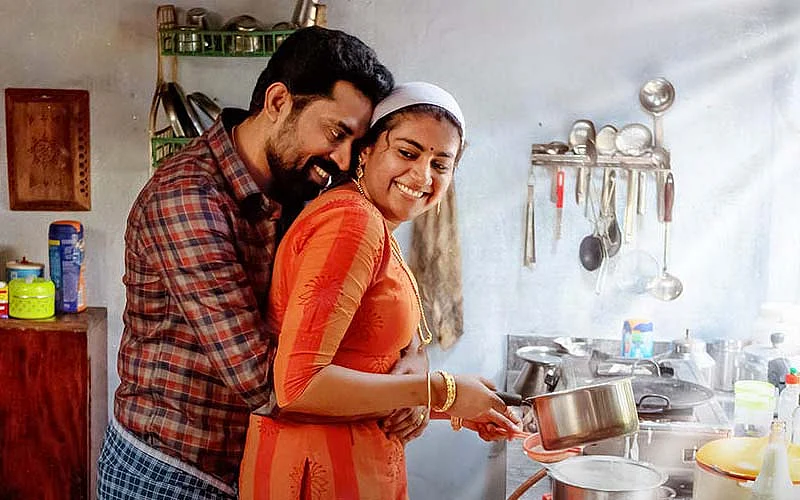
സിനിമയുടെ കെട്ട് ഇറങ്ങിക്കഴിയുമ്പോള്‍ അടുക്കളയിലേക്ക് നോക്കി 'ഒരു ചായ' എന്ന് വിളിച്ചു പറയാതെ ഇരിക്കുക | The Great Indian Kitchen Review


സ്വന്തം ഉച്ഛിഷ്ഠം കലക്കിയ വെള്ളം തലയിലൂടെ ഒഴുകിയ നിലയില്‍ ആണ് കഴിഞ്ഞ രണ്ടു ദിവസമായി മലയാളി ഗൃഹനാഥന്മാരുടെ നില്‍പ്പ്. 'നോട്ട് ഓള്‍ മെന്‍' എന്ന് പറയുന്നതിന് മുമ്പ് തങ്ങളുടെ വീട്ടിലെ ഭക്ഷണത്തിലേക്ക് നോക്കുക തീന്‍മേശയിലെ ആവി പറക്കുന്ന സമൃദ്ധിയില്‍ അല്ല, കഴിച്ചെഴുന്നേറ്റ് പോരുമ്പോള്‍ നിങ്ങള്‍ മേശപ്പുറത്ത് ചവച്ചുതുപ്പിയതിലേക്ക്, തലേന്ന് നിങ്ങള്‍ക്ക് വേണ്ടാതെ പോയ ചോറ് തിളപ്പിച്ചും അല്ലാതെയും ഉണ്ണുന്നവരുടെ പാത്രത്തിലേക്ക്, സിങ്കില്‍ കെട്ടിക്കിടക്കുന്ന നിങ്ങളുടെ അഴുക്കിലേക്ക്, ദുര്‍ഗന്ധം അവസാനിക്കാത്ത ആ ചവറ്റുകൂനയിലേക്ക്. മഹത്തായ ഭാരതീയ അടുക്കള അഥവാ The Great Indian Kitchen എല്ലാ വീടുകളുടെയും അകത്തളങ്ങളാണ്. സംവിധായകന്‍ ജിയോ ബേബിയുടെ നാലാമത്തെ സൃഷ്ടിയായ നൂറു മിനിറ്റില്‍ താഴെ മാത്രമുള്ള ഈ ചലച്ചിത്രം രേഖപ്പെടുത്തുന്നത് ഒറ്റ ക്രോമോസോമിന്റെ അഹന്തയില്‍ ആണുങ്ങള്‍ സൗകര്യപൂര്‍വം കണ്ണടച്ച് ഇരുട്ടിലാക്കിയ പെണ്ണുങ്ങളുടെ ജീവിതമാണ്.

അതെ, മഹത്തായ ഭാരതീയ അടുക്കള ആണുങ്ങള്‍ക്ക് വേണ്ടി മാത്രമുള്ള ചലച്ചിത്രമാണ്. കാലാകാലങ്ങളായി സംസ്‌കാരം, ആചാരം, കുടുംബം, മക്കളുടെ ഭാവി, തറവാട്ടുമഹിമ, വന്നു കയറിയ വീട്, എന്നീ വാക്കുകളില്‍ കുരുക്കി നിങ്ങളുടെ ജീവിതം സുഗമമാക്കാന്‍ വേണ്ടി നിങ്ങള്‍ ഒതുക്കിക്കളഞ്ഞ പെണ്ണുങ്ങളെ ഒന്ന് ശരിക്ക് കാണാന്‍ ഉള്ള അവസരമാണ് ഇത്. പെണ്ണുങ്ങള്‍ക്ക് ഇതവരുടെ ദൈനംദിനജീവിതമാണ്; ഇത് നിങ്ങള്‍ക്കുള്ള സിനിമയല്ല.

വടക്കന്‍ കേരളത്തിലെ ഒരു വലിയ തറവാട്ടിലേക്ക് വിവാഹം കൊണ്ടെത്തിക്കുന്ന ഒരു സ്ത്രീയും (നിമിഷ സജയന്‍) അവളുടെ കോളേജ് ലക്ച്ചററായ ഭര്‍ത്താവും (സുരാജ് വെഞ്ഞാറമ്മൂട്) മുന്‍ കരയോഗം പ്രസിഡന്റായ അയാളുടെ അച്ഛനും കേന്ദ്രകഥാപാത്രങ്ങളായുള്ള The Great Indian Kitchen രക്തം പൊടിയാതെ ബഹളം വയ്ക്കാതെ അക്രമരംഗങ്ങള്‍ പോലും ഇല്ലാതെ വീടിനകത്തു നടക്കുന്ന വയലന്‍സ് വ്യക്തമായി, painfully honest ആയി അവതരിപ്പിക്കുന്നു. വിദ്യാസമ്പന്നരായ, തൊഴില്‍ ചെയ്തു ജീവിക്കാന്‍ പ്രാപ്തരായ സ്ത്രീകളെ അഭിപ്രായം പറയാന്‍ അനുവദിക്കാതെ തങ്ങളെ സേവിച്ചുകൊണ്ട് ജീവിക്കാന്‍ കുടുംബത്തിനുള്ളില്‍ തളച്ചിടുന്ന വിദ്യാസമ്പന്നരായ, അലസരുമായ ആണ്‍കൂട്ടങ്ങളുടെ നേര്‍ക്കാഴ്ചയുമാണ് ചിത്രം.

അടുക്കളയുടെ രാഷ്ട്രീയവും തീന്മേശയുടെ രാഷ്ട്രീയവും തമ്മിലുള്ള അന്തരം, പാചകം ഹോബിയും സഹായവും കടമയും ആകുന്നത് തമ്മിലുള്ള അന്തരം, ഭക്ഷണം അധ്വാനവും അധികാരവും ആകുന്നത് തമ്മിലുള്ള അന്തരം, ഇതെല്ലാം ഒട്ടും അതിഭാവുകതയില്ലാതെ നാടകീയതയില്ലാതെ, എന്തിന്, പശ്ചാത്തലസംഗീതം പോലുമില്ലാതെ ശരിക്കും കൊള്ളിച്ചുകൊണ്ടും പൊള്ളിച്ചുകൊണ്ടും കാണാം ഇവിടെ. രുചിയിടങ്ങള്‍ എന്നാല്‍ വിഭവങ്ങള്‍ നിരത്തിയ തീന്മേശകളിലല്ല, പുകഞ്ഞും വിയര്‍ത്തും ചേറു പറ്റിയും ഉച്ഛിഷ്ഠം വാരിയും ജില്ലാ കലക്ടറേക്കാള്‍ മേന്മയോടെ 'കുടുംബത്തില്‍ പിറന്ന പെണ്ണുങ്ങള്‍' അവരുടെ രുചികളും അഭിരുചികളും മാറ്റിവച്ച് ചെയ്യുന്ന കാര്യങ്ങളിലാണ് എന്ന് കാണിച്ചു തരികയാണ് ജിയോ. Mansplaining ഇല്ലാത്ത ഇത്തരം കഥ പറച്ചില്‍ അപൂര്‍വങ്ങളില്‍ അപൂര്‍വ്വമാണ്.

ആവര്‍ത്തിച്ചാവര്‍ത്തിച്ചുള്ള അടുക്കളരംഗങ്ങള്‍ മടുപ്പുളവാക്കുന്നതാണെന്ന് തോന്നലുണ്ടെങ്കില്‍ ഓര്‍ക്കുക, ഈ ആവര്‍ത്തനമാണ് പലരുടെയും അന്ത്യം വരെയുള്ള ദിവസങ്ങള്‍. പാചകപ്പുരയുടെയും കിടപ്പുമുറിയുടെയും മേശയുടെയും ഇടുങ്ങിയ മാറിയിരുപ്പു മുറിയുടെയും ഫ്രെയിമുകള്‍ ആണ് സ്‌ക്രീനില്‍ എങ്കിലും സാലു കെ. തോമസിന്റെ ക്യാമറ ചൂണ്ടുന്നത് മനുഷ്യരുടെ ഉള്ളിലേക്കാണ്. എഡിറ്റര്‍ ഫ്രാന്‍സിസ് ലൂയിസിന്റെ കൃത്യമായ കട്ടുകള്‍ സിനിമയെ പറയേണ്ടത് മാത്രം പറഞ്ഞു വിഷയത്തിന്റെ ഗൗരവത്തില്‍ നിന്ന് ഒട്ടും തെന്നിമാറാതെ, തട്ടും തടവുമില്ലാത്ത മികച്ച അനുഭവമാക്കുന്നു. സിനിമയുടെ രാഷ്ട്രീയത്തോടൊപ്പം ചേര്‍ത്തു പറയേണ്ടതാണ് 'ഒരു കുടം പാറ്' ഉള്‍പ്പടെയുള്ള മൃദുലാദേവിയുടെ വരികളും. പറയ സമുദായത്തിന്റെ പാളവ ഭാഷയില്‍ മൃദുല രചിച്ച ഗാനങ്ങള്‍ മാറ്റിനിര്‍ത്തപ്പെട്ട ജനതയുടെ ഭാഷാസൗന്ദര്യം മാത്യൂസ് പുളിക്കന്റെ സംഗീതത്തില്‍ ലോകത്തെ കേള്‍പ്പിക്കുന്നു.

സാക്ഷരരും പരിഷ്‌കൃതരും സാംസ്‌കാരികസമ്പന്നരും നാട്ടുപ്രമാണികളും ആചാരസംരക്ഷകരും ഒക്കെ കൂടിയ പുരുഷാധിപത്യസമൂഹത്തിന്റെ മുഖത്ത് ആഞ്ഞു പതിഞ്ഞ ഒരു പ്രഹരമാണ് ചിത്രം. കുക്കറില്‍ വേവാത്ത, അടുപ്പത്ത് മാത്രം വേവുന്ന അരിയും, പേസ്റ്റ് പുരട്ടിയ ബ്രഷ് വരാത്തത് കൊണ്ട് ആരംഭിക്കാത്ത ദിവസവും, വാഷിംഗ് മെഷീനില്‍ കഴുകിയാല്‍ കേടായിപ്പോകുന്ന തുണികളും, അമ്മിയില്‍ അരച്ചാല്‍ മാത്രം രുചിയുള്ള ചമ്മന്തിയും ചൂട് ദോശയും ഒക്കെ നിര്‍ലജ്ജം സ്വീകരിച്ച് ഗൃഹനാഥന്മാര്‍ കുടുംബത്തെ നല്ല നിലയിലെത്തിക്കാന്‍ വേണ്ടി സ്ത്രീകള്‍ക്ക് നിര്‍ലോഭം കൊടുക്കുന്നത് കഴുകാത്ത ചോറ്റുപാത്രവും, വെള്ളം കെട്ടിക്കിടക്കുന്ന സിങ്കുകളും, ഉരിഞ്ഞെറിഞ്ഞ അടിവസ്ത്രവും, വികാരരഹിതമായ ലൈംഗികതയും ഒക്കെയാണ്. സ്വന്തം വീട്ടില്‍ എന്തും ചെയ്ത് manners ഇല്ലാതായിപ്പോയ പുരുഷന് അവന്റെ തെറ്റ് ചൂണ്ടിക്കാണിച്ച തെറ്റിന് അവളെക്കൊണ്ട് കുറ്റബോധം തോന്നിപ്പിച്ചും അല്ലാതെയും മാപ്പ് പറയിപ്പിക്കുവാനാകുന്നതും അവന്റെ ചോദ്യംചെയ്യപ്പെടാനാവാത്ത അധികാരം കൊണ്ടാണെന്ന് ചിത്രം തുറന്നുകാട്ടുന്നുണ്ട്. അടുക്കളയില്‍ നിന്ന് കിടപ്പുമുറിയിലേക്ക് എത്തുമ്പോഴും ആണ്‍കോയ്മ വ്യക്തമാണ്. ലൈംഗികതയില്‍ അഭിപ്രായമുള്ള പെണ്ണിനെ ഈഗോ തകര്‍ന്ന പങ്കാളി പരിഹാസ്യമായി നേരിടുന്നത് അധിക്ഷേപം കൊണ്ടാണ്.

അവഗണനയിലും മൗനത്തിലും എത്ര കഴുകിയാലും മാറാത്ത കെട്ട മണത്തിലും അവള്‍ക്ക് കൂട്ടാകുന്നതും പെണ്ണുങ്ങളാണ്. താന്‍ വളര്‍ന്നുവരുന്ന ലോകത്തെക്കുറിച്ച് ബോധ്യമില്ലാത്ത നിഷ്‌കളങ്കയായ ഒരു കുഞ്ഞു മോളും, ആര്‍ത്തവ 'അശുദ്ധി' കാലത്ത് സഹായത്തിനെത്തുന്ന പാട്ടു പാടിക്കൊണ്ട് പണികള്‍ ചെയ്യുന്ന, തന്റെ ആര്‍ത്തവമോ ജാതിയോ ആര്‍ക്കും അശുദ്ധിയല്ലാതായതിനെപ്പറ്റി സരസമായി പറയുന്ന ഒരു സ്ത്രീയും, 'മോള്‍ ജോലിയ്ക്ക് അപേക്ഷിച്ചോ പക്ഷെ ഞാന്‍ പറഞ്ഞെന്ന് ആരും അറിയരുത്' എന്നപേക്ഷിക്കുന്ന ഭര്‍ത്തൃമാതാവും, അനുഷ്ഠാനങ്ങളെപ്പറ്റിയും കടമകളെപ്പറ്റിയും 'ഇവിടത്തെ രീതികളെ'പ്പറ്റിയും ആണുങ്ങളുടെ കണ്‍വെട്ടത്ത് നിന്ന് മാറ്റി വെയില്‍കൊള്ളിക്കാതെ ഉണക്കേണ്ട പെണ്‍ അടിവസ്ത്രങ്ങളെപ്പറ്റിയും ജ്ഞാനം പകരുന്ന സന്തോഷത്തോടെ കുടുംബത്തെ ആണുങ്ങളെ സേവിക്കുന്ന അമ്മായിയും. അധികാരഗര്‍വിന്റെ ഇരകളും ആണ്‍കോയ്മയുടെ വാഹകരും ആചാരസംരക്ഷകരുമായ കുടുംബത്തിലെ സ്ത്രീകള്‍ നിരന്നു നിന്ന് 'ഇതാണ് ഞങ്ങള്‍' എന്നും 'ഇതാണ് നിങ്ങള്‍' എന്ന് പറയാതെ പറഞ്ഞു പ്രേക്ഷകരെ ചൂളിപ്പിക്കുകയാണ്. അതിന് ചലച്ചിത്രപ്രവര്‍ത്തകര്‍ മുന്‍നിര്‍ത്തുന്നത് വീടിന്റെ ഐശ്വര്യം എന്ന പേരില്‍ പ്രിവിലേജുകളാല്‍ സമ്പന്നരായവര്‍ കാലങ്ങളായി നോര്‍മലൈസ് ചെയ്ത ഗാര്‍ഹികപീഡനം തന്നെയാണ് എന്നത് ചിലരെയെങ്കിലും ഒന്ന് ഇരുത്തി ചിന്തിപ്പിക്കുമെന്ന പ്രതീക്ഷ നല്‍കുന്നു.

കൊവിഡ് കാല പ്രതിസന്ധി കടന്ന് ഈ ചിത്രം ഇറങ്ങിയത് തീയറ്ററില്‍ അല്ല എന്നത് ശ്രദ്ധേയമാണ്. തീയറ്ററിലെ ഇരുട്ടില്‍ അല്ല, തീന്മേശയുടെ മുമ്പില്‍ അമ്മയോടും ഭാര്യയോടും മരുമകളോടും ഒപ്പം ഇരുന്നു കൊണ്ടാണ് പ്രിയപ്പെട്ടവരും അല്ലാത്തവരുമായ ആണുങ്ങളേ, നിങ്ങള്‍ ഈ സിനിമ കാണേണ്ടത്. ഇരിപ്പിടത്തില്‍ നിന്ന് കൊണ്ടുതന്നെ വേവുന്നത്തിന്റെയും നാറുന്നതിന്റെയും മണം പിടിക്കാവുന്ന ദൂരത്തിരുന്നു കൊണ്ട്.

നിങ്ങളെത്തന്നെ സ്‌ക്രീനില്‍ കാണുമ്പോള്‍ ജാള്യതയില്ലാതെ കൂടെയിരിക്കുന്നവരുടെ മുഖത്തേക്ക് നോക്കാന്‍ ആവില്ലെങ്കില്‍ കൂടി, സിനിമയുടെ കെട്ട് ഇറങ്ങിക്കഴിയുമ്പോള്‍ അടുക്കളയിലേക്ക് നോക്കി 'ഒരു ചായ' എന്ന് ഉറക്കെ വിളിച്ചു പറയാതെ ഇരിക്കുക. അവിടെ ഒരു പക്ഷെ തീ അണഞ്ഞു കാണില്ല!

 Published in The Cue on January 16, 2021

Sunday, January 19, 2020

Lost & found heroine

89 years after Rosy’s disappearance, a group of women from Malayalam film industry launched a film society in Kochi and named it after their forgotten first heroine


1930: The year the first Malayalam feature film, Vigathakumaran, released. The year J.C. Daniel, father of Malayalam film industry, made his directorial debut with the country’s first social drama feature film. The year P.K. Rosy, a Dalit labourer and a Kakkarasi theatre artist, became Malayalam’s first heroine. The year when Rosy and family were attacked and their hut burned down by feudal Nairs, irked by a Dalit woman portraying an upper caste in the film, forcing Rosy to flee and to never return. 

2019: 89 years after Rosy’s disappearance, a group of women from Malayalam film industry launches a film society in Kochi and names it after their forgotten first heroine. P.K. Rosy Film Society, according to the Women in Cinema Collective (WCC), the organisation of woman professionals in Mollywood, is an attempt to restore the name of all those who failed to find a place in the annals of film history for their caste, gender, religion or opinions.


The lost heroine

Vigathakumaran (The Lost Child) was the story of a child who goes missing and years later, accidentally gets back with his family. Call it irony, the heroine Rosy too vanishes, but her history is traced years after her death. Rosy belonged to a Dalit family in Thiruvananthapuram who was discovered by Daniel while she was playing a part in Kakkarasi theatre, a Tamil Dalit art form, and convinced her to play the lead in his debut movie. At an era where caste system was practiced openly in Kerala, a Dalit actor acting as an upper caste woman enraged the Nair community, who pelted stones at the screen, disrupted the movie’s screening and went on to ostracised Rosy’s family. They were manhandled and their hut was set afire, forcing Rosy and family to flee their native. The actor fled to Tamil Nadu where she is believed to have lived and died assuming a different identity, without letting anyone know about her past. No print of Vigathakumaran exists anywhere, leaving no proof of Rosy’s acting career. 


A memorial could be anything – a statue, award or building, but for a woman who was hounded for her identity and forced to vanish, what better way than a platform to remember everyone who has been shown the door from history! The WCC, formed in 2017 in support of a female actor who was assaulted in an incident allegedly masterminded by Mollywood actor Dileep, has been supporting movements and activities to support the marginalized and oppressed, both inside and outside the industry. The formation of P.K. Rosy Film Society is yet another huge step from the collective to celebrate the voices that have been silenced. 

All the founders and members of the society are ciswomen and transwomen and together, they will hold screenings films made by women and discourses on feminist cinema. Archana Padmini, film curator and one of the founders of the society, explains, “Kerala can be considered very rich in terms of film societies, but there are very few who engage films academically. Launching a film society was an idea that came up during one of the general body meetings of the WCC. Our major focus being representation of women and intervention in issues of all sorts of marginalization, we had to create a platform for discourses and never let those die. When we thought of a name, history gave us no choice other than P.K. Rosy, a woman who deserved justice.”

Rosy’s life story was pieced together from books penned by film historian Kunnukuzhy S. Mani (who wrote the booklet P.K. Rosy), Chelangatt Gopalakrishnan (biographer of J.C. Daniel) and Vinu Abraham (who penned Nashta Nayika). Based on these accounts, director Kamal made the Malayalam film Celluloid in 2013, depicting the tragic life of J.C. Daniel, Rosy and their ‘lost film’.

Director K.J. Jeeva, another founding member of P.K. Rosy Film Society observes that Rosy has been denied even after all these years, “The government hasn’t yet instituted an award in her name. Just look at her personal life. She vanished into oblivion, lived under another name, assumed her husband’s upper caste surname. Now, even her children or grandchildren do not want to talk about her Dalit identity. 

“Rosy is not the first and last Dalit woman in the industry who is ostracized for her identity. Even now, many hide their Dalit identity fearing that revealing it would cost them their career; that has to end in the long run. The society aims at initiating public discourses, against stereotyping, ostracism and toxicity in the industry. Film is a woman’s world too; we have been here since the beginning and we have to reassert that this space is as ours as yours. Many sensitive contents made and issues addressed through films have not reached the public. Our mission is to bring those films to people and trigger forgotten memories,” Jeeva stresses. 

The events of the film society will be open to all, but only women qualify to be the members. Any woman who wish to be part of the screenings and discourses can register with the society. As Archana puts it, their aim is to discuss genuine, sensible, political content through films, watching it together and let discourses happen. “Film societies,” she adds, “have played a huge role in shaping up the gender perspectives, critical thoughts and film viewing culture of film viewers in Kerala. (According to the Federation of Film Societies of India, the state is home to over 125 film societies). P.K. Rosy Film Society is a platform for those who view film as an art form in both aesthetic and academic terms. And we will associate with various fields for fruitful interactions.”

The first event held by P.K. Rosy Film Society was the screening Leela Santhosh’s short film Paikinjana Chiri made in Paniya Malayalam and Jeeva K.J.’s feature film Richter Scale 7.6 on displacement woes of kolam thullal (a ritual dance form) artists, followed by discussions. In November 2019, the society screened Agnes Varda’s 1961 film Cléo from 5 to 7, noted for its French feminism narrative. Four days before New Year, they screened Deepa Dhanraj’s multi-lingual documentary We Have Not Come Here to Die, that chronicles the suicide of Dalit research scholar Rohith Vemula in the University of Hyderabad which triggered a huge anti-caste movement across the country. In January 2020, they co-organised Samabhav, a two-day film festival on gender, masculinity and relationships. 


The women have more plans for 2020. “We will be holding monthly film screenings, appreciation classes, workshops, curated packages and more discourses,” Archana says.

Each film is a learning; it’s not meant to be watched and forgotten. As the end credits scroll and the lights turn on, it fills in the minds of audience too, sometimes as revelations, and at times, as revolution. 


Published in Deccan Herald on January 19, 2020

Saturday, February 3, 2018

For Sou Sadanandan, Rabbit Hole is a redemption


Rabbit hole. The word comes from a story, a much-loved one – Lewis Carroll’s Alice in Wonderland, where little Alice falls into a strange, fantasy world through a rabbit hole. The dictionary defines rabbit hole as a situation that is strange, confusing or illogical, and often hard to escape from. 

Sou Sadanandan’s short film Rabbit Hole takes you through a similar situation, where you feel the trauma, sadness and aloofness felt by Christy, a woman who comes to a psychiatrist on his day off to discuss depression. 

A topic that needed to be brought to the attention of Malayalis who consider mental health a taboo subject, depression sank in well with the audience. A beaming Sou is happy about the responses. “I have received more than a hundred messages and mails, all of them ending with the word ‘Thank you’. Either they had been there or they are going through it. I think the short film could spread awareness on depression... that like cancer, it too needs to be treated at the earliest.” 

The conversation between the doctor and the patient, played to perfection by Alencier Ley Lopez and Gilu Joseph, is so convincing and relatable. 

So, has she ever gone down the rabbit hole? “I have seen a lot of friends struggling with depression but I couldn’t do anything to help them as they never let anyone near them. I really wanted to know what they were going through and help them. At one stage, I too stumbled into depression and experienced it. It took me more than a year-and-a-half to get over it. This short film is a sort of redemption for me,” she reveals. 

The idea of a short film on depression struck her when she read the story of the sad clown who spreads laughter, suppressing agony. A person who finds life in all art forms based on literature, Sou decided to make a small film on the story. 

“I was sure about not writing the dialogues myself. All my characters would be like me and I couldn’t bring to fore the conflict between the characters,” she recalls. She bestowed the task with Vinu Janardanan, who had co-written her National Award-winning documentary Chembai, My Discovery of a Legend. The screenplay was reworked over and over till they felt satisfied. 

Alencier readily accepted to play the part and Gilu was referred to by a friend. She says, “I had no money to offer. All I said was that it would be a wonderful role and she gladly agreed. After the first cut, we took a break to analyse how we could better the work.” 

It was then she made a discovery – that her friend, playback singer Sayanora Philip, could become a good dubbing artist. “We had felt that for Gilu, a voice one grade up than hers would be nice. While talking to Saya, suddenly I felt she could do it well. She too agreed and perfected the dubbing by working on it for two days. I hope our training did her good. After Rabbit Hole, she is dubbing for Trisha in Hey Jude,” says Sou, who also had on board actors Maala Parvathy and Ramesh Pisharody as voice actors. 

Currently, Sou is working on her debut feature film, a family satire starring Kunchacko Boban and Nimisha Sajayan, which is expected to go on the floors in April.

 Published in Deccan Chronicle on February 3, 2018

Friday, January 26, 2018

Nikhila is back to Mollywood


The last time Malayalis saw Nikhila Vimal was as Kabani in the 2015 film Love 24x7. Her growth from the nervous girl to the confident TV reporter in the movie somewhat resembles her real life progress. After making her debut as a heroine with Dileep, Nikhila signed up for a Tamil movie opposite actor-director M. Sasikumar, followed by two more from Tamil and two from Telugu, including the remake of Oru Vadakkan Selfie. Now, after a short while, she is back to Malayalam, playing a classical dancer in Aravindante Athithikal. 

The natural first query is why the break. And she replies, “The break in Malayalam was not something I planned. In fact, movies too came to me out of the blue. I never had dreamt of becoming an actress.” When Kabani got noticed, the first offer came from Tamil and she grabbed Vetrivel. The team took her on board their next project Kidaari, again with Sasikumar. Then happened her first Telugu movie Meda Meeda Abbayi, the Vadakkan Selfie remake, with Allari Naresh. “I have been getting offers from Malayalam in between, but I wasn’t sure I could do justice to mature characters. I am childish and always choose roles in my comfort zone. I can’t do a heavy character that I am not confident of pulling off."

It was the same thought that made her reject the lead role in Ramante Edenthottam. Nikhila surprises saying she has no regrets. “I am glad that I didn’t take it up. Anu Sithara played Malini to such perfection. I wouldn’t have been able to carry it off with grace,” she says. So what made her choose Aravindante Athithikal? “The character Varada is a dancer and I could relate well to her,” she says. Dance, to Nikhila, is a legacy. Her mother Kalamandalam Vimala Devi is a dance teacher who ensured that her daughter got trained in bharatanatyam, kuchipudi and Keralanatanam. “I have learned dance forms but don’t call me a dancer. I don’t perform regularly and I don’t practise like a dancer,” she says. 

In Aravindante Athithikal, directed by M. Mohanan, Varada has come for her arangettam in Mookambika Temple and stays in the lodge run by Vineeth Sreenivasan’s character. “Vijayaraghavan plays my dad and Prem Kumar plays my uncle. It’s an ensemble cast with actors like Urvashi, Shanti Krishna, KPAC Lalitha, Sreenivasan, Sreejaya and Aju Varghese. The shooting was so much fun. It was a great experience. Whenever I was confused about how to express and what to say, Vineeth helped me with suggestions and tips. Such a nice person he is, treating everyone with respect,” she recalls. 

The shooting will wind up in a week and the movie might hit the screens in March or April. Before that she has two film releases coming up — Tamil movie Ranga with Sibiraj and Telugu film Gayathri starring Mohan Babu. Life has never been a planned route for Nikhila. A graduate in Botany, she left studies midway when films came. Now, she has joined the University of Madras for post graduation in Women Studies. “I hope to continue my studies. I have been missing it so much,” she concludes.

 Published in Deccan Chronicle on January 26, 2018


Monday, January 15, 2018

Anson's fanboy moment

The actor recalls his joy when Mammootty invited him to the dais and talks about his new projects.


It’s a special year for Anson Paul. His Christmas release Aadu 2, in which he plays the villainous Anali Sabu, is running to packed houses. Kala Viplavam Pranayam that will see him as a guy-next-door is gearing up for release and his Tamil rom-com with Oviya is nearing completion. But the best of all is Abrahaminte Santhathikal, in which he acts as megastar Mammootty’s brother. 
Letting out an excited laugh, Anson says, “It was on New Year’s day that I met Mammookka for the first time. During the audio launch, when he called me on to the dais, it was my fanboy moment. The goosebumps lasted the whole day! For a person who grew up watching his movies and admiring his charisma, it was the best gift in the universe.” Only later did he know that it was Mammootty who suggested him for the role of his brother. The movie has Maria John playing Anson’s love interest. 
Going by his makeover, Anson is no longer the sophisticated, charming guy we are used to. Sporting long hair and rugged beard, he was unrecognisable in Aadu 2. In Kala… too, he maintains the hair and beard. “But both characters are poles apart. Anali Sabu is a ruthless ruffian whereas in Kala…, I play a village simpleton for the first time. As the name suggests, there is art, politics and romance. It’s a light-hearted movie about a middle class guy,” he says. The movie has him romancing Gayathri Suresh. 
When actor-producer Vijay Babu offered him Anali Sabu, Anson didn’t have to think twice. “I was told that I was an antagonist and had to dance, but an Aadu fan myself, I immediately accepted it. Like all the characters who have a background, Sabu too has one. The name Anali, came from his habit of spitting, like the snake. He doesn’t have many dialogues. So, I had to work on my look and body language. My inspiration came from Attakathi Dinesh’s Kabali act, how he carried off the role without much dialogues.” 
As he puts it, “It’s kind of fun breaking the image. If you can’t prove that you’d pull off any type of character, what’s the point in being an actor?” His penchant for perfection is evident from how he insisted on dubbing by sporting the costumes of Anali Sabu and chewing paan. During the making of Solo, a jetlagged Anson hurriedly finished the dubbing in Malayalam and Tamil. But later, when he introspected and realised that he wasn’t ‘in character’, he requested a re-dub and went for it. “What’s the use if you can’t do justice to your character in all realms,” he asks. 
Speaking from the sets of Abrahaminte Santhathikal, Anson says his body is all tired from shooting the fight scene. “But my spirit is not. I am always on the sets as a student, assisting the director and learning from legends. I haven’t committed to any other movie now. Whatever I do, I want to put my heart, soul and body into it.” He won’t reveal much about his look or role. Hope there are more surprises in store.

 Published in Deccan Chronicle on January 15, 2018

Friday, January 5, 2018

Feminichis stand up as ratings go down

As Women in Cinema Collective continues to be targeted online, various stakeholders share their opinions about the downrating campaign. 


The online tirade against the Women in Cinema Collective and Parvathy has taken an uglier turn in the past few days with a hatred campaign growing strong every minute. On New Year, the WCC had shared on its Facebook page an article on misogyny in Malayalam cinema, an act that saw immediate repercussions. Social media users were quick to react as they hurled another array of verbal abuses at the Collective members, whom they address as feminichis, and giving a 1-star rating to the page for ‘insulting megastar Mammootty’. 

Similarly, when the first song of year, ‘Pathungi Pathungi’ from My Story, was released on YouTube, there came thousands of dislikes for this song apparently for the reason Parvathy was in it. Though the article was pulled down from the WCC page, the down-rating attack still continues with 35,000-plus reviews and over 26,000 1-star ratings. 


My Story director Roshni Dinaker is sad about the dislike and vitriol campaign. “It is very disheartening. The only thing people are talking about is a statement made by a person. Nobody talks about how differently we have done it and how much effort the actors and technicians have put in. I’m very sad about Shaan Rahman. After the much-lauded ‘Jimikki Kammal’, his song is being degraded. We are being attacked for something that is in no way connected to our movie. I can’t even open my Facebook account. Even my inbox is full of abuses,” she says. 

It seems to be an organised attack and not random fans responding to the hurtful article and the actor’s ‘arrogance’. Jiyas Jamal, a lawyer who runs the startup Talk Loud, which engages in social media campaigns, explains how such campaigns work.

“People believe that what is shared the most is the truth. When a client approaches us to trigger a campaign, we first get to know what the real issue is, to plan how to counter it. We have a tie-up with around 200 active pages all over Kerala. 

“We alert them and they share the content our team creates along with related articles and write ups published on online portals. The rest will be shared and liked by the people and other pages,” he says. Talk Loud, with offices in Kochi and Kozhikode, has a 10-member team in Kochi and several part-time content generators working for them all over Kerala. Jiyas admits that it was they who offered legal support to Printo, who was arrested for the cyber attack on Parvathy, and bailed him out. “He can’t be called a client of our firm because we did it for free. He couldn’t even afford legal services and we helped him gain support on social media. Yes, what he posted came under defamation, but it wasn’t fair to slap all those charges on him. There were many fans who unleashed a very degrading attack on her,” he says. 

Though mass downrating campaign has been seen when the Facebook page of Republic TV and the apps of Snapchat and ScoopWhoop faced the wrath of social media users over many controversies, for the movie industry, it is a new phenomenon. Social media commentator Hiran Venugopalan opines, “It’s a mode of protest and we have seen many of these, but not on an organisational level like this. There’s no other film organisation that is active on social media like WCC, so it can’t be compared with any other entity. 

However, this rating never affects their activities, though there are people who consider it as an impact.” On the ‘immature’ dislike campaign too, he feels it can’t do anything to a movie or an actor. “They are trying to show their strength as fans. But it will have no effect on a movie. People will watch the movie if it is good despite any negative campaign. 

After all, social media users are a very tiny part of the audience crowd. A film like Mayaanadhi could survive such campaigns by running to packed houses even now. If My Story wins over the audience, people will turn up to watch it despite all these slur campaigns,” feels Hiran. Kasaba director Nithin Renji Panicker too echoed similar views. Though the whole controversy began from the character played by Mammootty in his debut movie, Nithin has no complaints. “I consider her comment as the response of an audience who has all the right to love or hate a movie. It will never affect me or my future movies. My character is a person who talks that way; in fact, all the characters in the movie were rough. And I don’t think I can work on my future projects by keeping certain parameters in mind. Regarding the campaigns, I don’t think it would affect a movie’s prospects. Even when Ramaleela released last year, there was a smear campaign, but it went on to be one of the highest-grossing films of last year. If a film is good, people would watch it,” he says. 

Despite the down-rating movement being countered by a 5-star rating campaign with people like litterateur K.R. Meera offering solidarity to the Collective, the WCC explained what went wrong and made it clear that the attacks had little effect on their activities. Their Facebook post read, “We are well-aware that an FB page rating doesn’t decide the credibility of an organisation. We deleted the online article we shared (written by Anand Kochukudy in DailyO) that had named many major male actors in the industry as there was a wide misunderstanding that it was ours. We deleted it as those opinions were not ours. It was not our intention to hurt anyone’s feelings. Such attacks won’t let us backtrack from our principles or activities (sic).” 

Published in Deccan Chronicle on January 5, 2018

Tuesday, January 2, 2018

The story of a storyteller


The Mayaanadhi frenzy is everywhere. Everyone around is seen discussing the movie, its real-life dialogues, everyday characters, soul-touching songs and the scenes that give them déja vu, especially the balcony scene of the girl gang with one of them singing Bawra Mann... When the movie ends, the song lingers, so does the face of the girl who sang it. Darshana Rajendran says she has always been the ‘Bawra’ girl, not just now. 

“It’s my soul song that stuck with me since college days. It was a song I used to sing every time I was asked to,” laughs the Chennai-based theatre activist who made famous the song 'Bawra’, penned and rendered by Swanand Kirkire in the 2003 movie Hazaaron Khwaishein Aisi, yet again, when Leona Lishoy (her co-star in Mayaanadhi) made everyone listen to it and finally script writer Shyam Pushkaran including it in the scene, which turned out to be a masterstroke. 

The girl gang — Darshana, Aishwarya Lekshmi and Leona — felt very relatable and genuine. “That’s because it was real. Since day 1, the three of us were very close. It was never like a film location. The director, writers and actors sat together to discuss what needed to be conveyed. We weren’t given any script. Most of the dialogues were impromptu; it was all rehearsal and improvisations. 

The balcony scene was emotional and intense for us as it was our last day of shooting,” she says. She also admits that she had no idea about their part in the movie. “We just did what we were told. Only when we watched it on the big screen did Leona or Harish Uthaman or I know what all parts we were playing,” she recalls. 

A lot of praise poured in for the movie, the most treasured ones for Darshana are the words of music composer Shahabaz Aman, who put up a long post on his social media about the ‘Bawra’ girl. Without concealing the excitement, she says, “It was so touching and left me teary-eyed. I am a huge fan of his music and work. I’m so happy for his kind words.” 

Darshana had a huge fan following even before movies happened. It’s just that all her admirers are children under six years of age. Holding theatre and storytelling workshops for kids, she has been working with Karadi Tales for some time now. The Kochi apartment where her parents live is always flooded with children who want to listen to her stories. “I love working with children. They have a lot of questions and being in the company of kids is a happy space.” 

Long before theatre, she used to work in the microfinance sector in Chennai. When a friend introduced her to theatre, she was smitten and tried multi-tasking between an 8-6 job and 7-12 rehearsals. “Finally, I called it quits two years ago and fully dedicated myself to theatre,” she adds. In between happened small roles in a few movies, then came Vijay Sethupathi-starrer Kavan, the web series Ctrl Alt Delete and Mayaanadhi. 

Coming up are Irumbu Thirai in which she plays Vishal’s sister and an Anjali Menon movie in which she acts with her mother Neeraja. Darshana wouldn’t call herself a professional in any stream. She says she tried to learn a bit of everything — dance, Carnatic music, Western music, acting, etc. “It’s my family that always encourages and inspires me to give everything a try.” 

Family means her uncle too — late documentary filmmaker C. Sarath Chandran whom she fondly calls ‘Saramman’. “It’s all lovely memories. Saramman always made sure that those he loved knew each other. Wherever I have been, in Chennai or Riyadh or Delhi, he used to send banana chips via his friends and made us travel all the way to collect it. But it was never about the chips; he just wanted people to meet. Now, every day, I come across people who love him. Now I am going through all those books and music CDs he gifted me, all those he has left me with. Only now I am getting to know Saramman.” 

Looking back, Darshana feels that it was a great journey across the ‘mystic river’. “It was a wonderful experience to have at least watched so many geniuses working under one roof.”

 Published in Deccan Chronicle on January 2, 2018

Monday, January 1, 2018

Grab bullies by horns


The year was marked with the cyberspace buzzing with a war of intolerance from fans. From vicious trolling to smear campaigns to vulgar threats, the self-proclaimed warriors went to any extent to ‘defend the honour’ of their idols. Most of the victims of this organised cyber bullying were, interestingly, women, showing how deep misogyny ran and how easily these ‘fans’ were hurt, unable to stand a light comment, a genuine opinion or even a sarcastic reference. The most-viciously-trolled women include actresses Parvathy and Anna Rajan and journalists Shani Prabhakaran and Dhanya Rajendran. 

While it was Parvathy’s mention about the sexist dialogues in Mammootty-starrer Kasaba that triggered the abuse, two-movie-old Anna Rajan faced the wrath of the super star’s fans for her response to a query in a TV show on who she would choose as her hero between Mammootty and Dulquer Salmaan. Her casual response that she’d play Dulquer Salmaan’s heroine if Mammootty played his dad; or if Dulquer played Mammootty’s dad, she would act as the latter’s love interest. In no time, her Facebook page was flooded with a torrent of abuse, forcing the actress to tender a tearful apology to the star and his fans on FB live. Even fans of the other M, ‘showed their strength’ to journalist Shani Prabhakaran after her negative review of Mohanlal-starrer Pulimurugan and unleashed violence on social media for ‘insulting’ their idol. 

Another Malayali journalist, Dhanya Rajendran, too faced the heat after she tweeted that she disliked the SRK-starrer When Harry Met Sejal as much as Vijay’s Sura. 

‘No one has a shield of anonymity’ 

There are people who think ‘what’s wrong in trolling?’ A spontaneous reaction to a tweet from 50 or 500 fans is different from an organised attack by over 5,000 people. They never let an issue die down and trigger it off every day. The same thing happened in my case and Parvathy’s case. Facing cyberattack is a soul-killing exercise. It was really harrowing to go through the most abusive messages to file a police complaint. There are rape threats from persons who you don’t know or might be living around you. It might even be an 18-year-old boy; the thought is very scary. Do these people have any respect towards anybody?

When I filed a police complaint, one of the guys applied for an anticipatory bail at the Madras High Court. His mother called me pleading not to spoil his future and when I talked to him, I found that he had no idea about who I am. He just felt that I was a fan of another Tamil actor and was degrading his idol, a thought that made him take part in the abusive campaign. Fan accounts are managed by several persons who have no idea who all post abusive comments and to what extent they go. Another thing you realise is that there are women who are patriarchal and misogynistic, like the woman named Suja who put up a post against Parvathy. 

The bullies believe that they have the power of anonymity. It’s high time they realise that there’s no such power and that any account can be traced. Only the actors or political figures in whose name this happens can put an end to this. Unless they address their core group and say they would distance themselves for these bullying fans, this is not going to stop. Ajith and Vijay responded after I was trolled, but in Kerala, despite several such instances, our stars have never intervened in the matter strongly. I am a person who advocates for freedom of expression. You can allow Parvathy to criticise and can debate with her. But the moment you descend to threaten a person with sexual harassment, your freedom ends there. 

‘Cusswords can make you cringe only once’ 

Online abuse, be it from fans of political leaders or superstars, has now become a part of my daily life. What’s new this week is the question I face every day. It first began as a fake news that Rs 7 lakh black money is stashed at my home, after my programme on demonetisation was aired. Then came corruption allegations and after the Pulimurugan review, it was profanities and threats all over my social media accounts. It was disturbing at first, but now I can easily laugh about it, because a cussword can make you cringe only once. Then you become insulated. I have found the attacks fall under two categories. One appears serious, laying out seemingly-fact-filled opinions like how I am degrading a noble profession and the other, a stream of expletives. I tried ignoring it all first. But once the tone changed to rape threats, I filed a complaint. Most of those came from fake IDs that could be traced to foreign countries. Later, I realised that I will have to file complaints every day and I stopped. I don’t mind creative criticism; that helps your professional growth. These types of attacks show their standard and I am ready to show mine. Let them say whatever they want; this is never going to affect me. 

Troll victims 

BJP state president Kummanam Rajasekharan was trolled heavily after he, allegedly uninvited, took a Kochi Metro ride with Prime Minister Narendra Modi and other dignitaries during its inaugural run. Union Minister Alphons Kannanthanam's wife Sheela became the butt of jokes on social media after her interaction with a TV journalist resulted in the creation of hilarious trolls, memes and spin-offs. Fr Tom Uzhunnalil, post IS captivity, praising his captors despite them murdering two nuns in front of him, saw him becoming an object of mockery as memes even as Stockholm Syndrome theories did the rounds.

 Published in Deccan Chronicle on January 1, 2018

The actor with an opinion


Eleven years and 19 movies — that’s how long we have all known Parvathy Thiruvoth Kottuvata. But that’s not all about her. An actor who speaks her mind, she is unlike all the onscreen divas we are used to. She is carefree, her words are blunt and she doesn’t want to please anybody and be their girl-next-door; all she cares about is honesty and she proudly announces to the world, “Yes, I am a feminichi.” 

Known to have her priorities and visions clear, Parvathy was one among the female actors to rally behind their colleague, who survived an attack in February. Nearly two months later, she, in a candid interview, let all hell break loose by opening up about casting couch in the Malayalam film industry. In May, she joined the women in the film industry to form the Women in Cinema Collective and launched the #withher campaign offering support to the attacked actor, hailing her as a survivor. 

November saw Parvathy making her Bollywood debut with Irrfan Khan-starrer Qarib Qarib Singlle, followed by her walking away with the Silver Peacock for Best Actress at the prestigious International Film Festival of India, becoming the first actor from M’wood to win the honour. It was in the final leg of 2017 that her comment against the glorified misogyny in movies and her reference to Mammootty-starrer Kasaba, set off a war in cyberspace with fans of the superstar, including those from the film fraternity, unleashing their wrath on the ‘arrogant’ Parvathy. Ironically, all the comments against her were loaded with misogyny and patriarchy. 

When a film director compared her to a monkey, who alleged that its trainer was exploiting it, she responded with a picture of an embroidered cloth that read OMKV (that can be roughly translated into ‘Get lost, loser!’). 

As the year ends, the investigation of her complaint to Cyber Cell has taken a new turn with two abusers being arrested for sexual abuse and rape threat. Call 2017 an eventful year, Parvathy would say it was ‘positive and liberating’. “People keep on saying ‘Ayyo, what a year!’, but for me, it’s ‘Yay, what a year!’,” she says. 

“A lot of unfortunate incidents happened, which led to the unification of people, not just women. There was togetherness even in chaos. While it is deafening silence elsewhere, we, in the Malayalam film industry, decided to at least do some- thing.” 

Was speaking up about casting couch, an issue which people knew, but never dared to mention, intentional? “Not at all. The interview was like a friend-to-friend conversation and me talking about it happened naturally. Now when I think about it, I feel it was coming. A lot had happened and there was no point in living in fear. You do something or not, you could be attacked. To be honest, it was more like a closure for me.” 

The question she faced a lot after the revelation was why she didn’t talk till then and what was she doing when many other things happened. “My answer to them is that, I too was stuck in this toxic social construct, which I am questioning now. I’m freeing myself now and just because it is making a lot of people uncomfortable, they cannot hold me back to my past.” 

Parvathy believes she is opening up not for her, but for the next generation — “I would rather be a change than be a witness to it — we have always had someone who had to be the change. We wouldn’t have had the laws protecting us if there wasn’t a Mathura or a Bhanwari Devi.” 

Her family, her lawyer-parents P. Vinodkumar and T.K. Ushakumari, and brother Karunakaran, like any family, are understandably worried, but they are supportive of her acts. “There’s openness in our relationships; they have never questioned me in terms of gender, studies, work or commitment. They have fully accepted me as I evolved. All they want is that I am happy, safe and sure about what I do. They also want me to realise the importance of social responsibility as a citizen more than an actor, and that’s what I am — a law-abiding citizen who shouldn’t be scared of living in my country,” she says. 

On the career front, Parvathy is what she calls a free-flowing entity, who goes with her intuitions. “It’s always the gut feeling. I like it when things come to me; I choose a movie if I know I need to be a part of it. That’s why I take a break for even say 10 months or a year.” 

She is intuitive in choosing the scripts too. “I know if something unhealthy is standing out. Even in a film like City of God, where my story line has a lot of violence in it, the most regressive and patriarchal scene is underlined as the most regressive and patriarchal scene. There’s no glorifying space in it. And if there is one, I openly discuss it with the director or the writer. Removing it will always be up to them but I’ll give it my best shot to have it removed. I won’t challenge their talent or seniority, but tell them that as an audience, I feel that this film can do well without this particular dialogue.” 

Her grave tone puts it across that she has done it. “It’s not in a rude manner. It might have been 11 years, but I consider myself a newcomer. When you convey your views to the filmmakers with all due respect, though rattled, many people see the point. And those who haven’t been able to, I have said no to such projects,” she reveals. 

It doesn’t mean that films have to be moral or preachy. Parvathy neither does believe that films don’t influence human minds. “A film can be an entertainer/ thriller without plastic humour or sexist jokes. A film like Charlie is a thrilling story about two free-flowing souls without a moral point of view. Take Off made a political statement without being preachy; that’s the beauty of filmmaking. If the audience felt inspired by Charlie and wanted to be like him, negativity in films can also influence them,” she adds. 

For Parvathy, Bollywood innings hasn’t made any difference. “The Qarib team was very energetic with an intimate way of working. The marketing strategy there is very different and interesting. If you are talking about industry, I have never ever restricted myself to Tamil, Malayalam, Hindi or Kannada. Whichever the language is, from Swahili to Marathi or Bhojpuri to Bengali, I would be happy to do it,” she says. 

As the year ends, she takes home several memorabilia, including the word feminichi, coined as a derogatory reference for outspoken women on social media. “#feminichispeaking — lovely, isn’t it? I really like it. It’s got a local flavour and is quite endearing; I might get inked with the word,” she laughs. Looking back, it has been a proud journey. 

She sums up, “The most beautiful thing about 2017 is that there’s no more going back. I can never go back to a workspace where there’s no dignity. But I am not going anywhere else. This is my industry as is anyone else’s. I will demand the respect that all of us deserve. Be it any gender. No more staying numb.”

 Published in Deccan Chronicle on January 1, 2018

Wednesday, December 27, 2017

A little bit of everything: Shruthi Vijayan


At the emergency medical department of a hospital in Thiruvananthapuram, patients often wonder why youngsters gaze at the doctor in awe, talk to her excitedly and get their selfies clicked. The pretty medical officer, Shruthi Vijayan, admits that the excitement of ‘those cute moments’ of being recognised as a VJ, is contagious. 

“It’s very gratifying to hear young girls coming to me saying that I inspire them,” says the girl, who, apart from hosting three TV shows, runs a bridal boutique, works as a bridal makeup artist and a model, occasionally performs Bharatanatyam and Kuchipudi and is an artist with a few published book covers to her credit. 

Call her a multi-tasker, Shruthi would say it comes from the genes. “Women are born multi-taskers. We just have to accept it. Everyone asks me how I do it all. It’s not that I am working 24x7. I have proper plans for every week. I am doctor for only 48 hours a week. TV anchoring comes only twice or three times a month. Modelling, bridal makeup and dancing are also not regular. The art part is what I dedicate very less time to,” she says. 

However, she gives the whole credit to her biggest support system – her family. Her dad, retired PWD official Vijayan, mother, businesswoman Prema, her retired teacher grandmother Agnes and her sister Smriti, an MBBS student, are all very supportive of this workaholic woman. 

A doctor on modeling assignments has a lot of negative stereotypical notions attached to it and Shruthi is glad that she could break it. “I have never known restrictions as a girl. My family raised me as a woman who is aware of her strength. In fact, it was my daddy who initiated me to feminism; he is the one who pushed me to do things confidently. Living in a house full of financially independent women too helped me. Even my 80-year-old grandmother has a steady source of income at this age. Now that I have 5-6 independent sources of income, I have financial freedom and I am comfortable in my space,” she says. 

Style quotient is something that came to her life very late. Till joining a Mangaluru college for MBBS, Shruthi was what she calls a naadan kutti and a nerd. “Mangaluru changed me and I became confident. I want other women to experience that confidence, which is why I ventured into bridal makeup and hold monthly grooming workshops for women, on how to do their hair, makeup and improve their dressing sense,” she says. 

An avid reader, Shruthi is inspired by anything written by women ‘who have broken the glass ceiling’. Interestingly, she confesses to not dreaming of herself as an actor. “I am not a movie buff at all and I’m notorious for not recognising celebrities,” she laughs, recalling how she once failed to recognise director Shaji Kailas. Shruthi says, “I can do anything but acting. My dream is to get into the influential category by the time I am 40. I don’t want to just exist and die. I want to be remembered as someone who, like everyone, had 24 hours a day, but did things 10 times better.”

 Published in Deccan Chronicle on December 27, 2017

Kabita Mukhopadhyay, Political All the Way

She was born in West Bengal and groomed at Santhiniketan during vibrant and turbulent times in Indian politics and culture, but Kabita Mukho...