Showing posts with label Celebrity. Show all posts

Sunday, February 9, 2020

'Indian Monster' going strong

Known as ‘Indian Monster’ in bodybuilding circles, Mr Universe 2019 Chitharesh Natesan is actually Mr Determination.  
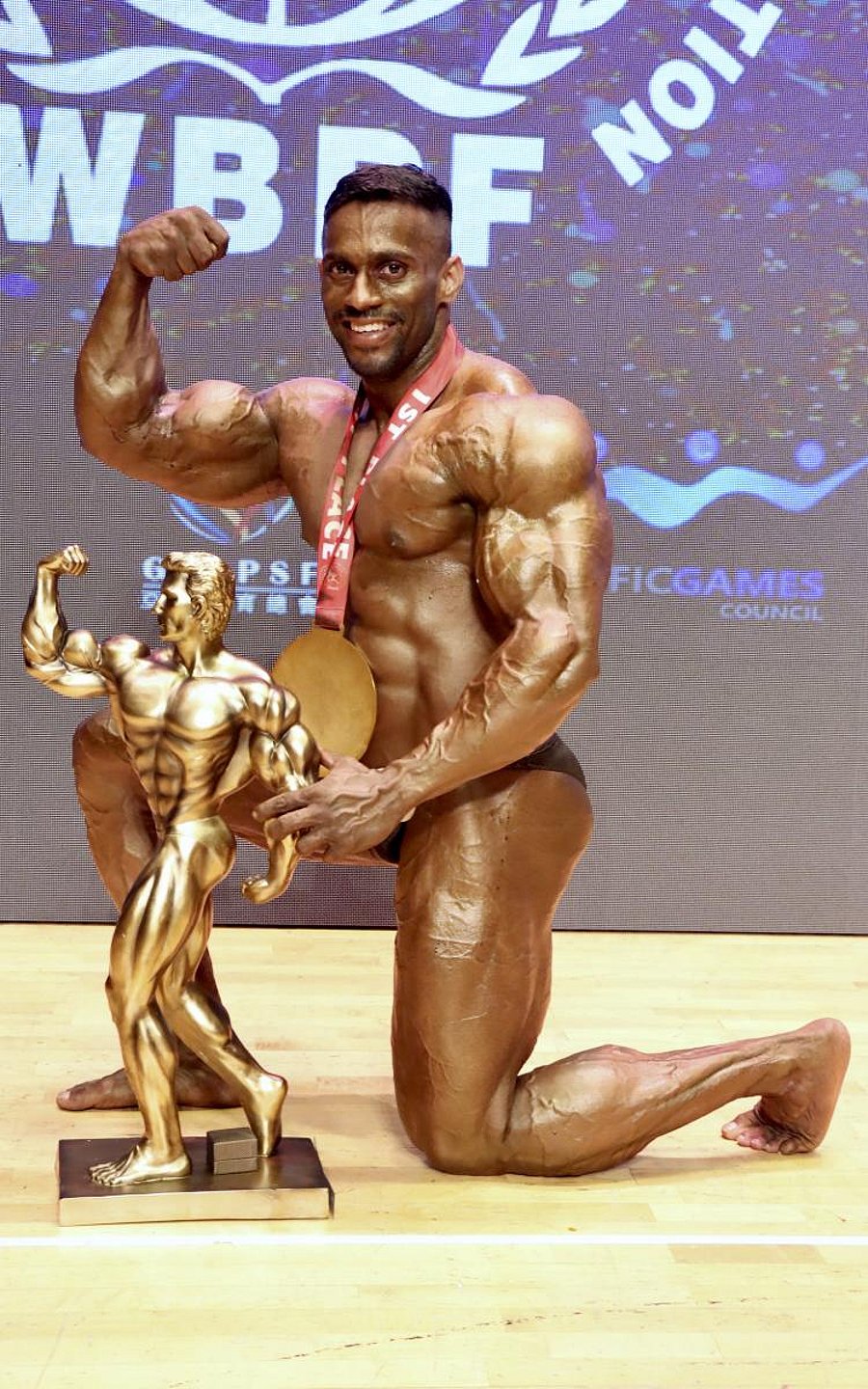

No one knew Chitharesh Natesan until late November, when cricket god Sachin Tendulkar tweeted about a historic win at South Korea – that the 33-year-old Keralite from Kochi put his hometown on the global map by becoming Mr Universe 2019. Chitharesh is the first-ever Indian to have won the title of Mr Universe in the World Bodybuilding and Physique Sports Championship, defeating participants from 38 countries and emerging as the Champion of Champions – again a first for India.

“A week before that I had won the Asian championships and become the Champion of Champions there too, but nobody knew about any of it until Sachin tweeted about it,” says Chitharesh, excitement booming in his voice. For this youngster for the tiny hamlet of Vaduthala in Kochi, the moment of recognition is a dream come true. His path to glory has been full of twists and turns. He is known by the nickname ‘Indian Monster’ in bodybuilding circles, but after a chat with Chitharesh, one would consider renaming him as Mr Determination. Numerous injuries, multiple breaks and missed championships didn’t affect his morale, but made him more focussed. Now, on a strict high-protein diet for over a year and long-hour workouts every single day, he believes he has more to do and a long way to go.

Chitharesh was not a wannabe bodybuilder; that was something that struck him at a later stage of life. His first love was hockey. “I started off as a hockey player since school days and went on to become a state-level player during graduation. Being a hockey player, I had to maintain my body weight and there was no chance of body building,” he recalls. He opted for his second graduation course at Lakshmibhai National College of Physical Education in Thiruvananthapuram, where he chose hockey as his specialisation.

After graduating, he moved to Delhi and started working with his friends’ fitness group there as a trainer. “There was very little scope for hockey in Delhi and I started weight training under the guidance of Sagar, my friend and coach,” adds Chitharesh, who considered contesting championships.

“In 2010, I participated in Mr Ernakulam championship, but soon, I met with an accident and contracted a foot infection that required two months’ bed rest. After preparations and training, I decided to compete in 2013, but a shoulder injury again pulled me down. I stayed off for one year,” he says. But the resting period had wonders in store for him. While recuperating, he took Latin Dance classes, where he met Nasiba, an Uzbek native. Soon, the two fell in love and they got married. Now settled in Delhi, the couple flies down to Kerala once in a while.

However, post injuries, Chitharesh bounced back and went on to become Mr India in three consecutive years from 2016. The year also saw him emerging as Mr India-Dubai. In 2017, he became Mr Delhi and the Champion of Champions in the contest. A year later, Chitharesh won Mr World title in the Europe-based IBFF championship and literally found himself on the top of the world. Then came the twist of fate. “I was hoping to earn a job with my win, but only then did I come to know that the federations I had been representing lacked recognition.”

He then joined Mumbai-based IBBF, where he was selected for Mr Asia championships. Chitharesh came home to meet his parents before the championships when hurdles, this time, came in the form of Kerala floods. With air traffic hit and whole life brought to a standstill, he rushed to rescue and relief operations though it took a toll on his diet and training. But he doesn’t brood over it, “When everyone around was affected, there was nothing to do. I and my friends were at the rehabilitation camps, coordinating rescue operations and helping people. There was no point in attending championships when you are not ready.”

Once on training mode, nothing would deter Chitharesh. No cheating, no breaks, not one day of eating out or hanging out. “In bodybuilding, focus and discipline are very important. So is money,” he smiles, explaining his daily diet of 300 g protein, 200 g carbohydrate and 100 g fat, which translates into 40 eggs and 1 kg chicken every day (6-7 meals a day)! “You have no idea how financially draining bodybuilding is,” he adds.

His advice to any aspiring bodybuilder is to find a good sponsor and a recognised federation to support their dreams, and an expert team of a trainer, doctor, physiotherapist. For Chitharesh, who had no sponsorship, his coach, friends, parents, wife and sisters have been his pillars of support.

“Participation in a championship means months of hard work and continuous training without any distraction. The more effort you put in the sweeter will be the success. And remember, there are no shortcuts, nothing at all,” he concludes.

 Published in Deccan Herald on February 9, 2020

Monday, February 5, 2018

Bringing Malabar stories on stage

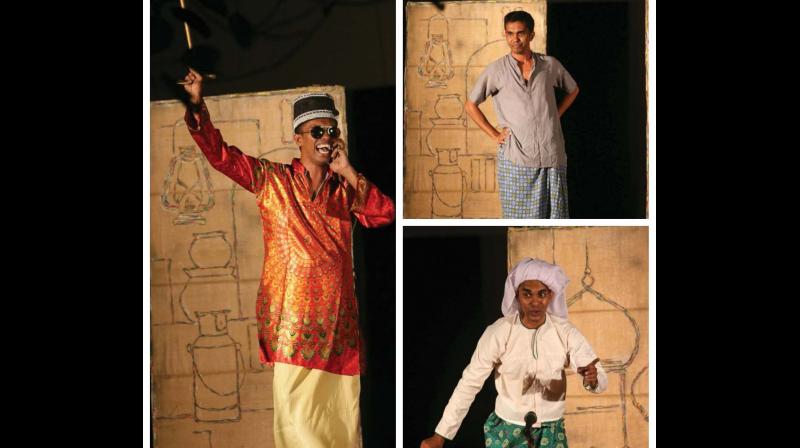
On the stage, when Sulaiman talks, jokes, laughs and emotes, there’s no trace of Binoy Nambala in him. When he walks in and out of stage playing six characters during the hour-long show Sulaimante Payakkam Parachilukal, the audience, surprised by the unique, humorous presentation in North Malabar dialect stay hooked on to it till the curtains fall. Binoy would say that the show is not a novel idea and has been here for long. 
“Payakkam Parachil is an age-old Mappila art form popular in Malabar region, especially Vadakara, till the 1960s. It is more of a satirical storytelling. An artiste would perform before a small crowd in a village by talking about several issues, both social and regional, in humorous language. At times, they take the performance to another level by amicably settling petty issues between neighbours and villagers,” recalls Binoy, who hails from Parappanangadi in Malappuram. 
He was attracted to the long-lost art form while preparing his PhD thesis at Sree Sankaracharya University of Sanskrit, Kalady, where he is a theatre student. Chakyar Koothu or the new-age standup comedy can be considered a closer version of Payakkam Parachil — which has been either a storytelling technique for a region or a means to attract people to the mosque to attend preaching sessions during the holy month of Ramzan. 
“What I perform now is an improvised version of the original with the accompaniment of music. I discuss current affairs and social issues laden with jokes and funny dialogues in various costumes,” he says. 
Directed by Gopan Chidambaram, who penned the story for Amal Neerad’s Iyyobinte Pusthakam, Sulaimante Payakkam Parachilukal has been to several parts of the world where people welcomed the show gladly. “The responses have been very helpful. Elders who have watched the original format are of great help by giving proper suggestions and guidance,” he adds. Since there are minimum cast members and props - himself and his musician - and the sets which would fit in his car, Binoy has been taking Sulaiman to various stages across Kerala for the past one year. 
On the movie front, last seen in a comic role in the super hit Aadu 2, Binoy is also part of the upcoming Anwar Rasheed directorial Trance. Theatre too has never taken a backseat for the actor, who, last year, won the second best actor award instituted by the Kerala Sangeetha Nataka Akademi for Bombay Tailors. 
On Monday, Binoy will perform his Payakkam Parachil at Mahatma Gandhi Beach, Fort Kochi, at 7 pm.


 Published in Deccan Chronicle on February 5, 2018

Saturday, February 3, 2018

For Sou Sadanandan, Rabbit Hole is a redemption


Rabbit hole. The word comes from a story, a much-loved one – Lewis Carroll’s Alice in Wonderland, where little Alice falls into a strange, fantasy world through a rabbit hole. The dictionary defines rabbit hole as a situation that is strange, confusing or illogical, and often hard to escape from. 

Sou Sadanandan’s short film Rabbit Hole takes you through a similar situation, where you feel the trauma, sadness and aloofness felt by Christy, a woman who comes to a psychiatrist on his day off to discuss depression. 

A topic that needed to be brought to the attention of Malayalis who consider mental health a taboo subject, depression sank in well with the audience. A beaming Sou is happy about the responses. “I have received more than a hundred messages and mails, all of them ending with the word ‘Thank you’. Either they had been there or they are going through it. I think the short film could spread awareness on depression... that like cancer, it too needs to be treated at the earliest.” 

The conversation between the doctor and the patient, played to perfection by Alencier Ley Lopez and Gilu Joseph, is so convincing and relatable. 

So, has she ever gone down the rabbit hole? “I have seen a lot of friends struggling with depression but I couldn’t do anything to help them as they never let anyone near them. I really wanted to know what they were going through and help them. At one stage, I too stumbled into depression and experienced it. It took me more than a year-and-a-half to get over it. This short film is a sort of redemption for me,” she reveals. 

The idea of a short film on depression struck her when she read the story of the sad clown who spreads laughter, suppressing agony. A person who finds life in all art forms based on literature, Sou decided to make a small film on the story. 

“I was sure about not writing the dialogues myself. All my characters would be like me and I couldn’t bring to fore the conflict between the characters,” she recalls. She bestowed the task with Vinu Janardanan, who had co-written her National Award-winning documentary Chembai, My Discovery of a Legend. The screenplay was reworked over and over till they felt satisfied. 

Alencier readily accepted to play the part and Gilu was referred to by a friend. She says, “I had no money to offer. All I said was that it would be a wonderful role and she gladly agreed. After the first cut, we took a break to analyse how we could better the work.” 

It was then she made a discovery – that her friend, playback singer Sayanora Philip, could become a good dubbing artist. “We had felt that for Gilu, a voice one grade up than hers would be nice. While talking to Saya, suddenly I felt she could do it well. She too agreed and perfected the dubbing by working on it for two days. I hope our training did her good. After Rabbit Hole, she is dubbing for Trisha in Hey Jude,” says Sou, who also had on board actors Maala Parvathy and Ramesh Pisharody as voice actors. 

Currently, Sou is working on her debut feature film, a family satire starring Kunchacko Boban and Nimisha Sajayan, which is expected to go on the floors in April.

 Published in Deccan Chronicle on February 3, 2018

Friday, January 26, 2018

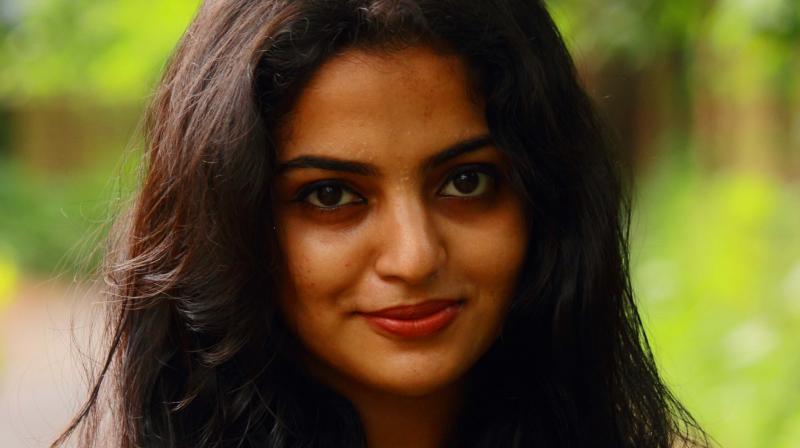
Nikhila is back to Mollywood


The last time Malayalis saw Nikhila Vimal was as Kabani in the 2015 film Love 24x7. Her growth from the nervous girl to the confident TV reporter in the movie somewhat resembles her real life progress. After making her debut as a heroine with Dileep, Nikhila signed up for a Tamil movie opposite actor-director M. Sasikumar, followed by two more from Tamil and two from Telugu, including the remake of Oru Vadakkan Selfie. Now, after a short while, she is back to Malayalam, playing a classical dancer in Aravindante Athithikal. 

The natural first query is why the break. And she replies, “The break in Malayalam was not something I planned. In fact, movies too came to me out of the blue. I never had dreamt of becoming an actress.” When Kabani got noticed, the first offer came from Tamil and she grabbed Vetrivel. The team took her on board their next project Kidaari, again with Sasikumar. Then happened her first Telugu movie Meda Meeda Abbayi, the Vadakkan Selfie remake, with Allari Naresh. “I have been getting offers from Malayalam in between, but I wasn’t sure I could do justice to mature characters. I am childish and always choose roles in my comfort zone. I can’t do a heavy character that I am not confident of pulling off."

It was the same thought that made her reject the lead role in Ramante Edenthottam. Nikhila surprises saying she has no regrets. “I am glad that I didn’t take it up. Anu Sithara played Malini to such perfection. I wouldn’t have been able to carry it off with grace,” she says. So what made her choose Aravindante Athithikal? “The character Varada is a dancer and I could relate well to her,” she says. Dance, to Nikhila, is a legacy. Her mother Kalamandalam Vimala Devi is a dance teacher who ensured that her daughter got trained in bharatanatyam, kuchipudi and Keralanatanam. “I have learned dance forms but don’t call me a dancer. I don’t perform regularly and I don’t practise like a dancer,” she says. 

In Aravindante Athithikal, directed by M. Mohanan, Varada has come for her arangettam in Mookambika Temple and stays in the lodge run by Vineeth Sreenivasan’s character. “Vijayaraghavan plays my dad and Prem Kumar plays my uncle. It’s an ensemble cast with actors like Urvashi, Shanti Krishna, KPAC Lalitha, Sreenivasan, Sreejaya and Aju Varghese. The shooting was so much fun. It was a great experience. Whenever I was confused about how to express and what to say, Vineeth helped me with suggestions and tips. Such a nice person he is, treating everyone with respect,” she recalls. 

The shooting will wind up in a week and the movie might hit the screens in March or April. Before that she has two film releases coming up — Tamil movie Ranga with Sibiraj and Telugu film Gayathri starring Mohan Babu. Life has never been a planned route for Nikhila. A graduate in Botany, she left studies midway when films came. Now, she has joined the University of Madras for post graduation in Women Studies. “I hope to continue my studies. I have been missing it so much,” she concludes.

 Published in Deccan Chronicle on January 26, 2018


Friday, January 19, 2018

Fashion sans boundaries

Costume designer Abeel Robin is truly the jack of all trades.


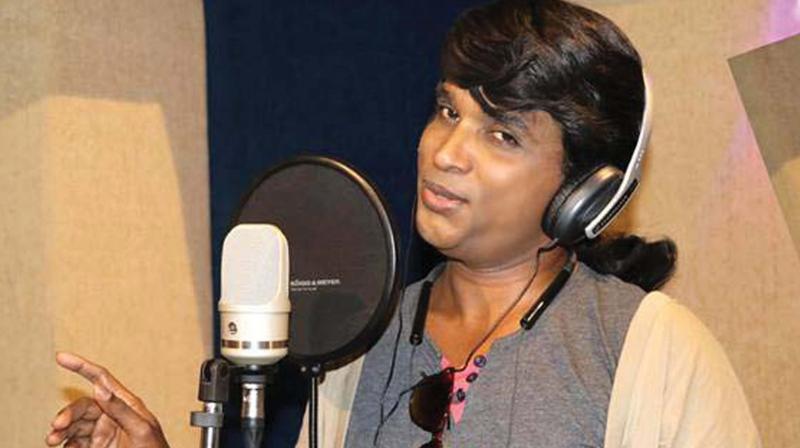
The front door of the apartment was ajar. Chupke Chupke Raat Din…. was flowing out in Ghulam Ali’s magical voice. “I’m here, please come in,” Abeel Robin calls out. A mannequin sporting a green and red outfit stands welcoming in the living room. The windows and shelves are filled with bangles, reminding of a shop in the Hyderabad’s Choodi Bazaar. A smiling Abeel greets you with a handshake. Settling down for a conversation, he switches off the song and says, “Ghulam Ali is my Lord. He always sings in the background as I engage in my activities.” Abeel’s activities can’t be described in one breath. A costume designer, makeup artist, choreographer, graphic designer, photographer, ghazal singer, music composer and an actor, this transgender artist is an all-rounder.

“It’s all God’s grace. That I am blessed with so many talents and the power of both man and woman are all God’s will. It’s not arrogance, but I am proud of what I am,” he says, adding that he wouldn’t want to be known as a member of any community. “I am happy to be addressed as a human being. Being a person who wants to live differently, I am happy that I am different from everyone else. In Kerala, words like queer and transgender have been recognised only in the recent times. Acceptance is something we too need to strive hard for.

People will laugh at us at first, but as they get used to our presence everywhere, they will have no choice but accept us.” A popular name in fashion industry, Abeel calls himself a ‘complete fashion designer’. “There are not many who handle all aspects of fashion designing without even an assistant. I offer a complete package – costumes, makeup, hair, accessories, styling and photography,” he says. Abeel also has to his credit two editions of the fashion show Monsoon Night, which he organised single-handedly. “The costumes included beach wear and nightwear. My collections were noticed, but it turned out to be controversial with the media reporting that there was ‘nude dance’ happening. It hurt me that I wasn’t getting enough support. But now, with Mayaanadhi, it has all changed. Appreciations are pouring in and I am glad to be part of such a great movie. It’s not every day you see people beaming at you at a shopping mall. Thanks to director Aashiq Abu and production controller Benny Kattappana for giving me the chance,” he smiles.

Childhood has been tough for the small town boy from Kannamaly who was ridiculed for his girlish mannerisms. As he grew up, Abeel learnt to ignore prying eyes and jibes. When he confided to his motherwhat he felt, she understood her son and accepted his identity. “Since then, Amma was my only friend and confidante. I never left her side till the day she died. When she was bedridden, it was I who took care of her. She died in my arms after blessing me,” he recalls. His studio in Thoppumpady and his current YouTube channel are both named Monica Fashion Studio, after her. As a tribute to his dad Abel, he added his name to his, tweaking it a bit. 

Not many were aware that Abeel was a very promising singer during his younger days till he uploaded on social media a video of a Christian devotional song he penned, composed and lent voice to. Laughing, he says, “I was trained in Carnatic music for seven years under Yesudas’ guru Ramankutty Bhagavathar, and later in Hindustani music for two years. Back then, I used to sing in choirs and youth festivals and win prizes. Funnily, due to my female voice, I had to sing with the girls in the choral group. Though I loved their company, I hated my voice and tried all means to change it. I gargled with hot water every morning for months and it started showing results. I’m sure that if I hadn’t tried that hard, it would have been a female voice.”

The new voice helped his music career. A ghazal singer at many Mumbai-based troupes, Abeel took part in concerts, worked on devotional songs, music albums, sang track for big names like Sujatha, Minmini, Biju Narayanan, Markose and Kester. He was working as a graphic designer when his pastime activity — designing costumes on paper — was noticed by his colleagues, who encouraged him to pursue it seriously. Abeel was happy to give it a try and soon joined as an assistant to Sanjana Jon. It has been seven years and now, Abeel is a known name in film and fashion fraternity. 

He also shares his talents through makeup seminars, workshops and YouTube tutorials. “At seminars and workshops, people initially laugh seeing me. But once I start demonstrating, I can see their expressions changing from contempt to admiration. Getting a first-hand experience of acceptance is truly amazing,” he says. Abeel has a dream — to be known globally as a complete fashion designer. “I am sure I will, because my parents’ blessings are with me.” Before signing off, he finishes the interrupted ‘Chupke Chupke’, this time, in his heavenly voice.


 Published in Deccan Chronicle on January 19, 2018

Monday, January 15, 2018

Anson's fanboy moment

The actor recalls his joy when Mammootty invited him to the dais and talks about his new projects.


It’s a special year for Anson Paul. His Christmas release Aadu 2, in which he plays the villainous Anali Sabu, is running to packed houses. Kala Viplavam Pranayam that will see him as a guy-next-door is gearing up for release and his Tamil rom-com with Oviya is nearing completion. But the best of all is Abrahaminte Santhathikal, in which he acts as megastar Mammootty’s brother. 
Letting out an excited laugh, Anson says, “It was on New Year’s day that I met Mammookka for the first time. During the audio launch, when he called me on to the dais, it was my fanboy moment. The goosebumps lasted the whole day! For a person who grew up watching his movies and admiring his charisma, it was the best gift in the universe.” Only later did he know that it was Mammootty who suggested him for the role of his brother. The movie has Maria John playing Anson’s love interest. 
Going by his makeover, Anson is no longer the sophisticated, charming guy we are used to. Sporting long hair and rugged beard, he was unrecognisable in Aadu 2. In Kala… too, he maintains the hair and beard. “But both characters are poles apart. Anali Sabu is a ruthless ruffian whereas in Kala…, I play a village simpleton for the first time. As the name suggests, there is art, politics and romance. It’s a light-hearted movie about a middle class guy,” he says. The movie has him romancing Gayathri Suresh. 
When actor-producer Vijay Babu offered him Anali Sabu, Anson didn’t have to think twice. “I was told that I was an antagonist and had to dance, but an Aadu fan myself, I immediately accepted it. Like all the characters who have a background, Sabu too has one. The name Anali, came from his habit of spitting, like the snake. He doesn’t have many dialogues. So, I had to work on my look and body language. My inspiration came from Attakathi Dinesh’s Kabali act, how he carried off the role without much dialogues.” 
As he puts it, “It’s kind of fun breaking the image. If you can’t prove that you’d pull off any type of character, what’s the point in being an actor?” His penchant for perfection is evident from how he insisted on dubbing by sporting the costumes of Anali Sabu and chewing paan. During the making of Solo, a jetlagged Anson hurriedly finished the dubbing in Malayalam and Tamil. But later, when he introspected and realised that he wasn’t ‘in character’, he requested a re-dub and went for it. “What’s the use if you can’t do justice to your character in all realms,” he asks. 
Speaking from the sets of Abrahaminte Santhathikal, Anson says his body is all tired from shooting the fight scene. “But my spirit is not. I am always on the sets as a student, assisting the director and learning from legends. I haven’t committed to any other movie now. Whatever I do, I want to put my heart, soul and body into it.” He won’t reveal much about his look or role. Hope there are more surprises in store.

 Published in Deccan Chronicle on January 15, 2018

Friday, January 5, 2018

Feminichis stand up as ratings go down

As Women in Cinema Collective continues to be targeted online, various stakeholders share their opinions about the downrating campaign. 


The online tirade against the Women in Cinema Collective and Parvathy has taken an uglier turn in the past few days with a hatred campaign growing strong every minute. On New Year, the WCC had shared on its Facebook page an article on misogyny in Malayalam cinema, an act that saw immediate repercussions. Social media users were quick to react as they hurled another array of verbal abuses at the Collective members, whom they address as feminichis, and giving a 1-star rating to the page for ‘insulting megastar Mammootty’. 

Similarly, when the first song of year, ‘Pathungi Pathungi’ from My Story, was released on YouTube, there came thousands of dislikes for this song apparently for the reason Parvathy was in it. Though the article was pulled down from the WCC page, the down-rating attack still continues with 35,000-plus reviews and over 26,000 1-star ratings. 


My Story director Roshni Dinaker is sad about the dislike and vitriol campaign. “It is very disheartening. The only thing people are talking about is a statement made by a person. Nobody talks about how differently we have done it and how much effort the actors and technicians have put in. I’m very sad about Shaan Rahman. After the much-lauded ‘Jimikki Kammal’, his song is being degraded. We are being attacked for something that is in no way connected to our movie. I can’t even open my Facebook account. Even my inbox is full of abuses,” she says. 

It seems to be an organised attack and not random fans responding to the hurtful article and the actor’s ‘arrogance’. Jiyas Jamal, a lawyer who runs the startup Talk Loud, which engages in social media campaigns, explains how such campaigns work.

“People believe that what is shared the most is the truth. When a client approaches us to trigger a campaign, we first get to know what the real issue is, to plan how to counter it. We have a tie-up with around 200 active pages all over Kerala. 

“We alert them and they share the content our team creates along with related articles and write ups published on online portals. The rest will be shared and liked by the people and other pages,” he says. Talk Loud, with offices in Kochi and Kozhikode, has a 10-member team in Kochi and several part-time content generators working for them all over Kerala. Jiyas admits that it was they who offered legal support to Printo, who was arrested for the cyber attack on Parvathy, and bailed him out. “He can’t be called a client of our firm because we did it for free. He couldn’t even afford legal services and we helped him gain support on social media. Yes, what he posted came under defamation, but it wasn’t fair to slap all those charges on him. There were many fans who unleashed a very degrading attack on her,” he says. 

Though mass downrating campaign has been seen when the Facebook page of Republic TV and the apps of Snapchat and ScoopWhoop faced the wrath of social media users over many controversies, for the movie industry, it is a new phenomenon. Social media commentator Hiran Venugopalan opines, “It’s a mode of protest and we have seen many of these, but not on an organisational level like this. There’s no other film organisation that is active on social media like WCC, so it can’t be compared with any other entity. 

However, this rating never affects their activities, though there are people who consider it as an impact.” On the ‘immature’ dislike campaign too, he feels it can’t do anything to a movie or an actor. “They are trying to show their strength as fans. But it will have no effect on a movie. People will watch the movie if it is good despite any negative campaign. 

After all, social media users are a very tiny part of the audience crowd. A film like Mayaanadhi could survive such campaigns by running to packed houses even now. If My Story wins over the audience, people will turn up to watch it despite all these slur campaigns,” feels Hiran. Kasaba director Nithin Renji Panicker too echoed similar views. Though the whole controversy began from the character played by Mammootty in his debut movie, Nithin has no complaints. “I consider her comment as the response of an audience who has all the right to love or hate a movie. It will never affect me or my future movies. My character is a person who talks that way; in fact, all the characters in the movie were rough. And I don’t think I can work on my future projects by keeping certain parameters in mind. Regarding the campaigns, I don’t think it would affect a movie’s prospects. Even when Ramaleela released last year, there was a smear campaign, but it went on to be one of the highest-grossing films of last year. If a film is good, people would watch it,” he says. 

Despite the down-rating movement being countered by a 5-star rating campaign with people like litterateur K.R. Meera offering solidarity to the Collective, the WCC explained what went wrong and made it clear that the attacks had little effect on their activities. Their Facebook post read, “We are well-aware that an FB page rating doesn’t decide the credibility of an organisation. We deleted the online article we shared (written by Anand Kochukudy in DailyO) that had named many major male actors in the industry as there was a wide misunderstanding that it was ours. We deleted it as those opinions were not ours. It was not our intention to hurt anyone’s feelings. Such attacks won’t let us backtrack from our principles or activities (sic).” 

Published in Deccan Chronicle on January 5, 2018

Tuesday, January 2, 2018

The story of a storyteller


The Mayaanadhi frenzy is everywhere. Everyone around is seen discussing the movie, its real-life dialogues, everyday characters, soul-touching songs and the scenes that give them déja vu, especially the balcony scene of the girl gang with one of them singing Bawra Mann... When the movie ends, the song lingers, so does the face of the girl who sang it. Darshana Rajendran says she has always been the ‘Bawra’ girl, not just now. 

“It’s my soul song that stuck with me since college days. It was a song I used to sing every time I was asked to,” laughs the Chennai-based theatre activist who made famous the song 'Bawra’, penned and rendered by Swanand Kirkire in the 2003 movie Hazaaron Khwaishein Aisi, yet again, when Leona Lishoy (her co-star in Mayaanadhi) made everyone listen to it and finally script writer Shyam Pushkaran including it in the scene, which turned out to be a masterstroke. 

The girl gang — Darshana, Aishwarya Lekshmi and Leona — felt very relatable and genuine. “That’s because it was real. Since day 1, the three of us were very close. It was never like a film location. The director, writers and actors sat together to discuss what needed to be conveyed. We weren’t given any script. Most of the dialogues were impromptu; it was all rehearsal and improvisations. 

The balcony scene was emotional and intense for us as it was our last day of shooting,” she says. She also admits that she had no idea about their part in the movie. “We just did what we were told. Only when we watched it on the big screen did Leona or Harish Uthaman or I know what all parts we were playing,” she recalls. 

A lot of praise poured in for the movie, the most treasured ones for Darshana are the words of music composer Shahabaz Aman, who put up a long post on his social media about the ‘Bawra’ girl. Without concealing the excitement, she says, “It was so touching and left me teary-eyed. I am a huge fan of his music and work. I’m so happy for his kind words.” 

Darshana had a huge fan following even before movies happened. It’s just that all her admirers are children under six years of age. Holding theatre and storytelling workshops for kids, she has been working with Karadi Tales for some time now. The Kochi apartment where her parents live is always flooded with children who want to listen to her stories. “I love working with children. They have a lot of questions and being in the company of kids is a happy space.” 

Long before theatre, she used to work in the microfinance sector in Chennai. When a friend introduced her to theatre, she was smitten and tried multi-tasking between an 8-6 job and 7-12 rehearsals. “Finally, I called it quits two years ago and fully dedicated myself to theatre,” she adds. In between happened small roles in a few movies, then came Vijay Sethupathi-starrer Kavan, the web series Ctrl Alt Delete and Mayaanadhi. 

Coming up are Irumbu Thirai in which she plays Vishal’s sister and an Anjali Menon movie in which she acts with her mother Neeraja. Darshana wouldn’t call herself a professional in any stream. She says she tried to learn a bit of everything — dance, Carnatic music, Western music, acting, etc. “It’s my family that always encourages and inspires me to give everything a try.” 

Family means her uncle too — late documentary filmmaker C. Sarath Chandran whom she fondly calls ‘Saramman’. “It’s all lovely memories. Saramman always made sure that those he loved knew each other. Wherever I have been, in Chennai or Riyadh or Delhi, he used to send banana chips via his friends and made us travel all the way to collect it. But it was never about the chips; he just wanted people to meet. Now, every day, I come across people who love him. Now I am going through all those books and music CDs he gifted me, all those he has left me with. Only now I am getting to know Saramman.” 

Looking back, Darshana feels that it was a great journey across the ‘mystic river’. “It was a wonderful experience to have at least watched so many geniuses working under one roof.”

 Published in Deccan Chronicle on January 2, 2018

Monday, January 1, 2018

The actor with an opinion


Eleven years and 19 movies — that’s how long we have all known Parvathy Thiruvoth Kottuvata. But that’s not all about her. An actor who speaks her mind, she is unlike all the onscreen divas we are used to. She is carefree, her words are blunt and she doesn’t want to please anybody and be their girl-next-door; all she cares about is honesty and she proudly announces to the world, “Yes, I am a feminichi.” 

Known to have her priorities and visions clear, Parvathy was one among the female actors to rally behind their colleague, who survived an attack in February. Nearly two months later, she, in a candid interview, let all hell break loose by opening up about casting couch in the Malayalam film industry. In May, she joined the women in the film industry to form the Women in Cinema Collective and launched the #withher campaign offering support to the attacked actor, hailing her as a survivor. 

November saw Parvathy making her Bollywood debut with Irrfan Khan-starrer Qarib Qarib Singlle, followed by her walking away with the Silver Peacock for Best Actress at the prestigious International Film Festival of India, becoming the first actor from M’wood to win the honour. It was in the final leg of 2017 that her comment against the glorified misogyny in movies and her reference to Mammootty-starrer Kasaba, set off a war in cyberspace with fans of the superstar, including those from the film fraternity, unleashing their wrath on the ‘arrogant’ Parvathy. Ironically, all the comments against her were loaded with misogyny and patriarchy. 

When a film director compared her to a monkey, who alleged that its trainer was exploiting it, she responded with a picture of an embroidered cloth that read OMKV (that can be roughly translated into ‘Get lost, loser!’). 

As the year ends, the investigation of her complaint to Cyber Cell has taken a new turn with two abusers being arrested for sexual abuse and rape threat. Call 2017 an eventful year, Parvathy would say it was ‘positive and liberating’. “People keep on saying ‘Ayyo, what a year!’, but for me, it’s ‘Yay, what a year!’,” she says. 

“A lot of unfortunate incidents happened, which led to the unification of people, not just women. There was togetherness even in chaos. While it is deafening silence elsewhere, we, in the Malayalam film industry, decided to at least do some- thing.” 

Was speaking up about casting couch, an issue which people knew, but never dared to mention, intentional? “Not at all. The interview was like a friend-to-friend conversation and me talking about it happened naturally. Now when I think about it, I feel it was coming. A lot had happened and there was no point in living in fear. You do something or not, you could be attacked. To be honest, it was more like a closure for me.” 

The question she faced a lot after the revelation was why she didn’t talk till then and what was she doing when many other things happened. “My answer to them is that, I too was stuck in this toxic social construct, which I am questioning now. I’m freeing myself now and just because it is making a lot of people uncomfortable, they cannot hold me back to my past.” 

Parvathy believes she is opening up not for her, but for the next generation — “I would rather be a change than be a witness to it — we have always had someone who had to be the change. We wouldn’t have had the laws protecting us if there wasn’t a Mathura or a Bhanwari Devi.” 

Her family, her lawyer-parents P. Vinodkumar and T.K. Ushakumari, and brother Karunakaran, like any family, are understandably worried, but they are supportive of her acts. “There’s openness in our relationships; they have never questioned me in terms of gender, studies, work or commitment. They have fully accepted me as I evolved. All they want is that I am happy, safe and sure about what I do. They also want me to realise the importance of social responsibility as a citizen more than an actor, and that’s what I am — a law-abiding citizen who shouldn’t be scared of living in my country,” she says. 

On the career front, Parvathy is what she calls a free-flowing entity, who goes with her intuitions. “It’s always the gut feeling. I like it when things come to me; I choose a movie if I know I need to be a part of it. That’s why I take a break for even say 10 months or a year.” 

She is intuitive in choosing the scripts too. “I know if something unhealthy is standing out. Even in a film like City of God, where my story line has a lot of violence in it, the most regressive and patriarchal scene is underlined as the most regressive and patriarchal scene. There’s no glorifying space in it. And if there is one, I openly discuss it with the director or the writer. Removing it will always be up to them but I’ll give it my best shot to have it removed. I won’t challenge their talent or seniority, but tell them that as an audience, I feel that this film can do well without this particular dialogue.” 

Her grave tone puts it across that she has done it. “It’s not in a rude manner. It might have been 11 years, but I consider myself a newcomer. When you convey your views to the filmmakers with all due respect, though rattled, many people see the point. And those who haven’t been able to, I have said no to such projects,” she reveals. 

It doesn’t mean that films have to be moral or preachy. Parvathy neither does believe that films don’t influence human minds. “A film can be an entertainer/ thriller without plastic humour or sexist jokes. A film like Charlie is a thrilling story about two free-flowing souls without a moral point of view. Take Off made a political statement without being preachy; that’s the beauty of filmmaking. If the audience felt inspired by Charlie and wanted to be like him, negativity in films can also influence them,” she adds. 

For Parvathy, Bollywood innings hasn’t made any difference. “The Qarib team was very energetic with an intimate way of working. The marketing strategy there is very different and interesting. If you are talking about industry, I have never ever restricted myself to Tamil, Malayalam, Hindi or Kannada. Whichever the language is, from Swahili to Marathi or Bhojpuri to Bengali, I would be happy to do it,” she says. 

As the year ends, she takes home several memorabilia, including the word feminichi, coined as a derogatory reference for outspoken women on social media. “#feminichispeaking — lovely, isn’t it? I really like it. It’s got a local flavour and is quite endearing; I might get inked with the word,” she laughs. Looking back, it has been a proud journey. 

She sums up, “The most beautiful thing about 2017 is that there’s no more going back. I can never go back to a workspace where there’s no dignity. But I am not going anywhere else. This is my industry as is anyone else’s. I will demand the respect that all of us deserve. Be it any gender. No more staying numb.”

 Published in Deccan Chronicle on January 1, 2018

Wednesday, December 27, 2017

A little bit of everything: Shruthi Vijayan


At the emergency medical department of a hospital in Thiruvananthapuram, patients often wonder why youngsters gaze at the doctor in awe, talk to her excitedly and get their selfies clicked. The pretty medical officer, Shruthi Vijayan, admits that the excitement of ‘those cute moments’ of being recognised as a VJ, is contagious. 

“It’s very gratifying to hear young girls coming to me saying that I inspire them,” says the girl, who, apart from hosting three TV shows, runs a bridal boutique, works as a bridal makeup artist and a model, occasionally performs Bharatanatyam and Kuchipudi and is an artist with a few published book covers to her credit. 

Call her a multi-tasker, Shruthi would say it comes from the genes. “Women are born multi-taskers. We just have to accept it. Everyone asks me how I do it all. It’s not that I am working 24x7. I have proper plans for every week. I am doctor for only 48 hours a week. TV anchoring comes only twice or three times a month. Modelling, bridal makeup and dancing are also not regular. The art part is what I dedicate very less time to,” she says. 

However, she gives the whole credit to her biggest support system – her family. Her dad, retired PWD official Vijayan, mother, businesswoman Prema, her retired teacher grandmother Agnes and her sister Smriti, an MBBS student, are all very supportive of this workaholic woman. 

A doctor on modeling assignments has a lot of negative stereotypical notions attached to it and Shruthi is glad that she could break it. “I have never known restrictions as a girl. My family raised me as a woman who is aware of her strength. In fact, it was my daddy who initiated me to feminism; he is the one who pushed me to do things confidently. Living in a house full of financially independent women too helped me. Even my 80-year-old grandmother has a steady source of income at this age. Now that I have 5-6 independent sources of income, I have financial freedom and I am comfortable in my space,” she says. 

Style quotient is something that came to her life very late. Till joining a Mangaluru college for MBBS, Shruthi was what she calls a naadan kutti and a nerd. “Mangaluru changed me and I became confident. I want other women to experience that confidence, which is why I ventured into bridal makeup and hold monthly grooming workshops for women, on how to do their hair, makeup and improve their dressing sense,” she says. 

An avid reader, Shruthi is inspired by anything written by women ‘who have broken the glass ceiling’. Interestingly, she confesses to not dreaming of herself as an actor. “I am not a movie buff at all and I’m notorious for not recognising celebrities,” she laughs, recalling how she once failed to recognise director Shaji Kailas. Shruthi says, “I can do anything but acting. My dream is to get into the influential category by the time I am 40. I don’t want to just exist and die. I want to be remembered as someone who, like everyone, had 24 hours a day, but did things 10 times better.”

 Published in Deccan Chronicle on December 27, 2017

Sunday, December 10, 2017

Rohingyans an international issue: Edmund Yeo


Edmund Yeo, The Malaysian director, whose film Aqerat is awaiting its third screening on Tuesday, is glad to see the enthusiasm in the air. “During the opening screening of The Insult, I too was cheering with the crowd. It is great to see such a huge crowd of film-lovers,” he says. 

Aqerat, which means ‘we are the dead’, is his second film. It speaks about Rohingyan crisis. Yeo’s films have been about resistance and struggles. At this year’s Tokyo Festival where Aqerat was screened, Yeo became the first Malaysian film maker to have won the best director award at the prestigious venue. “That was an emotional moment. I broke down on the stage,” the 33-year-old director recalls with a laugh. 

Rohingyan crisis, Yeo says, is not a regional issue happening in Malaysia. “It is an international issue. They are innocent people – teenagers, kids and women; there is no reason for them to be killed due to hatred in the countries where they try to find lives.” Aqerat had just 20 people on board as actors and technicians, some of them who doubled up as extras. The whole film was shot over 12 days. The lead character, Hui Ling, excellently portrayed by Daphne Low is especially dear to Yeo. 

“Hui Ling is a bit of me and a bit of her. Biographical elements of my displacement woes as a Chinese person in Australia and Tokyo, where I had gone for studies, are there,” Yeo adds. “There is no platform for independent film makers,” he said. 

“Last year, the independent film makers organised Malaysia’s first film festival. The reception wasn’t that great, but we hope participation will increase in the future and that we can host a huge international film festival like the IFFK.”

 Published in Deccan Chronicle on December 11, 2017

Saturday, December 9, 2017

Left out of the picture


The opening event of the 22nd International Film Festival of Kerala on Friday, though devoid of ceremonial programmes, was nonetheless memorable with a candlelight tribute to Ockhi victims followed by a power-packed speech by Prakash Raj. The stage was graced by the likes of legendary actor Madhabi Mukherjee, director Aparna Sen, Oscar-winning sound designer Resul Pookutty and state award-winning actress Rajisha Vijayan. The absence of one person was very conspicuous — of Surabhi Lakshmi, who, through her performance in Minnaminungu, brought home the National Award for Best Actress this time, after 14 long years. 

Surabhi was nowhere in Thiruvananthapuram; she was in Narikkuni, her hometown, just back from the shoot of Selin’s Tovino Thomas-starrer Theevandi. Ask her why she wasn’t seen at the festival and the actress says, “I didn’t get a delegate pass; I tried applying, but couldn’t get one. I had asked Kamal sir (Chalachitra Academy chairman) and he told me that he would ask someone to call me, but nobody did.” 

However, the delegate pass is the least of her concerns and she admits that she didn’t follow up. That she wasn’t invited is a lesser pain. In a sombre voice, she says, “I don't know about the procedures or if Meera Jasmine was invited to a stage like IFFK when she got the National Award. But this was a national recognition an actress won after nearly one-and-a-half decades. My movie didn’t even get a platform; that is more painful.” 

A parallel screening of Minnaminungu is being planned in Thiruvananthapuram at 2.30 pm on Tuesday at Lenin Balavadi, next to the IFFK main venue Tagore Theatre. However, Surabhi says she doesn’t want to sound arrogant or greedy. “It’s not that I am trying prove that I am above all. Many had told me that we would watch the film at IFFK. Though we expected that our movie would get a screening space at IFFK, that didn’t happen. Even during the release, it was hurriedly pushed out of the theatres. With no favourable scene for distribution or screening, small films like ours are turned down everywhere. There was a last-minute inclusion of a category called ‘Films of Identity and Space’ in which even an Indian film made in 2013 was included. Ours too, fell under the same category; they could have easily included Minnaminungu,” she explains. 

When asked about the allegations, director Kamal says that no one was invited to the festival as there was no inaugural ceremony. “If she claims she hadn’t got the delegate pass, I’m sorry, no one can personally hand it over to her at her home. The passes are ready here and she could collect it any time if she comes here. All these are just allegations. There is this festival NFFK, National Film Festival of Kerala, organised by the Academy every year where National Award winners are honoured. Anyone who was on the dais, including yesteryear actress Sheela and Rajisha Vijayan, were not invited delegates. They were there because they had come to the festival. All the printed invites are lying in the office. With no official ceremony, how could we have invited anyone?” he asks. 

He adds that National Award winners Salim Kumar or Suraj Venjaramood, weren’t invited in the previous years. Regarding Minnaminungu being denied a screening space, Kamal says, according to the rules, a movie which doesn’t get selected in the competition category won’t be screened under any other category. “If I choose Minnaminungu for screening, bypassing the rules, someone can sue us. Would that be fine?” he asks. 

Surabhi says she had expected this. “I know they will have hundreds of reasons to not screen my movie at the IFFK; but there is only reason for them to screen Minnaminungu — this National Award.” 

The organisation of women members of the film fraternity, Women in Cinema Collective (WCC), has opened a stall at one of the festival venues with the tagline ‘Equal Space, Equal Opportunity’. When asked about the denial of opportunity to Surabhi and her movie at the fest, Rima Kallingal, a member of the outfit, expressed sadness over the turn of events. “I am really sad that Surabhi isn’t here. She deserved to be on the stage with the dignitaries; it was such a proud moment for all of us when she won the National Award. She must be the one to be the most celebrated person here at this festival. I am really disappointed that she is not here among us at this prestigious event,” she says. 

This year, the Chalachitra Academy stresses on 89 years of Malayalam cinema, with the IFFK signature film itself ‘welcoming 90 years’. With allegations like these cropping up, it is also a time for introspection, to know who all are left out in the celebrations.

 Published in Deccan Chronicle on December 10, 2017

Thursday, December 7, 2017

Soccer hero from Nigeria


From the fifth floor of the apartment, the view of Kochi is splendid. “It’s a beautiful city,” says Samuel Abiola Robinson. The name might not ring a bell for Malayalis, but the film he is acting in would definitely spread a smile on their lips. The upcoming movie Sudani from Nigeria directed by debutant Zakariya will see Samuel in the title role along with Soubin Shahir. For movie buffs here, Samuel is a newbie, but back in his homeland Nigeria, he is a famous actor who has starred in several movies and TV series. 

“This is my 14th movie, but my first foreign movie,” he reveals. His 2016 film Green White Green, representing the iconic colours of Nigerian national flag, was such a huge hit that it went places, including the prestigious Toronto International Film Festival. His ticket to fame was the web series Desperate Housewives of Africa. To play the footballer who is brought from Nigeria to Malappuram for the Sevens Tournament in his movie, Zakariya had tracked Samuel down with the help of a casting agency in Africa. 

However, busting the general perception that soccer comes natural to an African national, Samuel announced that he didn’t know how to play football. Laughing, he says, “I belong to the 0.001 per cent population of my country that is not interested in football.” But Kozhikode, where he stayed, and Malappuram, where the shoot happened, changed his perceptions about the game. “People there are in love with soccer. I underwent a week-long intense training and realised that once you get to know the game, you start enjoying it. It is like kanji; you’d be apprehensive when you are offered it for the first time, but once you know the taste, you can’t hate kanji,” he smiles. 

Shooting with Soubin, who plays the team manager Majeed, has been fun and a great learning experience. “Football is just the backdrop of the movie. It’s a humorous drama about the bond between Majeed and ‘Sudu’, an abbreviation of ‘Sudani’. With Soubin, I had great dynamics and I’m glad to have worked with him,” he says. The 35-day-long shoot was fun; it’s just Malayalam that was tricky. “It’s a very complicated language. The only Malayalam words I managed to learn are mathi (enough) and vellam (water),” he quips.


The way he speaks, the knowledge he shares, leave you baffled at the thought that Samuel is just 19, a teen who dropped out of school at 15 to pursue acting, but knows about everything. He admits to have an inquisitive mind. “I am more of a bookworm and love to learn new things every day,” he says. Before coming to Kerala, he did his bit of research and learned about Mollywood, the major actors and technicians. “I had the privilege of meeting filmmakers Anwar Rasheed and Amal Neerad. Though I tried watching a Malayalam movie starring Mammootty, I didn’t understand a word of it,” he adds. However, he hadn’t expected such high film literacy among Keralites. “I’m surprised that Malayalam is a very small industry in Indian cinema. Compared to Nollywood (Nigerian film industry), which has hardly 200 cinemas, Mollywood makes around 1,600 films every year and has theatres everywhere. In Nigeria, TV soaps are more popular than movies.” For Samuel, acting is something he chooses to stay in. “Many people ask me to pursue academics as Plan B just in case things don’t work in movies. Education is important, but I have no Plan B. Acting is always my Plan A,” he says. The shooting in Kerala has wrapped up; only a few portions to be shot in Nigeria are remaining. The dubbing is almost over and he will be going home on Sunday. “Kerala is a wonderful place; the people are very kind and friendly. It’s been a very pleasant experience and I would like to stay, but I have commitments back home. I would be coming back for the promotions in a few months,” he concludes.

 Published in Deccan Chronicle on December 8, 2017

Saturday, November 18, 2017

Jimbroottan returns


Five years after spreading optimism and inspiring youngsters, Joy Thakkolkaran is back to cinemas. So is his employer Jimbroottan, another character from the much-acclaimed Punyalan Agarbathis. Reprisal of the comic role in the just-released sequel – Punyalan Private Limited – is a matter of joy for Gokulan. 

“At the beginning of Punyalan, I was told that my role was that of a nameless labourer in Joy’s factory. Jimbroottan was the name suggested by Jayasurya and the name got stuck,” laughs the Kochiite, who is known by the same name. 

On screen, Gokulan is someone who cracks jokes without meaning to do so, but off screen, he is different. He confesses that he was an introvert during school days. “I had stammer which made me a loner,” he says. But there is no trace left now. Gokulan owes it all to theatre. What started as skits during school days and NSS camps caught up with him as he joined college. “Campus theatre has made a confident youngster out of the old me,” he smiles. 

Being the youngest son in the family – he has three brothers and a younger sister – he was free to choose his path and Gokulan opted for theatre, on just one condition – ‘Do not drop studies’. “I did a journalism diploma, two post-graduation courses and an MPhil, only to act in plays,” he says. 

He was part of campus theatre, performed in college youth festivals and got selected to several state and national-level fests. He also performed as part of small theatre groups in the city. Don’t mistake him as an irresponsible youth. At 21, he was working for Bill Gates! Explaining, he says, “We used to perform street plays on AIDS awareness as part of an NGO funded by the Bill Gates Foundation. Back then, earning Rs. 8,000 a month was a big thing.” 

Movies were nowhere in his plans, but the inevitable twist happened in the form of Basheer’s Premalekhanam! He was playing Kesavan Nair in a play based on the novel. The practice was held at the open theatre in CUSAT. Director Kiran spotted him and impressed, offered him a small role in his movie Kudumbashree Travels. That was the beginning. He starred in a friend’s short film Mangandi, which won various awards. 

Then came the role that changed his life – of the coconut plucker, the representative of God, in Lijo Jose Pellissery’s Amen. “There’s an interesting back story. I was originally cast as a barber, but when I reached the location, the role had gone to another person and I was given the coconut plucker’s role. I was hurt and thought of leaving, firstly because of this and secondly because, I had no idea about climbing a coconut tree. It was Sudhi Koppa who talked me into acting. I somehow managed to climb the tree and the shot was okayed in the first take. There were scratches all over my chest, but it was worth it. The movie gave me an identity and the barber’s character didn’t make it to the final cut,” he recalls. 

More coconut plucker roles followed – in an advertisement and another movie, but he has no qualms. “It has all done me good,” he says. His association with Ranjith Shankar began with Molly Aunty Rocks and then, Jimbroottan happened. Jayasurya took a liking to Gokulan and soon he bagged roles in his movies Lal Bahadur Sasthri and Mathai Kuzhappakkaran Alla, followed by Ranjith’s Su Su Sudhi Vatmeekam and Ramante Edenthottam. 

Movies haven’t let theatre take a backseat. “I have a deep emotional connect with theatre. I can’t let go of it just like that.” The 33-year-old will next play the father of a young boy in the art house movie Lali Bela. Also coming up are Kuthirappavan and Vinayan’s Chalakkudikaaran Changathi. “I am a man of simple dreams. I don’t want to do big roles, but the ones that give me happiness. Anything I do, I want happiness in return and nothing else matters,” he concludes.

 Published in Deccan Chronicle on November 19, 2017

Saturday, September 23, 2017

A legacy in frames

Photographer extraordinaire Raghu Rai has been capturing exceptional images for decades now.


At a corner of the restaurant sat a man in his 70s, eating his dessert slowly, relishing every little bit of it. His deep, brown eyes had an oceanic calmness as he spoke. These are the eyes that first saw, before anyone else in the world, the hundreds of images that went on to be icons etched to our memories. This is Raghu Rai, the man behind the camera that’s facing history. 

“Photography is history, not art,” he begins. “Art by itself is useless and meaningless. The purpose of photography is not to become art; it is bigger than art. History, can be rewritten, but photographs can’t be. It’s a responsibility.” 

Even while talking and savouring the caramel sprinkles, he clicked photos of the city through the glass window near him. Below was the bustling city, people and vehicles hurriedly moving to their destinations trying to flee from the hot sun in the noon, but his camera was facing elsewhere — at the Metro workers toiling hard, ignoring the dust, heat and commotion to raise a metropolis. Very much like a Raghu Rai frame. “Kochi,” he says, “is a special place with its backwaters, rains, lighting, islands, architecture… especially the Old Cochin. There is so much spirit and heritage all over the place. But sadly, it is not preserved properly.” 

A person who has been to the city several times in the past, Rai is unhappy about its current status. Pointing at the Metro rail, Rai says, “This is a huge monster snake running through the city seamlessly. Kochi is not a city that needs a Metro, but politicians need a reason to make money, no?” 

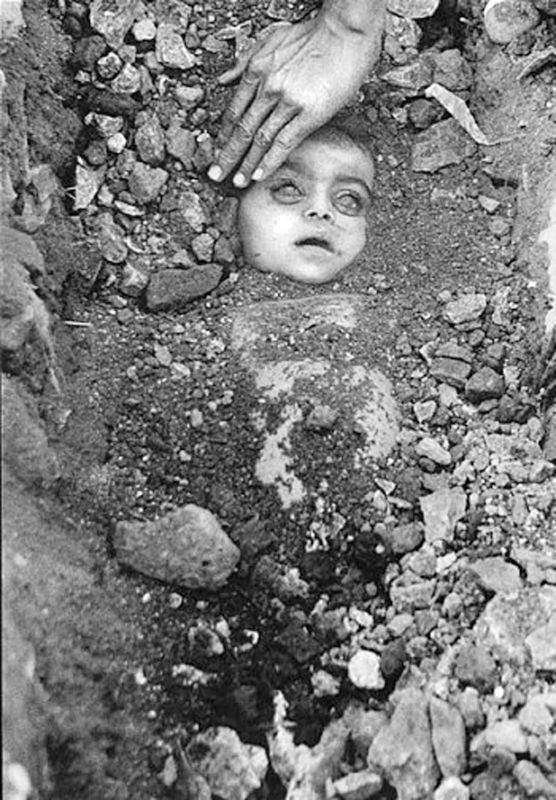
Rai has always been inspired by what he calls “the ever-changing spirit of life”. “Life on the streets, backwaters, inside and outside monuments are inspiring and challenging.” The great ‘visionary’ has immensely contributed in changing the face and definition of photojournalism over five decades. Everything he clicked – the Bhopal Tragedy, people around the Taj Mahal, the myriad expressions of Mother Teresa, Indira Gandhi, HH the Dalai Lama — were more than just frames. 

For the perfect click, he goes with his instinct. “A photograph, to me, is a moment of realisation and experience. It’s the same for a painter or a writer. A photographer should be an observer with sensitivity and responsibility. He should connect with the space, feeling and experiencing the wholesomeness of the place,” he states.


A witness to Bhopal tragedy, which he has chronicled a lot as photos, documentaries and writings, that iconic photograph must have been a painful memory. But Rai surprises, “No, it isn’t. It was shocking and numbing, but one needs to rise to the occasion and be responsible to share it to the world. Numbness and shock won’t take you anywhere. Journalism is not that simple.” 

The first Indian photographer to join Magnum Photos, an international photographers' cooperative formed by masters like Henri Cartier-Bresson, Robert Capa and David Seymour, Rai’s photos have been published in all international publications. The Padma Shri awardee has been through the transition ages of the camera, but he is not a nostalgic guy stuck in the past. 

“I have used the film camera for 35 years, but the day I started clicking with the digital camera, I couldn’t go back; it gave me such a control and freedom. This (caressing his camera) gives me the ability to penetrate, concentrate, meditate and capture life and nature,” he explains. His photographs of former Prime Minister Indira Gandhi are very famous. He has admitted that he had been photographing her almost on a daily basis. Over the regimes, leaders and their persona have changed; so has access to them. “Earlier, photographers could be five-eight feet away from the PM. If any security stopped us, we could say Dekhiye Indiraji… and she’d glare at them and without speaking a word, would make them run away,” he laughs, adding, “Today, due to security issues, we are at least 100 feet away from them. That’s why there are no intimate moments with the PM and other ministers. They are no longer humans; they have become just dry political situations on the dais.”


Mother Teresa, for Rai, is a mother and a teacher. “Dedicated to serving the poorest of the poor, she is a mother to anyone who met her. With so much love and concern, her service was amazing. She has taught me many things,” he recalls. In the age of Insta-photographers, he has some advice for wannabe photographers. “Unless you have something specific to capture, do not click. It has to be love and passion. Practise every minute. Carry your camera always. Being there and now is the key. Instead of creatively reproducing memories, connect eyes to heart,” he says. He is always clicking and documenting — currently on the Himalayas, sacred rivers, a book on Sadhguru Jaggi Vasudev and his Rally for Rivers, on HH the Dalai Lama…. Many of his famous clicks are in black and white. Does her prefer black and white to colour? “Not necessarily. It’s about expression. Where I find lots of colour and it’s uncontrollable to restrict, I go with black and white. Rivers are in colour. But the Himalayas, Sadhguru and the Dalai Lama are not,” he says. Having travelled all over India, a paradise for photographers, there is more to learn and chronicle. He animatedly explains, “The more you know and understand India, you discover how little you know and how small you are. Knowing India is an endless process. You have to inhale the whole world into it and deliver. There is so much left to know.”

Published in Deccan Chronicle on September 23, 2017 

Wednesday, August 2, 2017

He loves the stage

Sarath Kumar on his new app, acting with Mohanlal and learning how to drive.


Each screening of Angamaly Diaries ended with a series of ‘wows’ from the crowd — for the actors, especially for the towering screen presence of ‘Appani Ravi’. It is perhaps for the first time that an actor got a registered fans’ association after his debut movie. 

Sarath Kumar says it was not something made by him, but by a group of youngsters who came together impressed by his ‘Appani’ act. As you get to know him, more ‘wows’ follow, for Sarath bears no resemblance to the carefree, ruthless, no-nonsense ruffian from Angamaly. Overnight stardom has made this passionate actor all the more grounded. 

“I am very glad that ‘Appani’ happened. From a theatre student, I became a movie actor, got the opportunity to work with people I hadn’t even dreamt of meeting, made my parents proud, married my girlfriend, built my dream home and above all, received love from people all over the world. It’s all because of movies,” shares Sarath, speaking from the sets of Amala in Athirappilly. 

In the offbeat movie directed by Safeer Thailan, he plays a pivotal role along with Anandam-fame Anarkali Marikar. He has just finished Jijo Antony’s Pokkiri Simon and Laljose’s Velipadinte Pusthakam, in which he shares screen with Mohanlal. Also coming up are Odiyan and Pipein Chuvattile Pranayam, with Aju Varghese and Dhyan Sreenivasan, and a few other projects. 

‘Appani Ravi’ hasn’t got to stereotype Sarath. “You can see very different performance in all these movies. I was lucky enough to get diverse roles. 

“In Pokkiri Simon, I play Love Today Ganesh, an auto driver who is a hardcore Vijay fan. In Velipadinte Pusthakam, I play Franklin, a youngster who is a student during day and a fisherman during night. I act as Lalettan’s favourite student and have two get-ups in the movie. There are a lot of emotions, romance and humour. I have no words to explain the feeling of acting with Lalettan and watching his graceful movements and performance. I can’t still believe I could act with such a great legend,” he says. 

However, being busy hasn't made Sarath lose focus from theatre. “I haven't felt any lack of time. Theatre is what made me; I can never let it go,” says Sarath, who is also directing a play Nagothra. This is not his first; he has directed and acted in several mimes and plays, the notable ones being Cyclist, which went on to win the State Youth Welfare Board Award, and Narendra Prasad's Friday. 

Apart from composing music for a few plays, he has worked a lot with children's theatre too. Taking you along through his dreams and future plans, the humble Sarath says, “Many people advised me to start a business while doing movies, but I know nothing else other than acting. All I can do is my part towards theatre.” So, he decided to make the move. With a group of likeminded theatre enthusiasts, he is launching a mobile application — the first of its kind — on theatre named Theatrelife. 

“Theatrelife is an encyclopaedia on Kerala theatre. The app will have a list of all playwrights, actors, their works, photographs and also the theatres across the state. “We will update information on the ongoing plays being staged and are also planning to include facilities for booking stages. The app will also serve as a stress-buster by offering classes on children's theatre, meditation, kalarippayattu, kutiyattam, etc. Theatre is an excellent way to revive people who are looking for optimism and energy in life. Those registering on the app will be introduced to the classes at our space.” 

Speaking of space, Sarath reveals that he has plans to open an institute for performance, not just theatre, but dance” forms too. "My wife Reshma is a Bharatanatyam student at Sree Sankaracharya Sanksrit University, Kalady, whereI was a theatre student. Making use of her skills in Bharatnatyam, Mohiniyattom and Kuchippudi, we plan to develop the institute. My idea of a play is a visual treat which offers a movie experience to the audience," he adds. 

Asked where he was planning to build his institute, pat comes the reply, “Of course, somewhere near Angamaly!” During the shoot of Angamaly Diaries, Sarath did not know how to drive and it was his co-actor Tito Wilson, who played ‘U Clamp’ Rajan, who rode the truck. “I learned to drive after that. In Pokkiri Simon, I drove an auto rickshaw and in Velipadinte Pusthakam, I steered a boat to the mid-sea. I even did a car chase in a movie. I am confident enough to even fly an airplane now,” he laughs.

 Published in Deccan Chronicle on August 2

Kabita Mukhopadhyay, Political All the Way

She was born in West Bengal and groomed at Santhiniketan during vibrant and turbulent times in Indian politics and culture, but Kabita Mukho...