Showing posts with label Deccan Herald. Show all posts

Sunday, February 9, 2020

'Indian Monster' going strong

Known as ‘Indian Monster’ in bodybuilding circles, Mr Universe 2019 Chitharesh Natesan is actually Mr Determination.  
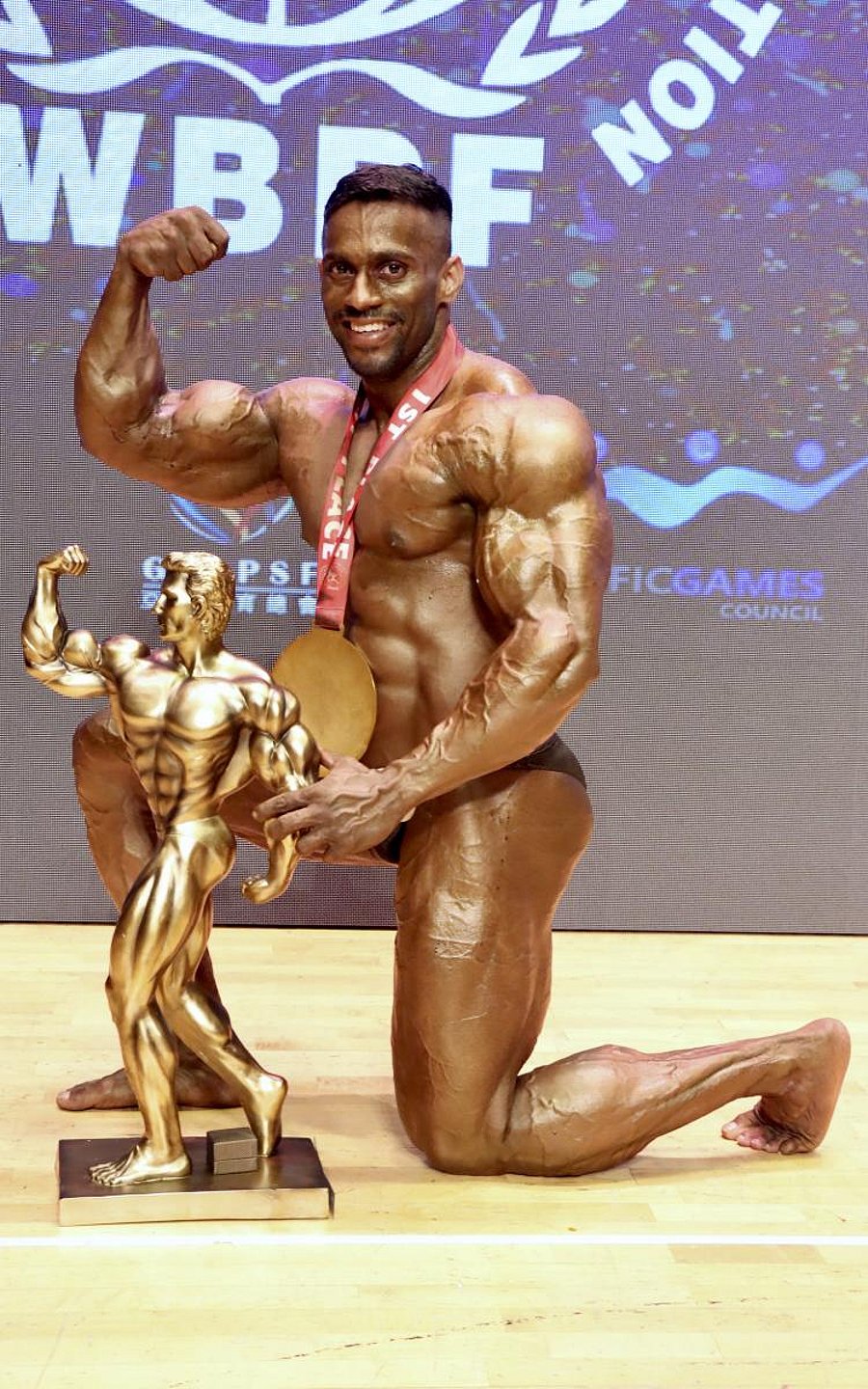

No one knew Chitharesh Natesan until late November, when cricket god Sachin Tendulkar tweeted about a historic win at South Korea – that the 33-year-old Keralite from Kochi put his hometown on the global map by becoming Mr Universe 2019. Chitharesh is the first-ever Indian to have won the title of Mr Universe in the World Bodybuilding and Physique Sports Championship, defeating participants from 38 countries and emerging as the Champion of Champions – again a first for India.

“A week before that I had won the Asian championships and become the Champion of Champions there too, but nobody knew about any of it until Sachin tweeted about it,” says Chitharesh, excitement booming in his voice. For this youngster for the tiny hamlet of Vaduthala in Kochi, the moment of recognition is a dream come true. His path to glory has been full of twists and turns. He is known by the nickname ‘Indian Monster’ in bodybuilding circles, but after a chat with Chitharesh, one would consider renaming him as Mr Determination. Numerous injuries, multiple breaks and missed championships didn’t affect his morale, but made him more focussed. Now, on a strict high-protein diet for over a year and long-hour workouts every single day, he believes he has more to do and a long way to go.

Chitharesh was not a wannabe bodybuilder; that was something that struck him at a later stage of life. His first love was hockey. “I started off as a hockey player since school days and went on to become a state-level player during graduation. Being a hockey player, I had to maintain my body weight and there was no chance of body building,” he recalls. He opted for his second graduation course at Lakshmibhai National College of Physical Education in Thiruvananthapuram, where he chose hockey as his specialisation.

After graduating, he moved to Delhi and started working with his friends’ fitness group there as a trainer. “There was very little scope for hockey in Delhi and I started weight training under the guidance of Sagar, my friend and coach,” adds Chitharesh, who considered contesting championships.

“In 2010, I participated in Mr Ernakulam championship, but soon, I met with an accident and contracted a foot infection that required two months’ bed rest. After preparations and training, I decided to compete in 2013, but a shoulder injury again pulled me down. I stayed off for one year,” he says. But the resting period had wonders in store for him. While recuperating, he took Latin Dance classes, where he met Nasiba, an Uzbek native. Soon, the two fell in love and they got married. Now settled in Delhi, the couple flies down to Kerala once in a while.

However, post injuries, Chitharesh bounced back and went on to become Mr India in three consecutive years from 2016. The year also saw him emerging as Mr India-Dubai. In 2017, he became Mr Delhi and the Champion of Champions in the contest. A year later, Chitharesh won Mr World title in the Europe-based IBFF championship and literally found himself on the top of the world. Then came the twist of fate. “I was hoping to earn a job with my win, but only then did I come to know that the federations I had been representing lacked recognition.”

He then joined Mumbai-based IBBF, where he was selected for Mr Asia championships. Chitharesh came home to meet his parents before the championships when hurdles, this time, came in the form of Kerala floods. With air traffic hit and whole life brought to a standstill, he rushed to rescue and relief operations though it took a toll on his diet and training. But he doesn’t brood over it, “When everyone around was affected, there was nothing to do. I and my friends were at the rehabilitation camps, coordinating rescue operations and helping people. There was no point in attending championships when you are not ready.”

Once on training mode, nothing would deter Chitharesh. No cheating, no breaks, not one day of eating out or hanging out. “In bodybuilding, focus and discipline are very important. So is money,” he smiles, explaining his daily diet of 300 g protein, 200 g carbohydrate and 100 g fat, which translates into 40 eggs and 1 kg chicken every day (6-7 meals a day)! “You have no idea how financially draining bodybuilding is,” he adds.

His advice to any aspiring bodybuilder is to find a good sponsor and a recognised federation to support their dreams, and an expert team of a trainer, doctor, physiotherapist. For Chitharesh, who had no sponsorship, his coach, friends, parents, wife and sisters have been his pillars of support.

“Participation in a championship means months of hard work and continuous training without any distraction. The more effort you put in the sweeter will be the success. And remember, there are no shortcuts, nothing at all,” he concludes.

 Published in Deccan Herald on February 9, 2020

Sunday, January 19, 2020

Lost & found heroine

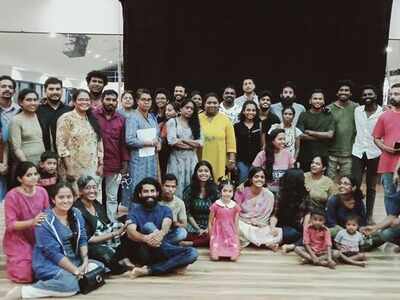
89 years after Rosy’s disappearance, a group of women from Malayalam film industry launched a film society in Kochi and named it after their forgotten first heroine


1930: The year the first Malayalam feature film, Vigathakumaran, released. The year J.C. Daniel, father of Malayalam film industry, made his directorial debut with the country’s first social drama feature film. The year P.K. Rosy, a Dalit labourer and a Kakkarasi theatre artist, became Malayalam’s first heroine. The year when Rosy and family were attacked and their hut burned down by feudal Nairs, irked by a Dalit woman portraying an upper caste in the film, forcing Rosy to flee and to never return. 

2019: 89 years after Rosy’s disappearance, a group of women from Malayalam film industry launches a film society in Kochi and names it after their forgotten first heroine. P.K. Rosy Film Society, according to the Women in Cinema Collective (WCC), the organisation of woman professionals in Mollywood, is an attempt to restore the name of all those who failed to find a place in the annals of film history for their caste, gender, religion or opinions.


The lost heroine

Vigathakumaran (The Lost Child) was the story of a child who goes missing and years later, accidentally gets back with his family. Call it irony, the heroine Rosy too vanishes, but her history is traced years after her death. Rosy belonged to a Dalit family in Thiruvananthapuram who was discovered by Daniel while she was playing a part in Kakkarasi theatre, a Tamil Dalit art form, and convinced her to play the lead in his debut movie. At an era where caste system was practiced openly in Kerala, a Dalit actor acting as an upper caste woman enraged the Nair community, who pelted stones at the screen, disrupted the movie’s screening and went on to ostracised Rosy’s family. They were manhandled and their hut was set afire, forcing Rosy and family to flee their native. The actor fled to Tamil Nadu where she is believed to have lived and died assuming a different identity, without letting anyone know about her past. No print of Vigathakumaran exists anywhere, leaving no proof of Rosy’s acting career. 


A memorial could be anything – a statue, award or building, but for a woman who was hounded for her identity and forced to vanish, what better way than a platform to remember everyone who has been shown the door from history! The WCC, formed in 2017 in support of a female actor who was assaulted in an incident allegedly masterminded by Mollywood actor Dileep, has been supporting movements and activities to support the marginalized and oppressed, both inside and outside the industry. The formation of P.K. Rosy Film Society is yet another huge step from the collective to celebrate the voices that have been silenced. 

All the founders and members of the society are ciswomen and transwomen and together, they will hold screenings films made by women and discourses on feminist cinema. Archana Padmini, film curator and one of the founders of the society, explains, “Kerala can be considered very rich in terms of film societies, but there are very few who engage films academically. Launching a film society was an idea that came up during one of the general body meetings of the WCC. Our major focus being representation of women and intervention in issues of all sorts of marginalization, we had to create a platform for discourses and never let those die. When we thought of a name, history gave us no choice other than P.K. Rosy, a woman who deserved justice.”

Rosy’s life story was pieced together from books penned by film historian Kunnukuzhy S. Mani (who wrote the booklet P.K. Rosy), Chelangatt Gopalakrishnan (biographer of J.C. Daniel) and Vinu Abraham (who penned Nashta Nayika). Based on these accounts, director Kamal made the Malayalam film Celluloid in 2013, depicting the tragic life of J.C. Daniel, Rosy and their ‘lost film’.

Director K.J. Jeeva, another founding member of P.K. Rosy Film Society observes that Rosy has been denied even after all these years, “The government hasn’t yet instituted an award in her name. Just look at her personal life. She vanished into oblivion, lived under another name, assumed her husband’s upper caste surname. Now, even her children or grandchildren do not want to talk about her Dalit identity. 

“Rosy is not the first and last Dalit woman in the industry who is ostracized for her identity. Even now, many hide their Dalit identity fearing that revealing it would cost them their career; that has to end in the long run. The society aims at initiating public discourses, against stereotyping, ostracism and toxicity in the industry. Film is a woman’s world too; we have been here since the beginning and we have to reassert that this space is as ours as yours. Many sensitive contents made and issues addressed through films have not reached the public. Our mission is to bring those films to people and trigger forgotten memories,” Jeeva stresses. 

The events of the film society will be open to all, but only women qualify to be the members. Any woman who wish to be part of the screenings and discourses can register with the society. As Archana puts it, their aim is to discuss genuine, sensible, political content through films, watching it together and let discourses happen. “Film societies,” she adds, “have played a huge role in shaping up the gender perspectives, critical thoughts and film viewing culture of film viewers in Kerala. (According to the Federation of Film Societies of India, the state is home to over 125 film societies). P.K. Rosy Film Society is a platform for those who view film as an art form in both aesthetic and academic terms. And we will associate with various fields for fruitful interactions.”

The first event held by P.K. Rosy Film Society was the screening Leela Santhosh’s short film Paikinjana Chiri made in Paniya Malayalam and Jeeva K.J.’s feature film Richter Scale 7.6 on displacement woes of kolam thullal (a ritual dance form) artists, followed by discussions. In November 2019, the society screened Agnes Varda’s 1961 film Cléo from 5 to 7, noted for its French feminism narrative. Four days before New Year, they screened Deepa Dhanraj’s multi-lingual documentary We Have Not Come Here to Die, that chronicles the suicide of Dalit research scholar Rohith Vemula in the University of Hyderabad which triggered a huge anti-caste movement across the country. In January 2020, they co-organised Samabhav, a two-day film festival on gender, masculinity and relationships. 


The women have more plans for 2020. “We will be holding monthly film screenings, appreciation classes, workshops, curated packages and more discourses,” Archana says.

Each film is a learning; it’s not meant to be watched and forgotten. As the end credits scroll and the lights turn on, it fills in the minds of audience too, sometimes as revelations, and at times, as revolution. 


Published in Deccan Herald on January 19, 2020

Sunday, December 22, 2019

More power to Tessa

What makes Tessa, the humanoid robot, special is that the students made her from scratch and not with the help of any robotic kit


Someone who drives past Siddhartha Central School in the quiet Pallimon village at the Kollam district of Kerala would guess that something big is happening there. For the past few weeks, people from various walks of life have been thronging the school premises, with one wish – to get a glimpse of Tessa!

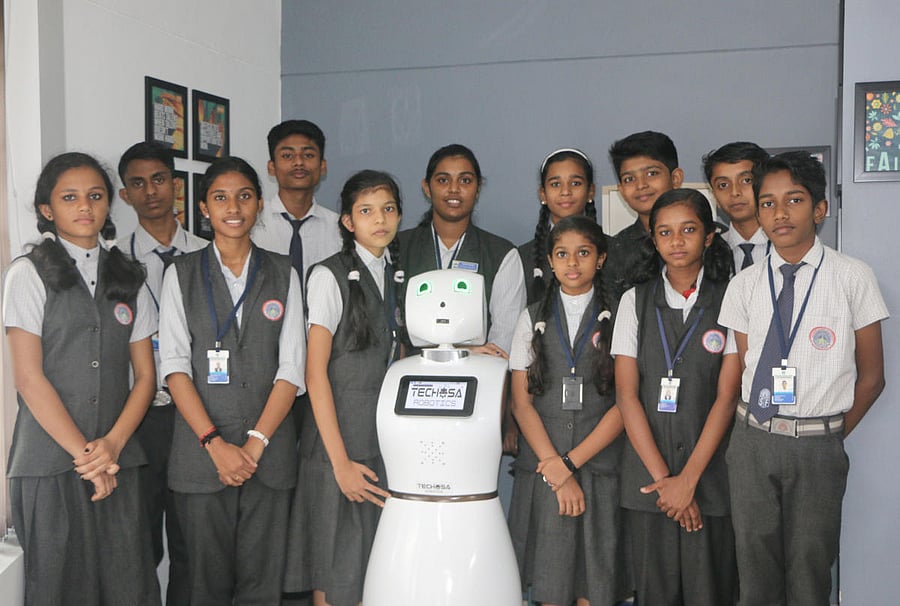
Well, their latest celebrity Tessa is not student, but a humanoid robot built by the Robotics Club of the school. What makes Tessa special is that the students made her from scratch and not with the help of any robotic kit. The ‘genius robot’, as the kids call it, who would sing, walk, rotate head, narrate stories, answer queries and recognize voices was born in the school robotics lab. It took almost one year for the students to develop, programme and build a working prototype of the AI-powered 27-kg robot, for which they designed the body using thermocol, plaster of paris and fibre coating.

“Around 150 students from class 7th and 8th were involved in the process. They made use of their weekly hour-long robotics period and turned up at school during weekends and holidays to work on the robot. Their enthusiasm and fascination were epidemic; the teachers too were very encouraging,” says Sam, the system administrator of the school, who guided the Robotics Club along with staff of Techosa Innovations, a robotics firm.

Tessa, built on Google Cloud database, can understand natural speech and can reply to any query. She can speak, sing and being sensor-enabled, move autonomously without hitting any object on the path. Bluetooth-controlled and enabled with gesture interaction, Tessa looks at the person who talks to her and can rotate her head to the direction of sound, reciprocating to calls and conversations.

“She is an assistant to us. She can rotate her head in 180 degrees and answer any query,” says Devananda, a seventh-grader, who is part of the robotics team, and explains the future plans, “Tessa will be our school’s main attraction. After updating her with face recognition, she will be placed at the school gate welcoming the visitors and identifying the faces of parents and guardians of the students. We are also updating her with home automation so that she can control the lights, fans and electrical system of the school, switching off anything that’s left on by mistake. As of now, Tessa has no arms, so we will first give her arms.”

The students will add surveillance mechanism to Tessa, who will also be the school receptionist who can offer the visitors a guided tour of the institution. Reciting the prayer and national anthem, she will soon grace the school assemblies and be an assistant to the sweepers by helping with cleaning.

School principal Sunitha Kumari is wowed by the students’ dedication. “They used to forgo their PT hours and holidays to work on Tessa. This was also a revelation for us that education can be fun too,” she adds.

It has been two years since robotics was added to the school curriculum with an aim to encourage lessons on technological advancement in artificial intelligence and automation. “We started with basic electronics in class V and progressed to programming concepts as the students reached class VII. We want the children to bring output through hardware. It was during a summer camp that they came up with the idea of Tessa after they were introduced to the semi-humanoid Pepper robot. Guided by their instructors, principal, parents and the management, who raised funds for the project, the students, armed by determination and passion, worked hard to make Tessa. Barring a little help with programming, everything else was done by the students themselves,” recalls Sam. The robot was built at the cost of Rs 2 lakhs.

It was proud day for the whole school when Tessa was unveiled in collaboration with the promotion of the Malayalam movie Android Kunjappan V 5.25 which narrates the story of a man who grows attached to the robot which takes care of him. Devika Praseeth, a seventh-grader from the Robotics Club remembers the day vividly, “I have never seen such a huge crowd. We were both excited and worried, but everything went well and Tessa was amazing. We are proud to be part of the glory Tessa brought to our school.”

A team of 12 students are taking the glory farther by accompanying Tessa to an international robotic conference in New Delhi. Once back to school, Tessa would be actively clearing doubts, assisting academic and manual works, doubling up as cleaning staff, guard and receptionist and above all, inspiring students to become ambitious. Ask if she would replace the teacher, Sam laughs, “No, even among robots, there’s no substitute for a teacher.” The students too would agree with him.


Published in Deccan Herald on December 22, 2019

Sunday, December 1, 2019

Allure of aurora

Geethu Mohandas is all set to become the first Indian woman to ever participate in the adventurous sub-zero Fjällräven Polar expedition in April


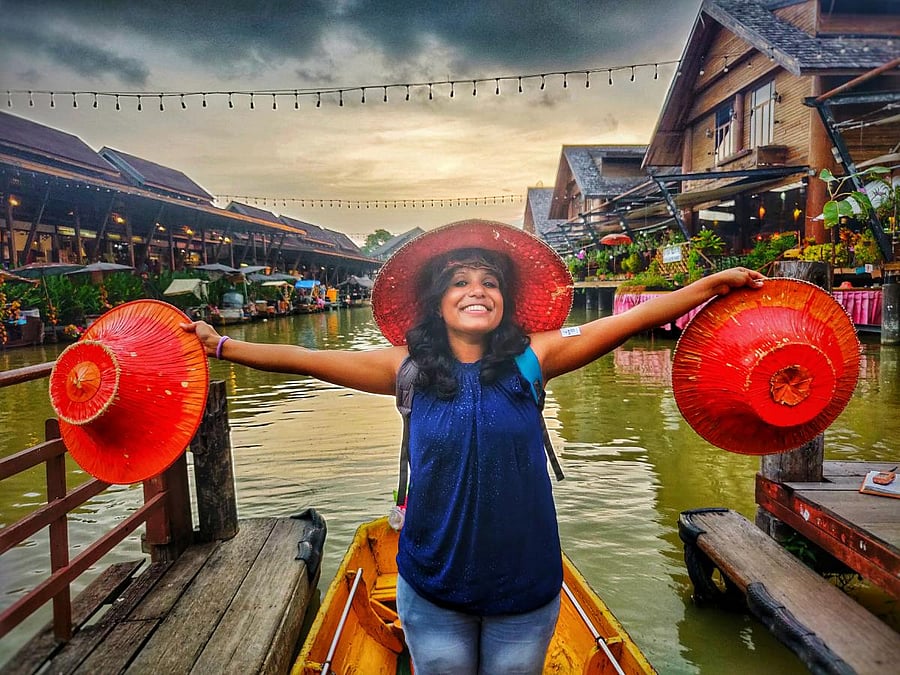
An Indian by birth and global by spirit’ is how Geethu Mohandas describes herself. The 28-year-old Keralitea an electronics engineer at a firm in Bengaluru, is all set to become the first Indian woman to ever participate in the adventurous sub-zero Fjällräven Polar expedition, if all goes well. The annual expedition to the 300-km Arctic wilderness is open to just 20 chosen travellers across the globe every year. 

“So far, there have been just two Indians who have gone on the expedition. I would be the third, and the first woman, if I am lucky,” says an excited Geethu, who is counting on the Fjällräven Polar online voting which is her ticket to see the Northern lights! 

“Witnessing the spectacular aurora borealis (the bright dancing lights in multiple colours seen above the northern and southern hemispheres), like any travel buff, is my dream too. I would consider lucky if I won and luckier if I could inspire more women to apply for the expedition next year,” she says.


Geethu has been travelling for several years now, starting with the school nature camps she has been part of as a teen. Staying in Forest Department dormitories and experiencing the warmth of nature, the passion grew with her and when she got a job, she started living her dream. Having lost count of her trips, she puts it as ‘I go trekking almost every weekend.’ Sometimes solo, sometimes with her husband Prasad Aadish and at times, with her buddies. A founder of the travel group Let’s go for a Camp, which promotes responsible tourism, Geethu believes that any journey should have a purpose. As part of the motto, she and her friends explore a place not just geographically but along with its culture, history and traditions by giving back to the people the happiness they experienced. 

“Wherever we go, we practise sustainable lifestyle and eco-friendliness. It’s not just sight-seeing. We believe in making a difference to the lives of people there. Tourism makes sense only if we explore places without upsetting the native people’s lives, nature or practices,” she stresses.

In the past four years, Let’s go for a Camp has organised 95 group journeys, thrice outside the country, every time to lesser-explored places. During the journeys, they practise and promote sustainable practices like use of menstrual cups, seed pens and green initiatives. 

“We conduct research on the historical, geographical and cultural significance of the places and while there, stay with the people, experiencing their lives, culture and cuisine, wear their traditional clothing and pay for it all.” As part of promoting employment for rural womenfolk, last April, a 15-member all-woman group comprising students, doctors, homemakers, teachers, IT professionals and lawyers from all age groups went to the Ladakh villages of Thakmachik, Choklamsar, Thiya and Mann, where they did a trial of the idea. “It was a great experience, for both them and us. We grew so close that parting was an emotional moment,” recalls Geethu, who, along with her Ladakhi friend Dolma, is planning a bigger exercise next year by taking more baches to the Ladakh villages from April to July when the climate is favourable.  

Applying for the Fjällräven Polar expedition is also an act of ‘responsibility’ for Geethu. “I noticed that women do not apply for it. May be because it is considered one of the most adventurous trips on the planet. I wanted to break the myth. So as a preparation I led a 19-member crew, 12 of them women, to the Chadar trek, where we had to survive minus 15 to minus 30 degree temperature and cross the entirely frozen Zanskar river in the harsh winter. We spent 10 days without water. It was an amazing endurance test. That was when I knew that cold meant pain,” she laughs.

Confident about Polar expedition, she is now keeping her fingers crossed. “With the required physical fitness and confidence, I am sure that I can do it. The voting is on for another 20 days and I am at the fourth position now. No worries even if I don’t win. I am sure that next year more women would apply. Being an inspiration itself is a victory.”


Published in Deccan Herald on December 1, 2019 

Kabita Mukhopadhyay, Political All the Way

She was born in West Bengal and groomed at Santhiniketan during vibrant and turbulent times in Indian politics and culture, but Kabita Mukho...