Showing posts with label Kerala. Show all posts

Monday, September 28, 2020

Is the Kerala model of tackling Covid an overreaction?

 Expert opinion is divided.
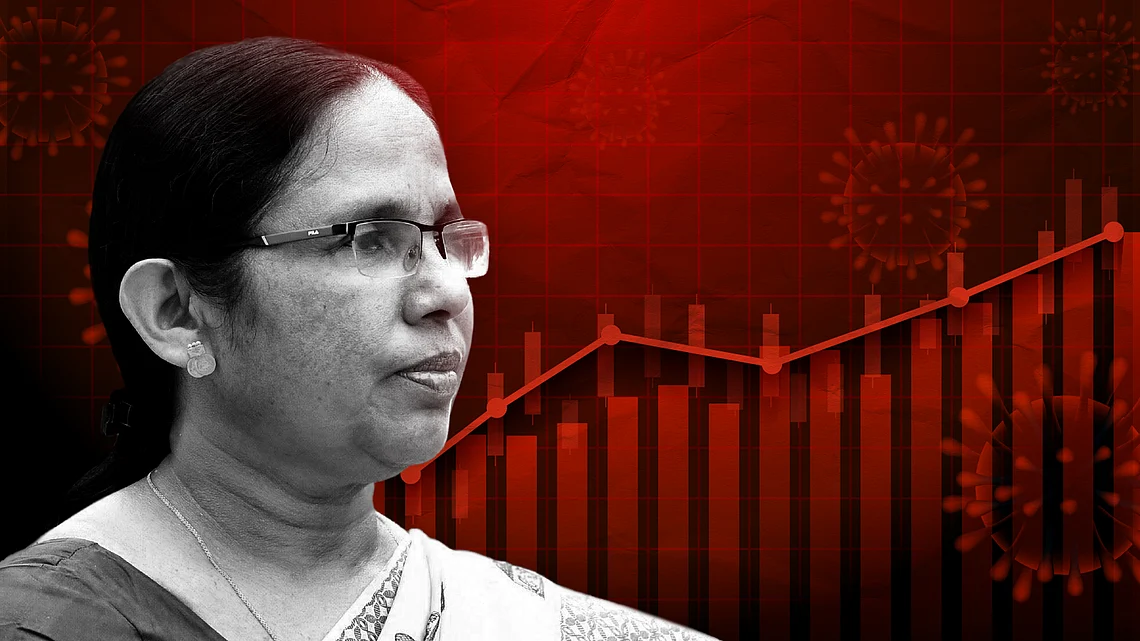

On January 30, India detected its first coronavirus patient, a student who had returned to Kerala from Wuhan, China, the epicentre of the pandemic. The Kerala government was prepared.
The state’s public health authorities, led by the health minister KK Shailaja, promptly put in place the protocol that they had used to successfully contain the Nipah outbreak in 2018. Strict quarantine rules, extensive surveillance and contact tracing measures, public testing and treatment facilities, and the distribution of rations to the needy ensured that the spread of the disease was contained quickly.
In the early months in particular, stringent quarantine rules saw even asymptomatic patients being taken to first-line treatment centres instead of being home quarantined. A few quarantined patients were denied permission to see their demised relatives one last time. As a result, new cases declined to a trickle by May. In fact, not a single new infection was recorded on May 1 and May 6.
The Kerala model, as the state’s response to the pandemic came to be called, earned wide praise internationally.
Nearly eight months on, Kerala is recording a spike in infections, adding over 7,000 new cases on September 27. The spike began after interstate travel restrictions were relaxed in May. The state recorded 238 new infections in March and 256 in April. Of these, 153 and 77 people, respectively, had returned from abroad. After the interstate borders were opened, Kerala saw 772 new cases in May, 3,173 in June, 19,171 in July, 51,772 in August, and 1,04,717 so far in September. The number of foreign returnees was 280 in May, 1,860 in June, 3,329 in July, 1,883 in August. Of the infections reported in September, around 93 percent have no travel history, indicating wide community spread.
It would seem, thus, that the strict measures taken by the Kerala government to contain the pandemic only delayed the inevitable.
So, did Kerala overreact in responding to the pandemic, more so since its handling of the health emergency contributed to panic, scaremongering, stigma, and even violence around coronavirus? Opinion is divided.
“Yes,” said Dr PK Sasidharan, former dean of the Government Medical College Hospital in Kozhikode. “I wouldn’t blame the government though. It’s just that the strategy they followed was incorrect. The intentions were genuine, but with no experience handling a situation like this, the decisions were wrong and the insights into public health were poor.”
The “first wrong step”, he added, was the decision to handle coronavirus like Nipah. “Coronavirus is more contagious than Nipah and has milder symptoms. Nipah was restricted to one geographical location, but the novel coronavirus spreads faster and will eventually affect everyone.”
In all, over 1.75 lakh people have contracted coronavirus in Kerala so far and at least 677 have died from it.
“The actual figures are far higher,” said a health inspector in North Kerala who asked not to be named because he wasn’t authorised to speak to the media. “Many deaths are not being recorded as coronavirus deaths. The situation is grave and not as projected.”
***
The Kerala government’s “overreaction” to the pandemic, as critics have described it, has come at significant financial cost, compelling the state to seek additional funds from New Delhi. Self-government institutions have been struggling to establish first-line treatment centres to accommodate even asymptomatic patients.
“Treating asymptomatic patients in first-line centres is not just an unscientific approach but a waste of resources as well,” remarked Sasidharan. “Elaborate arrangements and expensive medicines are provided for their intensive care.”
Though Kerala issued guidelines for home quarantining asymptomatic patients in August, many people, for fear of infecting family members and being stigmatised, demand hospitalisation, which is not denied.
The health inspector agreed with Sasidharan. “In the first phase, the government even provided new clothes for patients after burning the ones they wore. Many asymptomatic patients are taken to facilities run by the government. It is a huge financial burden. They could conveniently be home quarantined,” he said. “There is another flip side. People take it all lightly believing that even if they get affected, the government will take care of them.”
Dr KP Aravindan, a former professor of pathology who once led the Kerala Sasthra Sahithya Parishad, a grassroots movement to promote science, concurred that there had been “overreactions”.
“I feel that for asymptomatic cases, home isolation is a successful and less-burdening strategy for the government,” he pointed out. “If the numbers keep on rising, I think the government might compulsorily mandate home care for asymptomatic patients.”
He added, “The number of cases might not be correct as tests can be misleading. But considering the lower mortality rate, I think all is well as of now.”
Insistence on institutional quarantine has also caused some tragic incidents. A 19-year-old girl was raped by an ambulance driver on the way to a treatment centre where she was to be quarantined after testing positive for coronavirus. The authorities have since mandated the presence of two health workers in an ambulance and special care for women patients.
“That was an atrocious act committed by a sick man. It was unfortunate. There had not been a security lapse until then,” remarked a health official who asked not to be identified. “It could have been avoided had the patient not been transferred so discreetly.”
Sasidharan also complained about the constant revision of the Covid protocol, calling it inappropriate. “Quarantine rules were proper earlier, especially during the initial inflow of NRIs. All virus carriers could be identified and quarantined. Then the quarantine period was reducded from 28 days to 14 and now to seven.”
The health inspector concurred. “This doesn’t cover the incubation period properly and could actually facilitate community spread of the disease. People neglect symptoms or do not get tested at the right time as stipulated. And now every case has no source.”
This, he said, was partly an outcome of the “ridiculous situation” where “instead of epidemic control experts like public health officials, police have been given the power to initiate action against people who refuse to comply with the rules”.
“It’s absurd to have the police who are already burdened with responsibilities to work on the healthcare front. The protocol rules need to be revised and corrected for proper compliance,” the inspector said.
Sasidharan added, “Decentralised patient care should be decided by a panel of general practitioners who have adequate insight into public health issues and epidemiologists with a vision for a progressive society. With well-equipped primary care centres, a good team of health workers, intelligent planning on testing and isolating only the symptomatic and vulnerable ones who require critical care, the plan will be effective.”
***
On the other side, there are health experts who contend that the Kerala government adopted the right approach after coronavirus arrived. That it managed to even delay the peak of infections was a big success.
“History will keep only one record: how many survived,” said Dr Mohammed Asheel, citing the example of the Spanish Flu which killed nearly five crore people over four years in the first quarter of the last century.
Asheel is the executive director of the Kerala Social Security Mission, which is leading the fight against the pandemic. He continued, “We set up over 300 virology labs as well as quality infrastructure and health facilities. We could control imported cases with all these systems in place. Italy, with its all excellent facilities, let it peak and the cases spiralled out of control and many patients died. Delaying the infection peak has its own advantages. We get time to study the virus and then devise strategies to combat it.”
Aravindan agreed, “Almost six lakh people arrived in Kerala from the Gulf and we managed to control transmission. All current cases are connected to arrivals from other states after travel restrictions were relaxed and our deaths are also lower. It’s a huge success indeed.”
Moreover, he added, echoing Asheel, “The delayed peak will help conduct more research and continue interactions with the global research community to identify more viral traits. Until we find the vaccine, this will go on. It could be prolonged but it will be worth the wait.”
Dr Rajeev Jayadevan, the president of the Indian Medical Association’s Kochi chapter, even supported institutional treatment for asymptomatic patients.
Pointing out that the novel coronavirus isn’t harmless compared to flu viruses, he said, “This virus, unlike others, can suppress the symptoms and that’s why I recommend that even asymptomatic patients should not be left untreated. In many cases, the bewildering condition of happy hypoxia has been noted. The patient might not have noticeable symptoms, but their lungs would be deteriorating, reducing the amount of oxygen they can absorb. Those with serious lung, blood and cardiac conditions fall in high-risk categories.”
In the long run, though, decisions must be made depending on the available resources and the patient load, he added. “The world over, home treatment with proper monitoring is being followed. When numbers go higher, we too will have to go for optimisation of available resources. The virus does not spread according to a rulebook and predictions are irrational.”
***
Is Kerala equipped to deal with the ongoing spike in infections?
The government has maintained that it has provided more than adequate facilities and resources to deal with any situation. But with the cases suging, even the chief minister, Pinarayi Vijayan, has expressed worry. And Shailaja has expressed concern about the shortage of ventilators which could result in more deaths if the cases keep spiking. There is reportedly a scarcity of oxygen cylinders in the state’s public hospitals as well.
As of September 27, there were 380 Covid patients in ICUs across Kerala and at least 92 on ventilator support.
“As of now, we are good,” said Sulphi Noohu, the state secretary of the Indian Medical Association. “But at some places the cases are rising exponentially which is a cause for worry. Government and private hospitals in Thiruvananthapuram, Ernakulam, Kozhikode, Thrissur have adequate infrastructure and facilities to handle rising cases. But in Pathanamthitta, Alappuzha and Idukki, where the infrastructure and the number of hospitals are minimal since the people mostly depend on neighbouring districts for their healthcare needs, rising cases of infection might pose a grave problem.”


Published in Newslaundry on September 28, 2020

Wednesday, July 29, 2020

How Ireland’s Maharani gin symbolises rebellious spirit of Kerala’s women


It was the quest for spices that took European explorers to brave the seas and land in Kerala over 500 years ago, marking the beginning of imperialism and colonisation. In 2020, the spice scent has crossed the seas once again, this time, bottled as an Irish gin under the brand Maharani, by Bhagyalakshmi Barrett, a Keralite who co-owns Rebel City Distillery, the first distillery opened in the city of Cork in Ireland in the past 50 years.

Maharani Irish Gin, zested with pomelo fruit (known as Babloos Naranga in Kerala) and spices such as cassia and nutmeg mace, is a uniquely flavoured product. No one has so far used these spices nor this citrus-spicy magical combination in a gin.

That is not all. One can see Malayalam words—Viplava Spirit, Moksham, Alchemy and Sargathmakatha—ingrained on the indigo-hued bottle.

"For it's crafted with alchemy and artistry," says Bhagyalakshmi, in a telephone interview with onmanorama from Cork City.

Maharani, she says, is a tribute to women power.

"The brand symbolises the revolutionary, rebellious spirit of Kerala's women and their significant role in shaping up Kerala society. Viplava spirit refers to the rebel spirit in me, in all the women and in the gin," says the 34-year-old native of Kilikolloor in Kollam district of Kerala, who sources the botanicals for the distillery from Vanamoolika, a women's organic farming cooperative in Wayanad district.

"I am someone who is proud of my roots. I call myself first a Malayali and then an Indian. It has been my dream that anything I work on has to involve women and stay true to my roots." Bhagyalakshmi is the daughter of Rajeev Vasavan, an actor, and Vimala, a homemaker. She has a brother, Akhil Vinayak, who works in Kuwait.

She runs the distillery with her husband, Robert Barrett, and his father, Brendan Barrett, whom the couple calls their mentor.

From Chennai to Cork, via Madrid

After starting her career as an information technology (IT) professional in Chennai, she moved to Madrid in Spain and later came to Ireland in 2013 for her masters in business administration.

"Since then, I have been here. In 2015, I joined Dell as an IT programme manager, and two years later, Robert and I got married."

They tied the knot in August 2017 at Kollam in the presence of family and friends.

Robert, a fine spirits expert who did his MSc in brewing and distilling from Scotland, has worked in distilleries and breweries in Caribbean, Vancouver, Uganda and his homeland Ireland before coming up with the plan of setting up their venture in Cork.

Cork, the rebel city of Ireland

Cork is known as the 'rebel city' for its history of numerous rebellions. And the duo paid tribute to the city by naming their company Rebel City Distillery.

"Our plan was to roll out our first product as a fusion of two cultures, just like us," says Bhagyalakshmi, who considers it a privilege that their distillery is set up in the same plant where reputed global auto-maker Henry Ford and Sons started its first dedicated automobile plant outside the US.

"When we moved in, we decided to preserve history and not make much changes to the place in the process of renovation. Even the wall paints are maintained as such. This place is a treasure trove of history. We are next opening a gin school and visiting centre where visitors will be guided through the distillation process and can prepare their own gin bottles," she says.

Financial support

Launched with an initial investment of 500,000 Euros (Rs 4.39 crore) with the support of the Irish Food Board and local enterprises, the distillery is one month old and with just three staff, including her and Robert on board, they have been able to bring out 10,000 bottles of Maharani. The product is now available in stores in Germany and Sweden.

"Our primary target is the European Union market. We are planning to expand slowly to cover the US and of course, India. The reviews are overwhelming. Popular Irish food bloggers and drink enthusiasts have rated us with a score of 91 out of 100. Maharani is being served at a few Michelin-star restaurants in the UK and the responses have been great," she said.

Her company plans to collaborate with many restaurant chains and pubs after the COVID-19 crisis gets over. "Pubs and bars in Ireland remain shut these days. Once we overcome this crisis, we hope to scale up."

Maharani is currently priced at 49 Euros (Rs 4,306) per bottle, but once the global distribution plan works out, Bhagyalakshmi hopes that they can bring down the price as the production cost would come down.

Rum with ingredients from Marayoor

The couple is planning to introduce more products—white unaged rum, cask-aged rum and small batched spirits like absinthe—but the first one would be a rum with another Indian connection.

She says, "Well, the recipe for the rum is locked. All I can say now is that the main ingredients are sourced from Marayoor." (The Idukki town of Marayoor is famous for sugar cane, jaggery and sandalwood oil).

Kerala and Ireland, though both have a common ambience of greenery, are poles apart when it comes to treating a drink. "Till the age of 28, my idea about a drink was intoxication. Experience at Ireland made me realise that a drink needs to be enjoyed. In Kerala, people drink to get drunk, but here, people enjoy a drink taking hours, smelling it, letting it soak and sink in. Drinking is socialising and pubs are where people meet, where kids and family are welcome, unlike back home. But things are changing slowly. People have started appreciating their drinks. Attitude will change over time," she said.

Bhagyalakshmi and Robert had planned to visit her parents in March, but postponed it due to the global pandemic. "I can't wait to show my parents our Maharani, and I want to take this bottle to my strong women in Wayanad without whom this wouldn't have been possible. What makes Maharani special is the authentic story behind it and the distinct and well-balanced flavour, which stands out in the highly competitive gin market. Maharani is a revolution," she said.

 Published in The Week on July 29, 2020

Sunday, March 22, 2020

Operation Corona: How Kerala led the way


The state had been battling Covid-19 for more than a month before Maharashtra reported its first case on March 10. As of Saturday, it had 40 cases, while Maharashtra had 53. A deep dive on how it swung into action

On March 7, two people with fever paid a visit to Dr Shambhu, a physician at Ranni Government Hospital in Kerala’s Pathanamthitta district. It had been more than a month since Kerala reported the first three cases of Covid-19 — students who had arrived from China — so he followed procedure, and asked if they had been to any foreign country recently. They hadn’t, but said they had come into contact with a family in their neighbourhood that had just returned from Italy, where the disease was spreading rapidly.

Dr Shambhu realised that sitting before him were the first cases of secondary transmission of Covid-19 in the state. He quickly shifted them to the isolation ward and informed the health department and district administration. A medical team reached the Italy returnees’ home in an ambulance and, despite their initial refusal to cooperate, took their family members — who included their aged parents — to the hospital. The family initially refused to admit that they were sick. But when they tested positive they admitted that they had refused to furnish their travel history to authorities, had dodged screening at the airport, and had been visiting relatives instead of staying at home.

The state soon launched a massive search across the two districts the family had been to, identified more than 3,000 who had come into contact with the family, and began monitoring them. To avert a community spread, the health ministry also released a route map of the places the family had been to since returning to India. Meanwhile, CM Pinarayi Vijayan and Minister of Health and Family Welfare KK Shailaja asked everyone to stay alert.

Ahead of time

Kerala’s ‘secret’, it turns out, was being prepared for the outbreak well before it began. Dr M Narayanan, president of the Indian Academy of Paediatrics, Kerala, says, “The outbreaks in Kerala and Italy took place at almost the same time. But now, when the death toll in Italy, which has free and quality healthcare, has crossed 4,000, Kerala has not had a single death, despite having fewer resources and facilities. We have been able to identify and isolate suspected carriers, including asymptomatic ones, to avert a community-level spread.”


In what minister Shailaja called ‘a self-designed protocol’ — something she learned from the state’s battle with the 2018 Nipah outbreak, which claimed 17 lives — a surveillance mechanism was put in place in mid-January. It was part of a larger plan that involved co-ordination between the state’s infrastructure, bureaucracy and people. Quarantine facilities and control rooms were set up in all 14 districts to keep tabs on those arriving from abroad.

On February 3, as soon as the first three cases were reported, the government announced a state health emergency. As many as 18 expert groups at the rapid response control room split tasks into areas such as quarantine, isolation, monitoring, contact tracing, media surveillance, field teams, etc. When a person arrived with symptoms, health officials sprang into action at once, tracing the journey of the patient, finding his or her primary and secondary contacts, and shifting them to quarantine to avert a community outbreak. When a person tested positive for Covid-19, a map of their journey was published so that people could easily identify those who were most at risk of contracting the disease.

Dr Amjith Rajeevan, an assistant surgeon at a primary health centre in Pathanamthitta district, who also heads the media surveillance team that looks for possible links to any Covid-19 suspect that may have been overlooked, says, “When the first three cases were reported, we had the advantage of knowing they had been home-quarantined. But when a family of three dodged screening upon arrival from Italy and tested positive after visiting various places, we had the task of averting a community outbreak. The first meeting of the rapid response team was called at 7.30 am, which was attended by officials from the Chief Minister’s Office and Health Ministry, doctors, healthcare workers, public representatives and surveillance training committees. It was decided to track down the travel history of the patients and fill in the missing links. For this, we needed the help of field workers, women’s selfhelp groups and support groups, who talked to people and sourced CCTV footage. More people were quarantined, and this helped control the spread.”

Those who were quarantined in their homes were monitored using GPS to ensure they remained indoors. To support the virology institute in Alappuzha, opened after the Nipah episode, four more testing facilities were opened in various districts. At meetings convened twice a day, the ground situation was assessed and necessary arrangements were made; district-wise data and statistics on required health facilities, medical assistance and food were compiled and presented. This is followed by a daily press conference — sometimes twice daily — at which the chief minister, the health minister or both turned people’s panic into vigilance by sharing information about new developments, assuring people of a positive outcome and appreciating their efforts. While health helplines and round-the-clock emergency services worked tirelessly to quarantine suspected carriers, schools were shut down, weddings and other events with large gatherings were postponed, and cinemas shuttered.

What is the Kerala model?

As of Saturday morning, Maharashtra had 53 Covid-19 cases, Uttar Pradesh 24, Rajasthan 17, Haryana 17, Delhi 26 and Karnataka 15. Kerala, which has been battling the outbreak for longer than any other state, had 40 cases, 44,390 people under observation, and zero casualties. Why has Kerala’s battle against Covid-19 been more successful — at least so far — than those of other states? “Compared to other Indian states, Kerala has a lot of advantages,” says Dr Amjith, who has been in charge of coordinating the state’s control rooms during past crises.

“Keralites are a global community and Covid-19 infections have now been reported from all over the world, but we were prepared to face it right from when it hit China. Equipped with a peoplefriendly health delivery system, state-ofthe- art infection control facilities, expertise of public health professionals and strong backing of district administrations, Kerala could face the challenges. The state also has another great advantage — highly educated local body representatives, who are in direct contact with the people. Kerala’s high literacy rate made spreading awareness easier,” he adds.

Apart from government medical colleges, primary and community health centres, the public and private sector healthcare systems in Kerala maintain high standards. As CM Vijayan put it, “We have excellent healthcare systems, from primary health centres to super-specialty hospitals. The spirit of this system is a popular partnership. Healthcare workers from all parts of the system have joined hands to battle this crisis.” Minister Shailaja says, “Our main target is to not lose any life. Community service and public cooperation — seeking medical assistance in case of symptoms — will help us win the fight. The key to containing the virus is responsible behaviour.”

That’s exactly what Arjun (name changed to protect his identity) exhibited when he and his friends — all of them MBBS students in Wuhan, the epicentre of the outbreak — returned to India just before the city was locked down. Arjun and two of his friends are the three first Covid-19 cases in India. He says, “Our 30-member team was the first to have landed in India from Wuhan. At Kolkata airport, we underwent basic tests and signed papers, after which we were given guidelines. Once I reached my home in Alappuzha district, I informed the health department of my arrival and stayed at home. A few days later, I saw that one of my friends had tested positive, becoming the first person in India with the disease. Though I had no symptoms, I put on an N95 respirator and reported to the nearest primary health centre.”

Harbinger of hope

Harbinger of hope Any new contagious disease brings with it desperation, panic and mass hysteria. To tackle these, the Kerala government introduced trustworthy communication channels and outreach programmes. Through the mobile app GoK-Direct Kerala, which sends real-time updates and SMS alerts to subscribers in various languages, the Department of Information and Public Relations ensure transparency. To improve the lives of everyone forced to remain indoors, the government announced it would increase WiFi bandwidth. Through social media campaigns such as ‘Break the Chain’, calls for social distancing, and by acting swiftly against those spreading fake news, it combated fear and stigma. The government also ensured the supply of essential commodities and medical assistance to the public for free. Children who could no longer go to anganwadis (rural child care centres) continued to receive their much-needed mid-day meals at home. “About 3.7 lakh students in 33,115 anganwadis in the state have benefitted from the initiative,” Shailaja says.

But the masterstroke of the Pinarayi government was the Rs 20,000-crore health package he announced on March 19 to revive the economy. Of this, Rs 2,000-crore is for disbursing loans through Kudumbashree, a women’s self-help group; Rs 1,320 crore for paying two months’ welfare pension in advance; Rs 100 crore for families that do not otherwise receive any welfare pension; and Rs 100 crore for free cereals through the Public Distribution System. He also announced the opening of subsidised lunch outlets, relaxation of power and water bills, and assistance to public transport staff.

The challenges ahead

The Kerala model has been praised widely, but with one-sixth of its 3.5-crore population being expatriates, the state is not taking anything for granted. If even one person under quarantine ventures outdoors, it could spark a community-level outbreak. “Had this shutdown been done earlier, we could have avoided the current risk of community spread from patients exposed to secondary transmission,” says Dr Narayanan. Though the state machinery was been able to contain the disease at first, this responsibility is now with the public. There are people who have organised or attended mass gatherings, prayer meets and temple festivals. Many who returned from the Hajj have not practised home quarantine. The six new positive cases reported on March 20 from Kasaragod district were infected by a foreign-returnee who attended weddings, public events and football matches, forcing the whole district to shut down.

Dr Narayanan said, “After a lull, cases have spiked. The disease has reached tertiary contacts. If this explodes, I am not sure that we have enough infrastructure, hospital beds, ventilators and intensive care units to accommodate all patients and combat a massive outbreak. Even the lives of healthcare professionals are at risk. Kerala also has a huge high-risk population of senior citizens, cancer patients and others who need immunosuppressants.” Though Kerala has better medical facilities than most other states, it has only 1.1 hospital beds for every 1,000 people. While the government is converting college hostels to Covid-19 centres, it will face a shortage of ventilators and ICUs in case of a community-level spread. The only way to combat the disease, therefore, is to practice social distancing.

 Published in Mumbai Mirror on March 22, 2020

Kabita Mukhopadhyay, Political All the Way

She was born in West Bengal and groomed at Santhiniketan during vibrant and turbulent times in Indian politics and culture, but Kabita Mukho...