Showing posts with label Lifestyle. Show all posts

Sunday, February 9, 2020

'Indian Monster' going strong

Known as ‘Indian Monster’ in bodybuilding circles, Mr Universe 2019 Chitharesh Natesan is actually Mr Determination.  
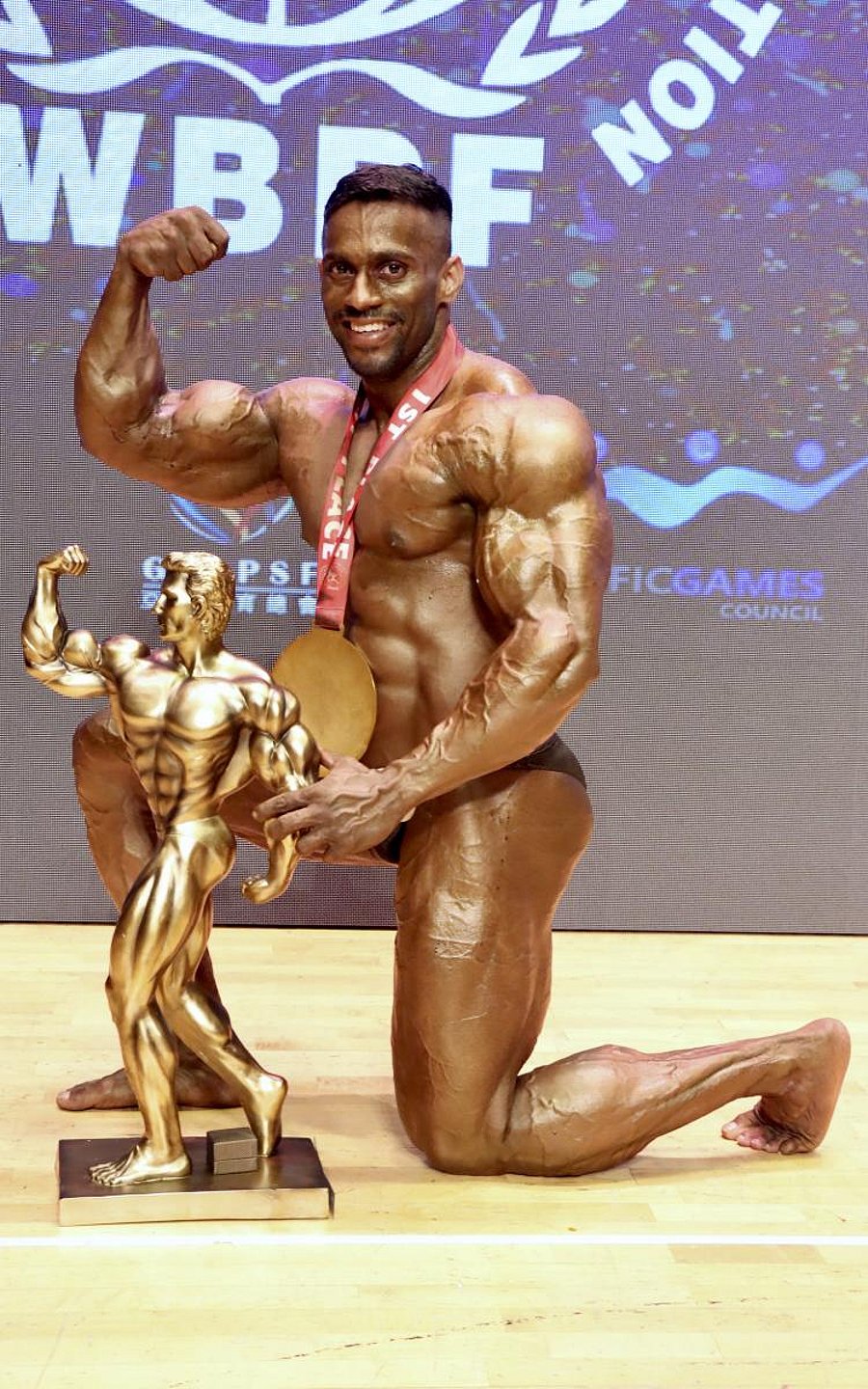

No one knew Chitharesh Natesan until late November, when cricket god Sachin Tendulkar tweeted about a historic win at South Korea – that the 33-year-old Keralite from Kochi put his hometown on the global map by becoming Mr Universe 2019. Chitharesh is the first-ever Indian to have won the title of Mr Universe in the World Bodybuilding and Physique Sports Championship, defeating participants from 38 countries and emerging as the Champion of Champions – again a first for India.

“A week before that I had won the Asian championships and become the Champion of Champions there too, but nobody knew about any of it until Sachin tweeted about it,” says Chitharesh, excitement booming in his voice. For this youngster for the tiny hamlet of Vaduthala in Kochi, the moment of recognition is a dream come true. His path to glory has been full of twists and turns. He is known by the nickname ‘Indian Monster’ in bodybuilding circles, but after a chat with Chitharesh, one would consider renaming him as Mr Determination. Numerous injuries, multiple breaks and missed championships didn’t affect his morale, but made him more focussed. Now, on a strict high-protein diet for over a year and long-hour workouts every single day, he believes he has more to do and a long way to go.

Chitharesh was not a wannabe bodybuilder; that was something that struck him at a later stage of life. His first love was hockey. “I started off as a hockey player since school days and went on to become a state-level player during graduation. Being a hockey player, I had to maintain my body weight and there was no chance of body building,” he recalls. He opted for his second graduation course at Lakshmibhai National College of Physical Education in Thiruvananthapuram, where he chose hockey as his specialisation.

After graduating, he moved to Delhi and started working with his friends’ fitness group there as a trainer. “There was very little scope for hockey in Delhi and I started weight training under the guidance of Sagar, my friend and coach,” adds Chitharesh, who considered contesting championships.

“In 2010, I participated in Mr Ernakulam championship, but soon, I met with an accident and contracted a foot infection that required two months’ bed rest. After preparations and training, I decided to compete in 2013, but a shoulder injury again pulled me down. I stayed off for one year,” he says. But the resting period had wonders in store for him. While recuperating, he took Latin Dance classes, where he met Nasiba, an Uzbek native. Soon, the two fell in love and they got married. Now settled in Delhi, the couple flies down to Kerala once in a while.

However, post injuries, Chitharesh bounced back and went on to become Mr India in three consecutive years from 2016. The year also saw him emerging as Mr India-Dubai. In 2017, he became Mr Delhi and the Champion of Champions in the contest. A year later, Chitharesh won Mr World title in the Europe-based IBFF championship and literally found himself on the top of the world. Then came the twist of fate. “I was hoping to earn a job with my win, but only then did I come to know that the federations I had been representing lacked recognition.”

He then joined Mumbai-based IBBF, where he was selected for Mr Asia championships. Chitharesh came home to meet his parents before the championships when hurdles, this time, came in the form of Kerala floods. With air traffic hit and whole life brought to a standstill, he rushed to rescue and relief operations though it took a toll on his diet and training. But he doesn’t brood over it, “When everyone around was affected, there was nothing to do. I and my friends were at the rehabilitation camps, coordinating rescue operations and helping people. There was no point in attending championships when you are not ready.”

Once on training mode, nothing would deter Chitharesh. No cheating, no breaks, not one day of eating out or hanging out. “In bodybuilding, focus and discipline are very important. So is money,” he smiles, explaining his daily diet of 300 g protein, 200 g carbohydrate and 100 g fat, which translates into 40 eggs and 1 kg chicken every day (6-7 meals a day)! “You have no idea how financially draining bodybuilding is,” he adds.

His advice to any aspiring bodybuilder is to find a good sponsor and a recognised federation to support their dreams, and an expert team of a trainer, doctor, physiotherapist. For Chitharesh, who had no sponsorship, his coach, friends, parents, wife and sisters have been his pillars of support.

“Participation in a championship means months of hard work and continuous training without any distraction. The more effort you put in the sweeter will be the success. And remember, there are no shortcuts, nothing at all,” he concludes.

 Published in Deccan Herald on February 9, 2020

Wednesday, February 7, 2018

Breaking the mould

A lone warrior who defies gender, racial and hegemonic stereotypes of classical dance, Guru Manu's life is a textbook


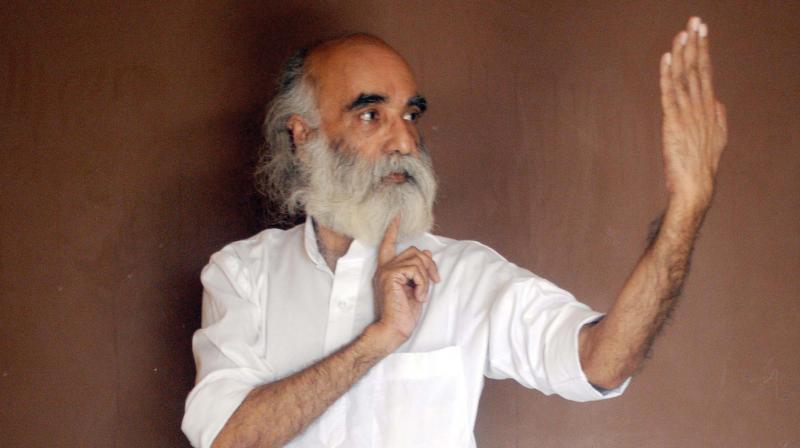
The first feature you notice about Guru Manu is his eyes — deep, calm, filled with mystery. Sporting a long silver beard, a spotless white kurta and saffron mundu, one would easily mistake him for a yogi. But when he starts talking, the Guru’s arms move gracefully, forming mudras and as if in a recital, he pulls you in, to his world of sadir. “Bharatanatyam is Sadir attam in Tamil-speaking regions. Widely considered a temple art form, it is actually based on Tantric philosophy. It’s an art form based on straight line movements involving all the eight directions,” he says as he gestures, demonstrating the hastas with arms forming a straight line. 

A lone warrior who defies gender, racial and hegemonic stereotypes of classical dance, this man’s life is a textbook. Born into a middle class Muslim family in Kodungallur as Abdul Manaf, his penchant for dance was spotted by his brother-in-law Aboobacker, who used to take little Manu to Kathakali recitals and Kutcheris. Falling in love with dance, Manu used to jump across the compound wall of a school near his home to watch a dance teacher training the children. Aboobacker enrolled him for Bharatanatyam classes, but the inevitable storm brewed and he soon became an outcaste. “It wasn’t from the Muslim community. Protests came from within my extended family and people around me,” he recalls. 

His fort, back then, was Irinjalakuda, where he attended concerts and recitals, rubbed shoulders with maestros and got trained under masters like Kalamandalam Raghavan asan. “I learned Kathakali, Kathak and Mohiniyattam, but my heart lies in Bharatanatyam. I left Kerala to learn more and travelled across Tamil Nadu and Karnataka, where sadir followed the lasya-based Thanjavur system, and then to the North. I halted at many places, at times, spent years at one spot. My return to Kerala was after 30 years,” he says. At Madhya Pradesh, where he spent many years, he trained children in Bharatanatyam. 

There, he got to associate with Bharatanatyam exponent Shankar Hombal, a direct disciple of Kalakshetra founder Rukmini Devi Arundale. Hombal considered him as his son and together, they run Kala Padma Institute in Bhopal. As years passed, he decided to take the learning further, outside books and scriptures, and went out to get first-hand experience from temple art works. His references were the temple sculptures in Tamil Nadu and south Karnataka, which immortalised dance moves on it. It was time for Guru Manu to make the move. In a transgressive attempt, he revolutionised Bharatanatyam, which is known for its fixed upper torso and spectacular footwork, by introducing bhangas and bhangis of sculptures to the dance form. 

“What I have learned is that sadir has no original form. An art form that projects femininity, sadir is being traditionally practiced with no hip movements. But in every temple sculpture, the hip had bhangas and bhangis and I inculcated it in performance,” he says, demonstrating the posture of Krishna in traditional pose and his reformed version. 

He researched through paintings and sculptures in temples across the country, came across long-lost dance forms like Laavan. A wanderer, he took his artistic rebellion to places and trained children in his own style. He is not a strict guru but is very particular that his disciples should give their whole heart to the art. “I do not train anyone who eyes competitions. Only a limited number of dancers take forward their passion. A lot of dancers are doing research and coming out with doctorates. Does anyone know what they have researched and found out?” 

In Kochi, where Guru Manu is on a halt between travels, he is training a small group of women — homemakers and artistes who are passionate about Bharatanatyam. He also conducts workshops for students. “My training technique involves developing inquisitiveness in my students so that they too get out of the fixed structures to explore more and experience the real sadir,” he concludes.


 Published in Deccan Chronicle on February 7, 2018

Tuesday, February 6, 2018

A life-changing journey

Years ago, when Kevin Cherian read an article on Ziro Festival, he was impressed and decided that someday he would go to Arunachal Pradesh to attend the annual music fest. He knew that the journey wasn’t easy — there are no direct flights or even efficient transport facilities. 

At 27, while running a computer business in Kottayam, his hometown, Kevin decided to take the plunge. Kevin says, “I didn’t know Hindi or have a proper idea of the Indian map.” He planned it as a week-long trip, but didn’t expect that it was going to be a life-changing three-and-a-half-month solo journey, shattering every single idea he had about a safe, happy world. 

The trip, as expected, was tough. He travelled by train and share taxis, hitchhiked and finally reached Ziro. “The festival was a wonderful experience…meeting people from all over the world, it was a big revelation for me,” says Kevin, in an excited voice. From there, a friend suggested that he travel all around the Northeast and he thought of giving it a try. But he didn’t have much money left and whenever he ran out of money, did menial jobs and earned enough to continue the journey. 

At Tawang, he worked as a waiter in a cafĂ© for a fortnight and earned Rs 1,000 with which he covered the northeast states except Nagaland. “Their lives are very different. Everyone has an iPhone and by the time they turn 18, they move in with their partners, away from their parents. The women are the decision-makers there,” he recalls. 

His next destination was Punjab, where he stayed in a rural area in Amritsar with farmers for a month. He also took tuition for children there. 

From there, he went to Jammu and Kashmir. In Jammu, he was looking for a place to stay when a driver offered him a lift. “He appeared very friendly at first, but the ride was very long. After covering almost 40 km, I smelt something fishy and asked him to stop, but he wasn’t paying heed. I realised that I was being kidnapped.” 

On reaching a place called Avantipura, Army officials stopped the vehicle. The two were stripped and searched and asked why they were there. 

“I was relieved actually and told them that I am from Kerala. Suddenly, they pointed their guns towards me. They told me that there was no reason for a Keralite to come to Avantipura. I explained my journey to them and showed them my ID cards. They must have been convinced and let me go. Only then did I realise that we had walked in to an encounter where IS militants were gunned down. They thought that I too was one of them!” 

He was safely taken to Srinagar that night. But that incident didn’t deter him; he continued the journey to Hasinapur, 30 km away from Meerut, UP. “The villagers are mostly farmers. They have a lot of money but no toilets, schools or phones. They live according to khap panchayat diktats and the caste system. I couldn’t even convince them that there is a state named Kerala,” he exclaims. 

The journey taught him a lot. Raised by his mother Leena after the demise of his dad, Kevin has never been out of his comfort zone. “The journey taught me so many things, including Hindi, cooking and the Indian map. Both my mind and body were cleansed during the journey; I lost oodles of weight. Above all, I realised that Kerala is heaven. There are still underdeveloped places in our country,” he says. 

It has been just a few weeks since he returned, but Kevin wants to go on his next trip — to Varanasi with a travel group, working for them. “But my mother is furious and I am grounded now as she fears that I would disappear again,” he laughs.

 Published in The Asian Age on February 6, 2018

Monday, February 5, 2018

Bringing Malabar stories on stage

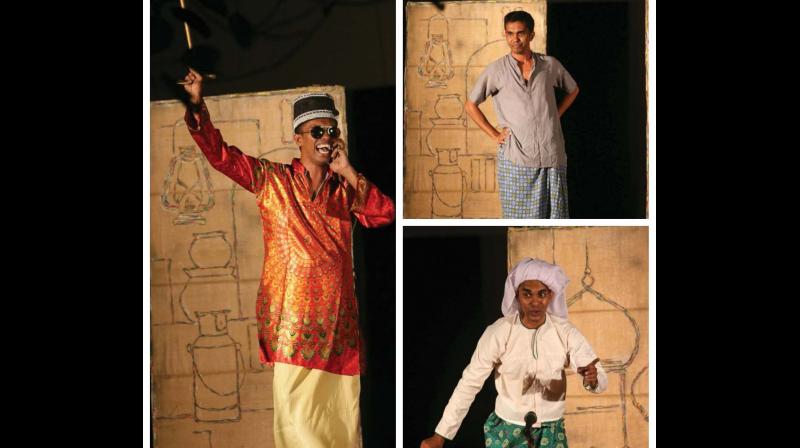
On the stage, when Sulaiman talks, jokes, laughs and emotes, there’s no trace of Binoy Nambala in him. When he walks in and out of stage playing six characters during the hour-long show Sulaimante Payakkam Parachilukal, the audience, surprised by the unique, humorous presentation in North Malabar dialect stay hooked on to it till the curtains fall. Binoy would say that the show is not a novel idea and has been here for long. 
“Payakkam Parachil is an age-old Mappila art form popular in Malabar region, especially Vadakara, till the 1960s. It is more of a satirical storytelling. An artiste would perform before a small crowd in a village by talking about several issues, both social and regional, in humorous language. At times, they take the performance to another level by amicably settling petty issues between neighbours and villagers,” recalls Binoy, who hails from Parappanangadi in Malappuram. 
He was attracted to the long-lost art form while preparing his PhD thesis at Sree Sankaracharya University of Sanskrit, Kalady, where he is a theatre student. Chakyar Koothu or the new-age standup comedy can be considered a closer version of Payakkam Parachil — which has been either a storytelling technique for a region or a means to attract people to the mosque to attend preaching sessions during the holy month of Ramzan. 
“What I perform now is an improvised version of the original with the accompaniment of music. I discuss current affairs and social issues laden with jokes and funny dialogues in various costumes,” he says. 
Directed by Gopan Chidambaram, who penned the story for Amal Neerad’s Iyyobinte Pusthakam, Sulaimante Payakkam Parachilukal has been to several parts of the world where people welcomed the show gladly. “The responses have been very helpful. Elders who have watched the original format are of great help by giving proper suggestions and guidance,” he adds. Since there are minimum cast members and props - himself and his musician - and the sets which would fit in his car, Binoy has been taking Sulaiman to various stages across Kerala for the past one year. 
On the movie front, last seen in a comic role in the super hit Aadu 2, Binoy is also part of the upcoming Anwar Rasheed directorial Trance. Theatre too has never taken a backseat for the actor, who, last year, won the second best actor award instituted by the Kerala Sangeetha Nataka Akademi for Bombay Tailors. 
On Monday, Binoy will perform his Payakkam Parachil at Mahatma Gandhi Beach, Fort Kochi, at 7 pm.


 Published in Deccan Chronicle on February 5, 2018

Friday, January 12, 2018

Dark is divine!

All these years, the popular imagery of Hindu deities has been of fair-skinned model-like figures with chiselled torso sporting a halo.


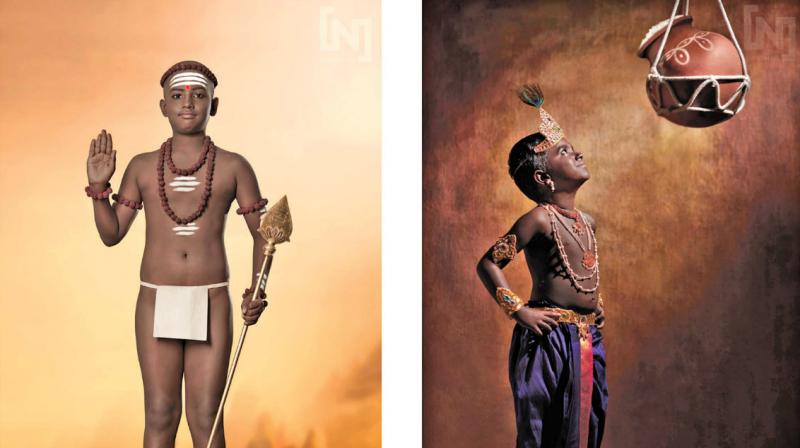
All these years, the popular imagery of Hindu deities has been of fair-skinned model-like figures with chiselled torso sporting a halo — like the images seen on Sivakasi calendars. When Chennai-based ad film makers Naresh Nil and Bharadwaj Sundar decided to do a different photo series for their personal satisfaction, after myriad ideas and brainstorming sessions, they zeroed in on the subject ‘Dark is Divine’. 

Featuring everyday men, women and children, the photo series showed gods and goddesses as dark-skinned figures. No sooner than they uploaded the photos on Facebook, it broke the Internet; with close to 5,000 shares and over 3,500 likes. 

If you call it a revolutionary act, the duo would correct you, “The photos and idols of gods we have been seeing are in no way close to reality. Of course, no one has seen God, but the images need to be true according to the epics. Ours was an attempt to do it right along with pointing to people’s obsession with fairness.” 

Naresh and Bharadwaj have been friends since college days and their startup firm has been working on ad films, fashion photo shoots and musicals since 2012. At times, in between work pressure time for clients, they do a few works "from their heart". The ‘Dark is Divine’ series is one of those. 

“Earlier, we have done two videos —60 jobs, 60 seconds for May Day and an A cappella version of Jana Gana Mana for Independence Day. This idea came up a couple of months ago and after doing a bit of research, we started working on it,” recalls Naresh, who handled the photography part. Bharadwaj reveals that they had planned it as a 12-photo series and, due to time and budget constraints, narrowed it down to six. “The seventh one - of Sita and Lava-Kusha — was not planned earlier. Our makeup artist Sridevi Ramesh, who is also a plus-size model, was inspired by the work and expressed interest that she be part of it. And so she became Sita,” he says. 

The photos have it all —the grace, aura and divinity; even the postures are maintained in the traditional way. They haven’t attempted to change even the poses. Bharadwaj explains why, “We were already bringing a change and didn’t want to make it more abstract.” 

Both of them agree that before looking into movies for blaming popular culture for inculcating a liking for fairness, one should introspect. “Everything starts from home. Every mother wants their son to marry a fair girl, a ‘Lakshmi’. That’s what needs to change,” Naresh says. 

Bharadwaj adds, “There’s so much negativity associated with dark skin. Lord Ram and Lord Krishna, who are dark-skinned according to Puranas, are portrayed as fair or blue. Even Ganesha is all white-skinned in paintings, movies and idols. Have we ever seen a white elephant?” 

As part of breaking stereotypes, the two preferred normal people over models. Even the children featured belonged to family and acquaintances. While a lot of people have appreciated the work, not all are happy about it. “It’s natural. God is a sentimental subject. When we try to break what people have been seeing for long, they will naturally be upset. But this is our one small step towards making a change,” Bharadwaj says. 

This photo series, they hope, will bring acceptance to all those dark-skinned women who are expected to be like Lakshmi.

 Published in Deccan Chronicle on January 12, 2018

Saturday, January 6, 2018

Home that embraces light

The 3,500 sq ft Chungath House in Kochi is a work of marvel.

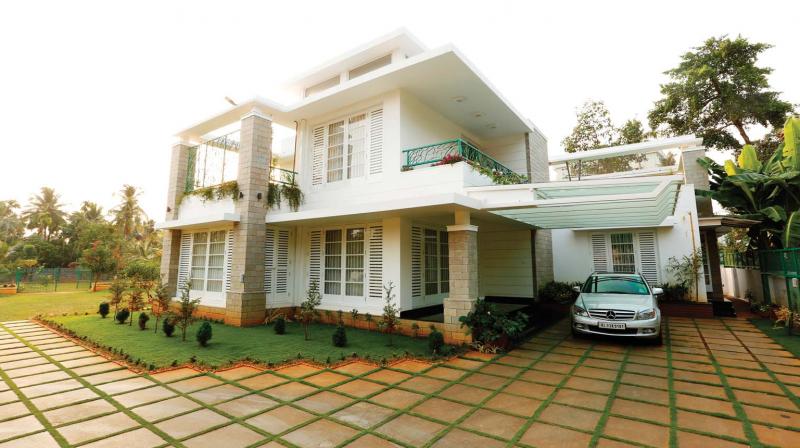
The tall, white Chungath House in Vennala, Kochi, hasn’t still got over the Christmas hangover; the red and white decorations, the Christmas tree and the lightings are all intact. Situated on a 20 cent plot, the 3,500 sq ft house with its French windows and peculiar construction oozes charm. 

Joseph Wilson and family were in Nigeria where he worked as an engineer for several years. When they decided to settle in their hometown, all they wanted was an airy, spacious two-storey home with four bedrooms for the family and ample space to accommodate guests. “It was our architect friend Herman Fernandez who took care of the plan and design. From the basic plan to the furniture for each room, he had a vision about every minute thing, which turned out into this wonderful home,” says Joseph’s wife Reeni. 

The brass work on the door and shelves and the glass details on the walls and showcase give an insight to the architect’s eye for precision. On the doors, windows, walls and false ceiling, there are a lot of horizontal lines, a theme which the house is based on. The front door, which appears as an extension of the French windows opens to a huge mirror where the visitor can see their reflection. The living space, with windows on two sides, offers a view of the whole ground floor. “The position of the bedroom and the kitchen were decided by us according to vaastu. The rest was left to the architect,” she says. 

The ground floor has two bathroom attached rooms – a master bedroom and a guest room. The living room and the dining space are separated by a beautiful showcase decorated with LED lamps. “There are no doors or walls in between. A person sitting on this sofa can see the one in the kitchen,” Wilson says. The grey and beige colour combination of windows, dĂ©cor and granite flooring are complemented by the wooden doors and cupboards. The false ceiling with LED lamps has a white-brown combination. 

“Automotive paint is used on the doors and the walls to give it a lustrous appearance. Brown colour and wood theme is also used extensively,” he says. Between the dining space and the open kitchen is a small living area with a photo wall in the background. 

On the opposite wall is the huge TV set placed in a proper viewing distance from the grey sofa there. The dining space and the lawn are separated by huge sliding glass doors which offer a great view of the exterior. 

In the kitchen, cabinets are built in a triple-wood combination, countertops are built in glass surface. A six-seater breakfast table and a crockery shelf sporting crystalware is an attraction of the kitchen. The kitchen opens to a work area and then, to the lawn. Another attractive feature of the house is the huge teakwood staircase perched on an elevated wooden laminated space that leads to the first floor. The natural stone-clad wall on the sides goes up to the ceiling with a skylight. The space under the staircase has been converted into a guest’s washroom. 

What awaits one at the first floor is a cozy living room with a mini-library and beautiful art works adorning the walls. The rooms of Joe and Atheena, the Wilsons’ children, are on this floor. The balcony space is bordered by a green grill which matches the white walls. 

The sprawling lawn in the backyard can accommodate over 100 persons. The grass planted in the spaces between perforated terracotta paving blocks adds to the attraction of the lawn. “We can arrange a party in this area. The Mexican grass is well maintained to preserve the beauty of this place even when we are away on vacation,” Reeni adds. 

Apart from a floral garden and a vegetable garden, the backyard also has an outhouse for the servants. While the glass ceilings and huge windows let in ample air and light in the day, the house is all illuminated in the night. Day or night, the ambience is always the best at the Wilsons.


Published in Deccan Chronicle on January , 2018

Monday, December 25, 2017

Turning her life around


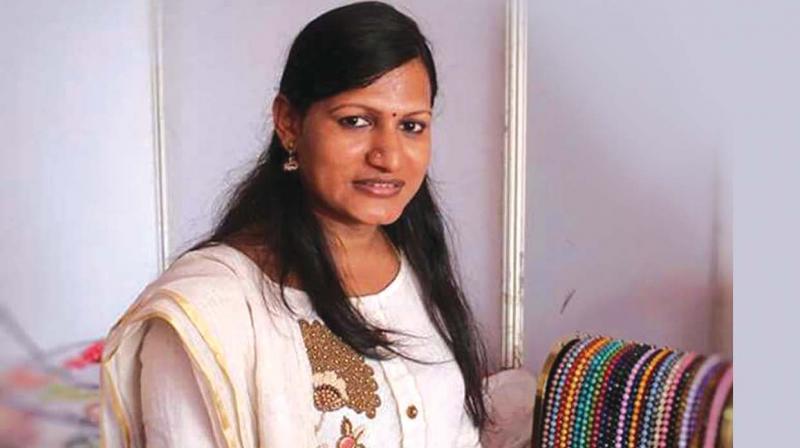
It takes one a few moments to follow Thripti Shetty as she shares her story, not just because she speaks fast, but because it’s a flow of blunt truths. In a painfully honest conversation, she speaks of her journey, from the Kasaragod native Kiran, who was puzzled about his identity, to Thripti, the first transgender entrepreneur in Kerala. “All my life, my dream was to live as a woman,” she says, sitting at her stall of handicraft products and handmade jewellery at the Christmas Mela at Marine Drive, Kochi. To realise the dream, Thripti, then Kiran, left her hometown Manjeshwar in 2004 to earn money, trusting a man who promised her a job in Bengaluru, where she worked unpaid for six months. She left the place and after earning her ticket fare from menial jobs, returned to her hometown. Experiences had left her shattered, but the desire to get out of a man’s body stayed strong.

She says, “I worked with a catering firm in Mumbai and later, in Kozhikode. In 2006, I went to Chennai and embraced the hijra culture. My aim was to undergo sex reassignment surgery and make money. I had only two choices — sex trade and begging.” Thripti chose the latter.

In 2012, she underwent sex change at a dingy Chennai hospital on a table with no anesthesia, operation theatre or proper facilities. Right after the surgery, she was sent home. On the 40th day, she was ceremoniously initiated to womanhood through jalsa, the ritual of new birth. On the 42nd day, the wound got infected and she was catheterised. “I went for begging, carrying the catheter. It was painful but I had no qualms. It was all for a life I wished for,” she reasons. 

It was when she came to Kochi two years ago that her life changed forever. “One day, for no reason, I was attacked by two men who came in an auto. Dr. Annie of Ernakulam General Hospital, who treated me, was the one who introduced me to jewellery making and helped me lead a decent life,” she says. A fortnight into learning the new art, Thripti held her first exhibition. Then on, there have been a couple of exhibitions. “The responses have been great. I make jewellery using stones, silk thread jimikkis and dĂ©cor using discarded bottles. There are jute products and paintings as well,” she adds.

The year has been awesome for Thripti, getting modelling assignments, becoming one among the 15 finalists of a beauty pageant, being part of the movie Kallanmarude Rajavu and participating in the art festival Samanwaya. “I got a job in Kochi Metro, but since my heart lies in business, I chose to go with entrepreneurship. I became the first transgender to register under the Handicrafts Development Corporation of the Kerala government. I have also applied for the Mudra loan. The next step is to own a shop, if possible, with the support of the Tourism Department,” she reveals. Thripti has been to several places in the country but would like to call Kochi home. She says, “I want to settle down here and prove to the world that a transgender can live in pride, holding my head high.”

 Published in Deccan Chronicle on December 25, 2017

Wednesday, December 20, 2017

Little, but fierce artwork


The belief is that each grain of rice has a name engraved on it, of the person whom it is destined for. Not until you meet Thomas Jacob and he shows you the rice grain on which he has painted the face of Jesus Christ.

Then there is a landscape art work – a lone boat in a river as the sun sets, as two birds fly towards the horizon, again, on a grain. “There were more, but it fell off my palm and I couldn’t find it,” recalls Thomas, who reveals that he doesn’t use either a microscope or magnifying glass. Even the brush, is a modified point brush with all its bristles except two or three cut off.

That’s not all. A specialist in miniature art, Thomas’ art works range from micro art on chalk to pencil lead and crayons using paper cutter or safety pin. The chalk engravings of Marilyn Monroe, Baahubali, Kabali, Pulimurugan, mother and child, Krishna, Mahabali, Arab and the falcon; the crayon structure of Spiderman; and dancing girl, lock and key and crucified Christ boast of such precision that as he shows you around his Kochi apartment filled with his artworks and colour pencil portraits, you wonder how he manages to do all these. “It has been difficult. For the past 10 years, I have been working in the IT field and used to work on micro art at nights. If your heart lies in art, you can’t devote yourself to another job. So last week, I resigned from the job to focus on artworks,” says Thomas. 

Before writing him off as crazy to have quit his job, know that his artworks have been getting good responses. He says, “I keep on experimenting. Earlier, it was terracotta jewellery. Then came micro art and later, diorama (miniature landscapes) and paper cup works.”

 Published in The Asian Age on December 20, 2017

Thursday, September 7, 2017

Lessons from jungles

Aparna Purushothaman, whose only dream was securing a government job, is now a school teacher and a passionate wildlife photographer.


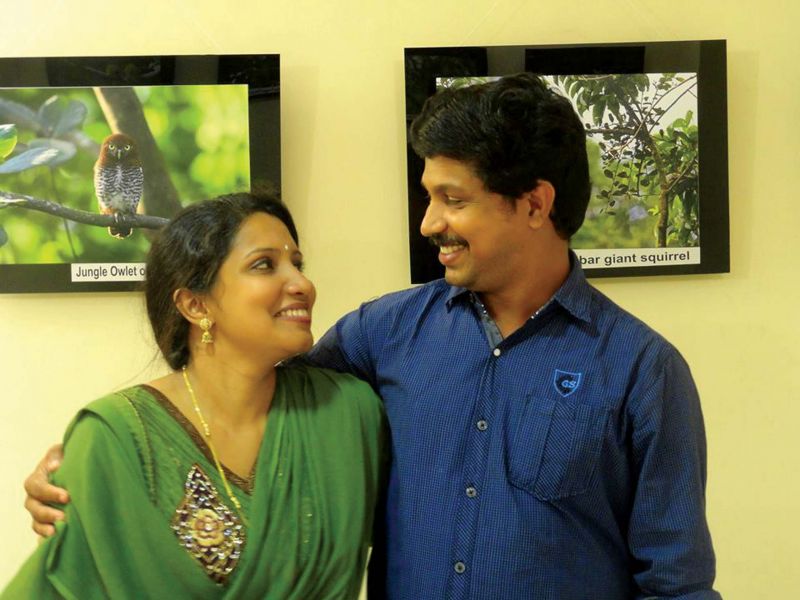
For most girls, wedding marks the end of their dreams as their world shrinks and limit to their homes and for a few fortunate, their office. For Aparna Purushothaman, it’s just the opposite. Marriage opened before this school teacher new avenues; from a bookworm whose only aim was securing a job, she turned into a wildlife photographer who explores the forests looking for rare sightings and exquisite clicks.


Looking back at those days, the 33-year-old can’t hide her surprise. “As a child, camera was a rare and precious object kids weren’t allowed to touch. Also, I was a sick child and hadn’t gone for even a study tour. I was a padippist with no dreams beyond a secure government job.” Her only extracurricular activity was glass painting, which she claims, anyone can do.

It was when she was doing her MPhil in 2010 that she got married to Ashok Damodaran, an assistant engineer at KSEB. On seeing her glass painting works, an impressed Ashok asked her to focus on art and she hesitantly tried her hands at painting. Soon, she discovered that she was ‘not bad’. On their first wedding anniversary, Ashok gifted her a Sony Cybershot camera remembering her mentioning once that she wished for one. The excitement is still there in her voice when Aparna remembers those first clicks, “It was a small red one. I clicked everything I saw. My practice ground was the lonely Kattoor Beach near his home at Pala.”


One day, in the garden outside her lab, she spotted two Red-whiskered bulbuls building a nest. She clicked their activities every day as they built the nest, laid two eggs, guarded those till they hatched, the nestlings were fed, taught to fly and finally, left their home. “After my husband posted it on Facebook, the response was very encouraging. That was the beginning of photographing wildlife. He was working in Sholayar back then. I went there with him and clicked the photos of a lot of birds and posted it on Facebook. Many said I had a frame sense and could try a DSLR camera. Ashokettan was waiting for such a response and he literally rushed out to buy me one,” she recalls.


Aparna learned the techniques from the manual and help from photographer friends. Caught in the web of wildlife photography, she began to keenly follow professionals like Rathika Ramasamy and their beautiful action shots. “My interest was in avian photography. Animals came only secondary,” she confesses. Then came the huge turning point. The couple was roaming in the forests in Sholayar when they came across an animal which resembled a mongoose. She was reluctant to capture it on the camera as her focus was on birds, but on Ashok’s insistence, she took a few ‘lazy clicks’. The shocking revelation came when she asked a friend what the animal was. It was the endangered carnivorous Nilgiri Marten that featured in the IUCN Red List of Threatened Species. No one knew that it existed in Sholayar! It was her ticket to fame in wildlife photography and zoologist circles. “It also boosted my confidence. Then on, it has been journeys and clicks,” she says.

Ashok got a transfer to Kottayam and Aparna’s school was in Kannur, but whenever they got a holiday, the duo escape into the wilderness. They had been to forests all over Kerala and the borders of Tamil Nadu and Karnataka. No jungle has frightened her. “Forests are the safest place on earth. Animals are very harmless, far more than human beings. You just have to stay on the forest path. For a sharp click, you need good lighting, so a photographer always stays in well-lit open areas.”


Ashok got a transfer to Kottayam and Aparna’s school was in Kannur, but whenever they got a holiday, the duo escape into the wilderness. They had been to forests all over Kerala and the borders of Tamil Nadu and Karnataka. No jungle has frightened her. “Forests are the safest place on earth. Animals are very harmless, far more than human beings. You just have to stay on the forest path. For a sharp click, you need good lighting, so a photographer always stays in well-lit open areas.”


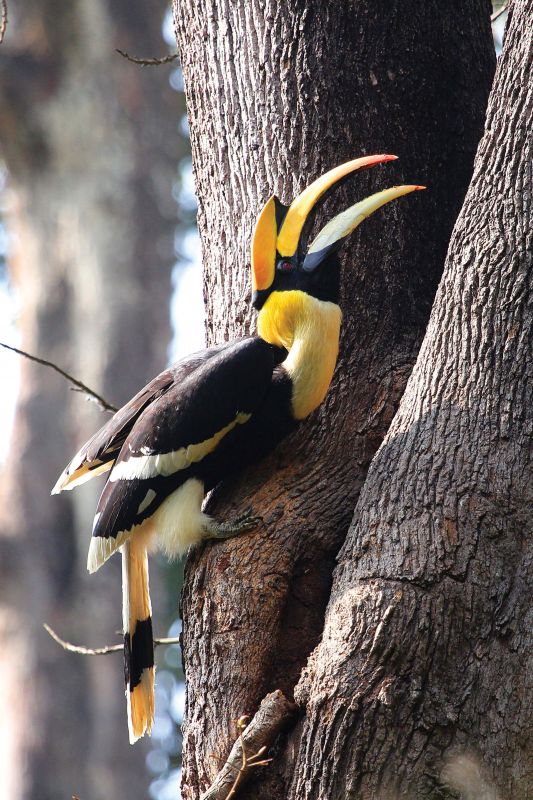
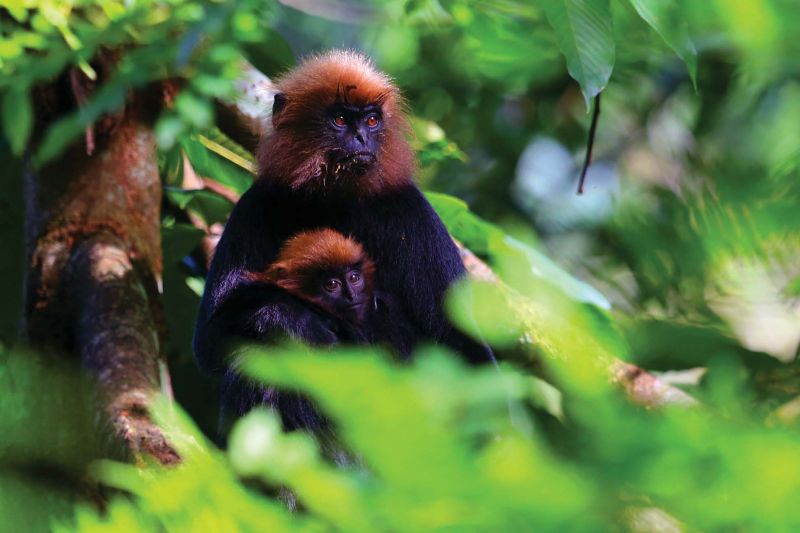
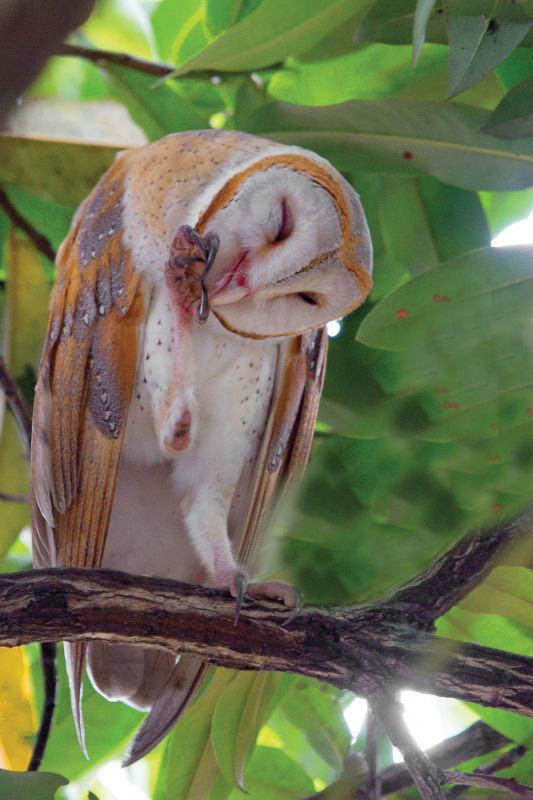
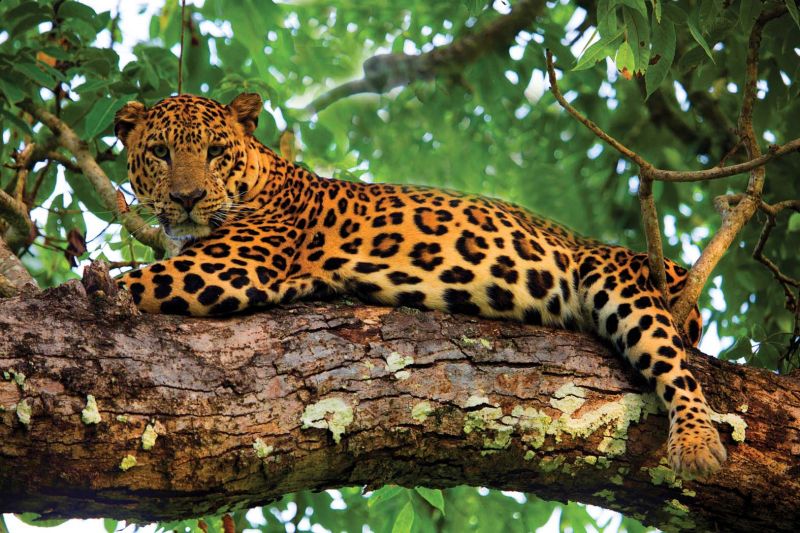
Asked about her best shots, Aparna is confused. There are so many — the leopard that won her an award, the lizard that was chosen by Lalithakala Akademi, the Great Indian Hornbill feeding its mate, the frightened Nilgiri Langur holding its baby, so on. But her all-time favourite is owl. She has already photographed eight of the 10 owl species spotted in Kerala. “We are setting out next week to spot the Indian Eagle Owl. I am also looking for a black panther,” she says.

Inspired by their ‘Physics miss’, a lot of her students want to become like her. Aparna is happy about them pursuing wildlife photography as a passion, but won’t advise it as a career choice. “It earns only happiness, not money. Jungles offer a lot of sights and inspire you to explore more, but the income is zero.” She has more plans — to spread awareness on nature conservation and various rare wildlife species through exhibitions, to write a book, to go on that long-pending international wildlife expedition and photograph the Bird of Paradise species in Papua New Guinea.


 Published in The Asian Age on September 8, 2017

Thursday, July 20, 2017

Partners in flight

Childhood sweethearts Sanjay and Riya are a much-loved travel vlogger duo who go by the name Trip Couple'.


Sanjay Haridas and Riya Tony have known each other since childhood. As they grew up, their friendship blossomed into love and with their parent’s blessings, they got married and flew to the US, where Sanjay worked as a software developer and Riya joined for MBA. Till now, it was just another happy story of two childhood sweethearts. What follows is a wonderful journey of two adrenaline junkies.

Every weekend, the couple, both 26 years old, explore new places, make videos, edit those and upload it on their YouTube channel Trip Couple, which has brought the vloger couple a huge fan base. Speaking over phone from New York, Riya says, “The channel was initially named ‘Kantha Njanum Varaam’. But since people here call us ‘Trip Couple’, we decided to rename it.” 

The journeys happen over the weekends. At times, they spend the nights there. Apart from visiting the place, the couple makes it a point to learn more about the place, explore the food, culture and history. “We go with a schedule. I do the research part by planning the places to visit, the less-explored sites, off-road adventures, food and accommodation. We always try to include in the videos interesting trivia about the places. The shoot, edit, graphics and music are handled by Sanju,” says Riya. 

They have explored Boston, Philadelphia, Napa Valley, San Fransisco, New Jersey, etc in the past one and a half years. The most memorable journey was to San Fransisco where they spent two whole weeks. “That was our best trip. It’s beauty everywhere in San Fransisco. We went to the McWay Falls, Big Sur coast, Muir Woods, Alcatraz Island, so on. Many beautiful spots were not frequented by people as they weren’t featured in the lists of tourist spots.” 

The trip was memorable in another way too. At San Fransisco, a purse containing Riya’s passport and Green card were stolen from their car. Till the new IDs were issued, their travels were limited to the borders. The farthest they could travel was to the Canadian border. Not all trips were fun-filled either. Only with a shudder can Riya recall that scary trekking night in Pennsylvania. “It was a trip full of mistakes. We started trekking in the evening by 7 — our first mistake. After almost two hours, we reached the top and while descending, I almost stepped on a rattle snake. I jumped back and both of us fell down through the thorny bushes. Suddenly, it turned dark and we could sense the presence of wild animals around. We couldn’t think of anything, forget lighting the torch! We ran through the pitch black and reached the starting point in just 20 minutes! So, our next video was titled ‘Travel Tips: Trekking essentials’,” she laughs.

They have so far posted 37 videos. Interestingly, all those are not travel diaries. A three-part series is about the Montauk Project, alleged secret government project conducted as part of developing psychological warfare techniques like time travel, at Camp Hero on Long Island, where they live. “There are a lot of conspiracy theories about the experiments conducted in connection with the project. It is said that a ship was attempted to be made invisible, following which many lives were put in danger. The entry to the site was banned and we couldn’t get permission. But we did some research and made a video on what we came to know.” 

The couple also did a Halloween special video by visiting three haunted places — the infamous Amityville horror house, Lake Ronkonkoma and Pilgrim Psychiatric Centre. “Sanju loves horror stuff and I am scared about those. He planned the trip to bust the horror myths and my fear. Though he preferred a night journey, I didn’t want that. All along the way, people kept on asking us to go back. That trip was very interesting though I haven’t yet got rid of my fears,” giggles Riya. 

The videos were earlier shot on handycam, but later, as the subscribers increased, they invested on cameras, mic and drone and improved the video quality by adding interesting visuals, background score and graphics. “It has grown out of travelogues. Earlier, our backpacks had clothes. Now, it is more equipment and bare essentials. We always ensure packaging the videos in a pleasant manner with colourful visuals and happy presentation. We want to inspire people to pack their backs and distress themselves by exploring the world,” she says. 

The duo wants to globetrot and explore more countries and continents and if possible, stay there and experience the magic the places offer. They are also regretting not having been able to travel across India. During the next vacation, possibly next year, they are planning a big family trip covering many places, especially Hampi, where they had planned their wedding photo shoot that didn’t happen. 

As their vlog description reads, the couple’s motto is: Hit the road, live the moment, tell the story. Theirs is indeed a match made in heaven!

https://www.deccanchronicle.com/lifestyle/astrology/weather-and-prayer-timings-for-tuesday-august-19-2025-1898268

 Published in Deccan Chronicle on July 20, 2017

Wednesday, July 12, 2017

Untold tale of intersexuality

Eka, the makers claim, is the first Indian movie on intersex community. 


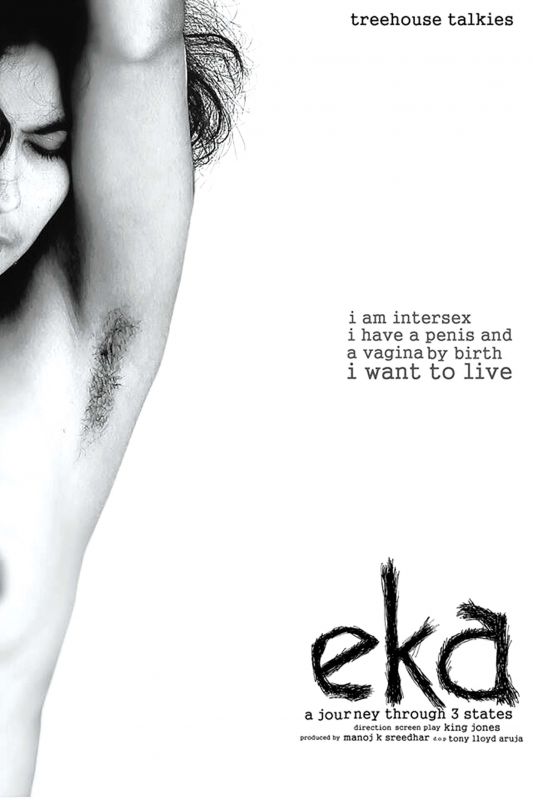
A couple of days ago, on Facebook appeared a poster of a topless woman, with her hands bound together and hairy armpits exposed. It was the poster of Eka, the first Indian movie that discusses intersexuality. In the days that followed, two more posters were released — one showing blood trickling down the feet of a menstruating woman and another depicting her naked lying on her back with a perfect reflection on the floor. The posters carried the tagline: ‘I am intersex. I have a penis and vagina by birth. I want to live’. For the uninitiated, intersexuals are people born with a mix of male and female biological traits. A quick Google search would show that worldwide, only less than 10 movies have discussed the topic. Eka, the makers claim, is the first Indian movie on intersex community.
The model in the poster, Rehana Fathima, plays the titular role in Eka. The movie talks about a road journey undertaken by two colleagues — Eka Sindoori, an intersexual from Tamil Nadu, and Laila, an orthodox woman hailing from Kerala, the freedom they enjoy during the bike ride from Bengaluru, the lives they come across and their experiences. Known for her daring stance in movements like Kiss of Love, body politics discourses and breaking into the male-reserved domain of Pulikkali, Kochi girl Rehana was attracted to the movie for its perspective. Speaking in a surprisingly soft voice for a bold artiste, she delves into the role of Eka Sindoori, the intrasexual.

Stressing that nakedness hasn't bothered her at all, she says, “For me, body is not a sexual object. It is nothing vulgar or something to be ashamed of. I am not someone with the ‘so-called’ feminine traits, especially in my body and personality. What caught my eye were the questions the movie asked about body, sexuality and gender.” 

Like Eka, Rehana too has started retaining her body hair. “Eka does it intentionally to irritate her colleagues. But for me, it's an assertion of my politics of body. Who decides that armpit hair is macho for males and unhygienic for women? Why does a bare chest become sexy for a man and obscene for a woman,” she asks. 

Rehana is happy about the immediate responses to the poster. “People have started accepting crude realities. The change has begun. And I think ‘Kiss of Love’ had a great role in bringing about a change in thinking among Malayalis. I am happy to be a part of the change,” she says. Not that all are receptive; there are intolerant and abusive comments too. But Rehana ignores it with her rehne-do (let it be) attitude. 

Eka director Prince John calls his movie a journey through three states — body, intersexuality and pubic politics. It's also a road movie along three states - Kerala, Karnataka and Tamil Nadu. Sitting at a food court in Marine Drive, Kochi, in earnest voice, Prince speaks about his movie, its theme, the making and the actors. “Intersexuality is a taboo subject and many are still on denial mode about it. It is said that one in around 10,000 births are intersexuals, but their physicality is changed through surgery. However, as they grow up, they have to face the reality and fearing isolation, they refuse to come out and live in agony. In Kerala alone, only three have declared their identity as intersexuals; they are the minorities among minorities." 

The movie has been on his mind for long. “The movie talks about body politics. A body doesn't commit any crime. What makes body a sexual object are the surroundings. A naked body on a mortuary table doesn't arouse sexual feelings in a heterosexual male, but a fully covered body in a ‘favourable’ circumstance does. The contradiction can't be ignored.” 

The characters Eka and Laila develop a very strong bond, something with the warmth of a female bonding and a romantic relationship. “Eka is a bold person who reveals gender identity everywhere but their workspace. The reason for that is an eye-opener to the living conditions of intersexuals. The film deals with pubic politics and breaks the existing concepts of sexuality. It breaks off the male-female binaries and focuses on duality,” he states. 

Apart from Rehana, the movie has on board Anusha Paul, who portrays Laila, and a horde of transgenders. The whole crew is a bunch of passionate filmmakers who have come together for their love for movies and their stance. The shoot has no sets and covers a queer pride march. 

Everything is shot at real places, including real incidents. Showering praise on Rehana for her body commitment, Prince says, “Rehana always surprises me. She lives as Eka.” However, he is surprised that the posters evoked not many negative reactions. "We had expected a storm, but the people received it sensibly and reacted very positively. I am happy that they could perceive it as an art work and not porn. Thanks to the DOP Tony Lloyd Aruja. But I do expect a storm in the coming days. So far, none has blocked it in social media. That itself is a welcoming sign,” he smiles. 

Update: By the time this paper went to print, the posters of Eka have been removed by Facebook, much like Prince had predicted. But the filmmakers say, they will continue to advocate body politics however ‘intolerable’ it is.

 Published in Deccan Chronicle on July 13, 2017 

Monday, July 10, 2017

Aroor's tech guru

Ebadu Rahman uses his YouTube channel to create a positive impact.


Do you know that adding a missing place, photos or reviewing the bus station you enter would earn you points and badges in Google Maps? Are you aware that you can know the number of times the mail you sent has been read? Has it ever occurred to you that scanning a QR code can automatically update the entry on your Google calendar? A quick scan through the YouTube channel 'Ebadu Rahman Tech' shows you that all these things are possible. 

Ebadu Rahman, the man behind the hit channel, is happy that more and more people are subscribing to his informative tutorials. A tech Vlogger, social media consultant, Facebook video marketing professional and strategy advisor, Rahman shares information on technical subjects - ranging from fixing a water-damaged cell phone to applying online for a birth certificate. “I explain things in simple Malayalam in an interesting way so that people get hooked to the video,” says Ebadu, who, though has been running the channel for over a year, gained popularity in the last three months. He has been uploading a video each day with tips to bring the layman closer to technology. The videos also educate people about various government schemes that can be accessed online instead of facing serperntine queues and red tapes.

Ebadu started off as a wedding videographer, but knew that his heart was elsewhere. He always had a penchant for technology and kept his know-how updated. When Google purchased YouTube in 2006, he sensed that it was a new beginning. “By 2010, I quit videography and focused on YouTube, which has been my passion, career, and life since then. I am a certified YouTube consultant and have worked for various Malayalam TV channels,” he says. He now earns much more than he used to -–both in terms of money and happiness. 

For Ebadu, social media is not for just entertainment. “People here are yet to realise the reach and market of social media. It can be used for so many positive purposes. More than money, what attracted me is its potential for social purposes. Vlogs can be started with a zero budget – you just need a mobile phone. And you can make money by spreading good ideas and not cheap stuff. Be a responsible social media user,” he says, inviting more content creators. 

The YouTube channel is a family affair for the Rahmans - the video is shot by Ebadu's wife Safna and by their son Raihan at times. The graphics and editing are being handled by Ebadu himself. An old cattle shed in their home at Aroor has been converted into a studio where the shoot happens. The family waiting for their little daughter Raima to turn one to launch another YouTube channel – Safna's Tips, about kitchen tips, home remedies and traditional practices people need to know. 

Apart from running his own channel, attending technical sessions and being ready to answer any doubt 24x7, Ebadu also manages over 10 YouTube channels for his clients. Where does he find time for all of this? Smiling, he says, “Actually, I have a strategy for that too. I go with a daily schedule and do not take up anything that affects it. Above all, I love what I do.”

 Published in Deccan Chronicle on July 11, 2017 

Tuesday, July 4, 2017

Time to declutter your mind

A mental block, the worst nightmare of a professional, can be dealt with sensibly by switching your activities or moving to a new place.


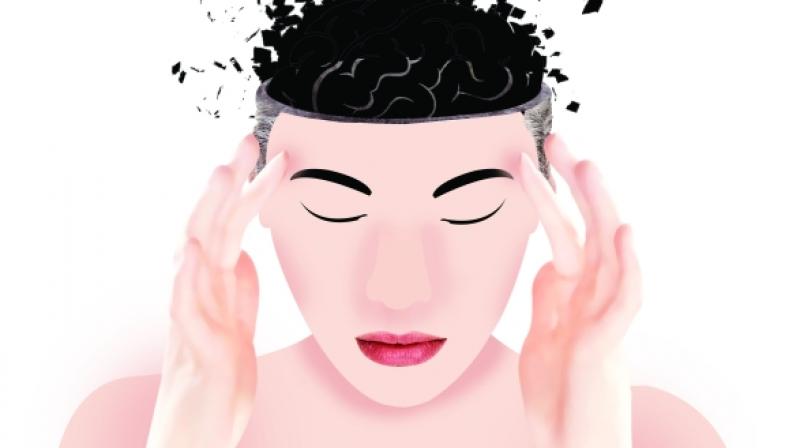
Everything might be going great with your career progressing upward, all your moves perfect and life flowing unhindered, but one day you just go numb, you can’t step ahead and everything appears frozen. Many of us might have faced this. From a student to a celebrity, a mental block is the worst nightmare! The moment you get stuck and lose the motivation to go on is dreaded by all. For some, it is just a passing phase; others need quick intervention — the sooner the better. But why does it happen? 

“There might be several reasons, mostly emotional ones,” explains Dr Shaji Prabhakaran, a senior consultant neurologist. “It’s a competitive world and everyone is under stress to outperform each other. There’s a lot of negativity and pressure that leads to mental blocks,” he says. Acceptance of the situation is the first step. “Understand that it can happen to anyone around you. Take a break, relax, find other interests and pursue them. In fact, activities like yoga can be of great help. If nothing is effective, do not give up. Seek professional help,” he says. 

A mental block that affects one’s performance, skill, creativity, career or life need not be sudden. “Some events might trigger your suppressed memories and you unconsciously block yourself. It can range from witnessing a death to a traumatic sexual abuse. Though we can’t say why the mind acts this way, obsessing about it doesn’t actually help much,” feels Dr C.J. John, chief psychiatrist of Medical Trust Hospital, Kochi.

The burden of expectations results in emotional turmoil in most cases. For a student, a wrong choice of course might make him realise it was not his cup of tea and cause mental blocks. Performance anxiety can be the trigger for an athlete or a sportsperson who loses focus. “Numbness is not insensitivity; it can be the result of hypersensitivity. That is why some people just watch and don’t act when accidents happen. They go numb as their mind prevents them from acting,” Dr John adds. 

However, all these can be dealt with sensibly. Urbanisation causes a block in all physical and emotional spaces. When leading a target-oriented lifestyle, you can’t escape from mental blocks easily unless you cultivate the ability to cope up with the fast pace. “Instead of getting tormented, address the aspect that bothers you and engage in confidence-building activities. Ideally, one has to focus on life above materialism. Change your action, switch your job, move to another place — just leave your past behind and start afresh. Script a new lifestyle and fix your priorities by managing time well. Be contented and choose peace over worries,” Dr John says. 

It’s as simple as clearing a cluttered table. Rearrange everything and break the mental wall that stands in your path!


 Published in Deccan Chronicle on July 5, 2017

Saturday, June 10, 2017

Look before you eat


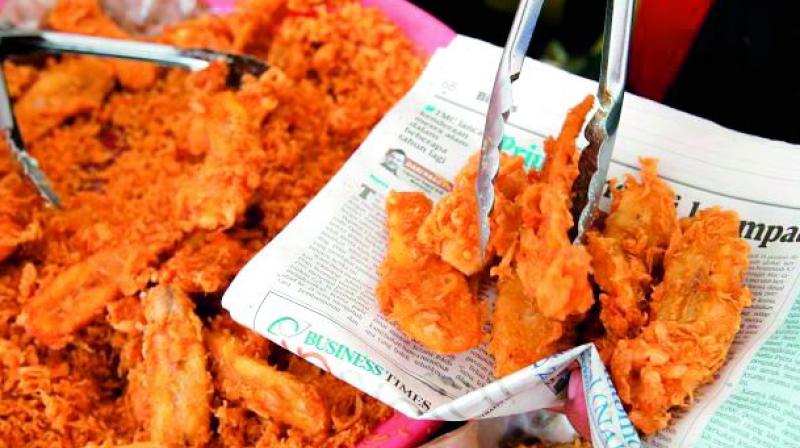
Steaming pakodas and piping hot tea from a roadside eatery seem welcome on a rainy day! But wait, look closely at the newspaper the pakodas are wrapped in, and the wax-coated paper cups in which the tea is served. Not just tasty, these delicacies may be layered with slow poison too. Some of our methods to deal with food might not be the safest,” cautions Dr. Saurabh Arora, founder, FoodSafetyHelpline.com, as he enlists a few dangerous situations people tend to overlook.

Newspaper wrappings and wax cups 
The dye and solvents used for printing can be toxic. The contents include chemicals and heavy metal ingredients, which lead to toxicity after a long-term accumulation in the body and might cause paralysis, allergies, DNA damage, cancer and affect your immunity. Food grade wax cups are safe, but one can’t just tell the safe ones apart. It is best to use glass or stainless-steel cups.

Rat droppings, urine... 
There are high possibilities of canned food stock being rummaged by rodents and cockroaches, while being stocked in storage, exposing them to rat droppings, urine and hair. Such food products, if tested positive for uric acid, indicate rodent infestation, which might cause viral infections, allergies and could affects one’s immunity. Make sure the cans are washed before breaking the seal.

Microwave cooking 
Some food like instant noodles, go straight into the microwave oven without being transferred to a safe cookware. One never knows if the container that comes with the product is suitable for microwave. It might leach chemicals as it gets heated, and spread the poison. Good quality glass, and silicon vessels are ideal for ovens. Even for cookware, low-quality teflon-coated pans that crack and get mixed in your food need to be discarded. Toxic chemicals from utensils are a threat to the functioning of your central nervous system and might cause mental, reproductive and developmental issues.

Cleaning agents 
While cleaning utensils, especially mixer grinders, ensure that no soapy smell remains. Also, rub your fingers on the surface to ensure that it is clean without residues. The effects of chemical poisoning depend on the strength of the cleaning agent. Simple soap residues can be digested, but stronger synthetic detergents can affect the gastrointestinal system.

Fungus in pickles 
The ‘normal’ practice of scooping out the fungal layer from pickles and cutting off the moulds from vegetables like tomatoes before consuming it, is dangerous and not recommended at all. Moulds go deeper than what meets the eye. It can affect your digestive and gastrointestinal functions if toxins have accumulated in the food. The moulds can produce aflotoxin and other mycotoxins which are known carcinogens.

Metal utensils and aluminium foil 
Metal containers made of copper or brass should not be used to store salt, imli, lemon juice, curd or anything acidic in nature. It reacts with the metal and contaminates the food. Ensure that quality stainless steel containers are used for storage. Many aluminium foils contain a plastic coating which is unsafe. Aluminium however, doesn’t react with anything and is preferred for storage, unless it is an alloy with lead, cadmium or other heavy metals, which contaminate food and cause retarded mental growth, stunted physical growth, liver damage, renal failure and nervous issues.

Plastic bottles 
To know how poisonous your container is, just check the smell. The strong smell from your new bottle shows how much toxin leaches into the water you drink. There is a regulated ‘overall migration limit’ for plastic to food and anything that violates it is dangerous. The monomers in plastic can cause DNA damage and even cancer.

Ants and insects 
Ants and insects can transport bacteria from drainage to food and cause infections. Any food touched by insects should therefore be chucked out. 

Human hair 
Presence of human hair in food is an indication of lack of hygiene. Though hair by itself is not toxic, it can have bacteria or fungus growing on it resulting in infection of digestive or pulmonary functions. So, stay alert and ensure that what you cook and eat are safe, healthy and toxin-free.

(Published in Deccan Chronicle on June 10, 2017)

Kabita Mukhopadhyay, Political All the Way

She was born in West Bengal and groomed at Santhiniketan during vibrant and turbulent times in Indian politics and culture, but Kabita Mukho...