Monday, December 25, 2017

Turning her life around


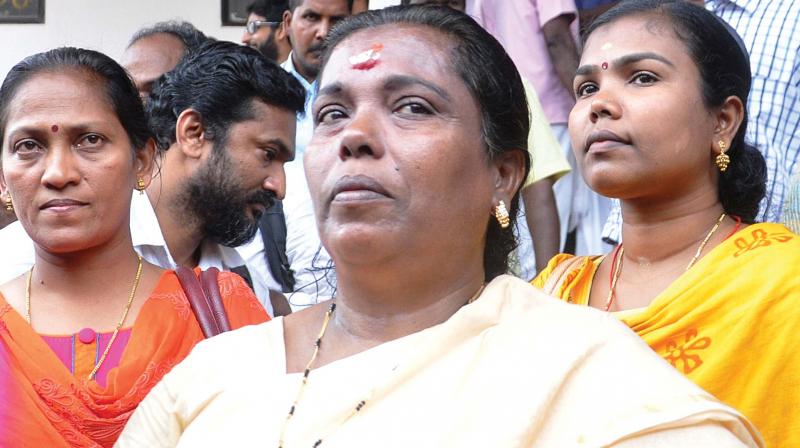
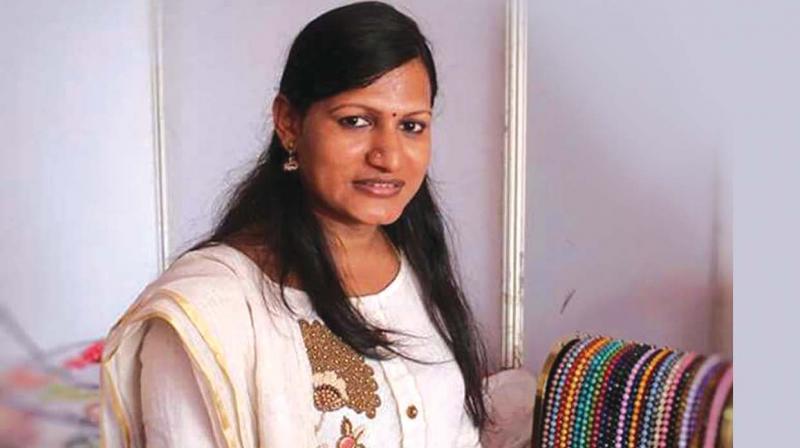
It takes one a few moments to follow Thripti Shetty as she shares her story, not just because she speaks fast, but because it’s a flow of blunt truths. In a painfully honest conversation, she speaks of her journey, from the Kasaragod native Kiran, who was puzzled about his identity, to Thripti, the first transgender entrepreneur in Kerala. “All my life, my dream was to live as a woman,” she says, sitting at her stall of handicraft products and handmade jewellery at the Christmas Mela at Marine Drive, Kochi. To realise the dream, Thripti, then Kiran, left her hometown Manjeshwar in 2004 to earn money, trusting a man who promised her a job in Bengaluru, where she worked unpaid for six months. She left the place and after earning her ticket fare from menial jobs, returned to her hometown. Experiences had left her shattered, but the desire to get out of a man’s body stayed strong.

She says, “I worked with a catering firm in Mumbai and later, in Kozhikode. In 2006, I went to Chennai and embraced the hijra culture. My aim was to undergo sex reassignment surgery and make money. I had only two choices — sex trade and begging.” Thripti chose the latter.

In 2012, she underwent sex change at a dingy Chennai hospital on a table with no anesthesia, operation theatre or proper facilities. Right after the surgery, she was sent home. On the 40th day, she was ceremoniously initiated to womanhood through jalsa, the ritual of new birth. On the 42nd day, the wound got infected and she was catheterised. “I went for begging, carrying the catheter. It was painful but I had no qualms. It was all for a life I wished for,” she reasons. 

It was when she came to Kochi two years ago that her life changed forever. “One day, for no reason, I was attacked by two men who came in an auto. Dr. Annie of Ernakulam General Hospital, who treated me, was the one who introduced me to jewellery making and helped me lead a decent life,” she says. A fortnight into learning the new art, Thripti held her first exhibition. Then on, there have been a couple of exhibitions. “The responses have been great. I make jewellery using stones, silk thread jimikkis and décor using discarded bottles. There are jute products and paintings as well,” she adds.

The year has been awesome for Thripti, getting modelling assignments, becoming one among the 15 finalists of a beauty pageant, being part of the movie Kallanmarude Rajavu and participating in the art festival Samanwaya. “I got a job in Kochi Metro, but since my heart lies in business, I chose to go with entrepreneurship. I became the first transgender to register under the Handicrafts Development Corporation of the Kerala government. I have also applied for the Mudra loan. The next step is to own a shop, if possible, with the support of the Tourism Department,” she reveals. Thripti has been to several places in the country but would like to call Kochi home. She says, “I want to settle down here and prove to the world that a transgender can live in pride, holding my head high.”

 Published in Deccan Chronicle on December 25, 2017

Wednesday, December 20, 2017

Little, but fierce artwork


The belief is that each grain of rice has a name engraved on it, of the person whom it is destined for. Not until you meet Thomas Jacob and he shows you the rice grain on which he has painted the face of Jesus Christ.

Then there is a landscape art work – a lone boat in a river as the sun sets, as two birds fly towards the horizon, again, on a grain. “There were more, but it fell off my palm and I couldn’t find it,” recalls Thomas, who reveals that he doesn’t use either a microscope or magnifying glass. Even the brush, is a modified point brush with all its bristles except two or three cut off.

That’s not all. A specialist in miniature art, Thomas’ art works range from micro art on chalk to pencil lead and crayons using paper cutter or safety pin. The chalk engravings of Marilyn Monroe, Baahubali, Kabali, Pulimurugan, mother and child, Krishna, Mahabali, Arab and the falcon; the crayon structure of Spiderman; and dancing girl, lock and key and crucified Christ boast of such precision that as he shows you around his Kochi apartment filled with his artworks and colour pencil portraits, you wonder how he manages to do all these. “It has been difficult. For the past 10 years, I have been working in the IT field and used to work on micro art at nights. If your heart lies in art, you can’t devote yourself to another job. So last week, I resigned from the job to focus on artworks,” says Thomas. 

Before writing him off as crazy to have quit his job, know that his artworks have been getting good responses. He says, “I keep on experimenting. Earlier, it was terracotta jewellery. Then came micro art and later, diorama (miniature landscapes) and paper cup works.”

 Published in The Asian Age on December 20, 2017

Tuesday, December 19, 2017

Live, Let Live


A couple of days ago, a metamorphosed Mohanlal, moustache-less, silky smooth-skinned, sporting blue tees, dark shades and fitted jeans was hailed by all, from the who’s who of filmdom to diehard fans; they all went gaga about the actor’s new avatar. The photos of the actor in his late 50s broke the internet with people literally drooling over his charisma. In a terrible irony, it is the same social media buffs who couldn’t stand the sight of Rajeshwari, the mother of Jisha, the girl who was brutally murdered in Perumbavoor more than a year ago. 

Rajeshwari, who, a year ago, appeared devastated, wailing, in her grey hair and unkempt clothes, looked healthier and stronger in better clothes and coloured hair, much to the ire of many netizens who found it hard to accept the makeover of a woman who refused to appear ‘shattered’ after having lost her daughter and estranged husband. Social media is abuzz with ‘diktats for a widow’ and accusations of Rajeshwari using the ‘blood money’ of her daughter to buy expensive sarees and tip hotel waiters. Why is society obsessed with judging an ageing woman on her appearance, without realising that she needs to move on? “That’s because our society can’t accept a survivor, especially if she belongs to a lower social class,” says writer S. Saradakutty. 

“If a woman who is supposed to be grieving goes to watch a movie, learns to drive or attends weddings, misogynists — that includes both men and women — rush to criticise her. They would never want to know how these women lived before the death of their dear ones. Whether she was happy or safe till then is never their concern. All that matters to these do-gooders is that she doesn’t deserve to appear happy. It is unfortunate and it will take centuries for them to get justice,” she feels. 

In Rajeshwari’s case, Saradakutty thinks whatever she does has a justification. “Once, a woman who lost her husband told me with tear-filled eyes that widow pension was the first earning she got in her life. It is not Jisha’s mother who caused her death, but a criminal living among us. Whatever she does, tipping waiters heavily or buying the sarees she likes, will have justification because it was she who had been living a marginalised life, not those who point fingers at her.” 

Actor Sreedevi Unni, mother of late actor Monisha, feels that what Rajeshwari did was right. “Her sorrow would never leave her and nobody can ease it. The verdict (gallows to the killer) might have given her a sense of relief; however, the pain of losing a daughter will stay with her till her last breath. Why should she wear a dress that projects her grief? Will doing so ease her grief,” asks Sreedevi. 

“If she is someone who committed a crime and walked around dressing up nonchalantly, that is a different case. Here, this girl’s mother is innocent. She has actually disguised her pain by coming out well in public and she should do that always. She should set an example. None should criticise her,” she adds. 

“This ostracism is something I have faced after my husband passed away eight years ago,” reveals Chandini Santosh, another writer, who stresses on how Malayalis are bothered about a woman’s appearance, when she crosses 30 or, 50, when she has grandkids or when her husband dies. 

“At the wedding of my neighbour’s daughter, the bride’s mother was worried if I — a childless woman who has lost her husband — would bless the couple and bring them bad luck. I understood that and stayed away. It was ridiculous and I felt like laughing. But sometimes, it hurts,” she says. 

“Rajeshwari has suffered a lot in life. She is the one who lost her daughter, not us. Despite poverty, she encouraged Jisha to study law. People would definitely have opposed her decision back then. She, like in those days, need not bother about people even now and should carry on. Now she has a better life, house and money, let her live well,” says Chandini. 

As Sreedevi puts it, society should help her move on instead of tarnishing her spirit to fight. “We shouldn’t push her to sorrow again. The negative response is the opinion of a minority — the narrow-minded. We can’t change them. They should change themselves. But, at least let her be like that. Let her live in peace.” 

(With inputs from Elizabeth Thomas)

Published in Deccan Chronicle on December 20, 2017

Friday, December 15, 2017

The brave storyteller


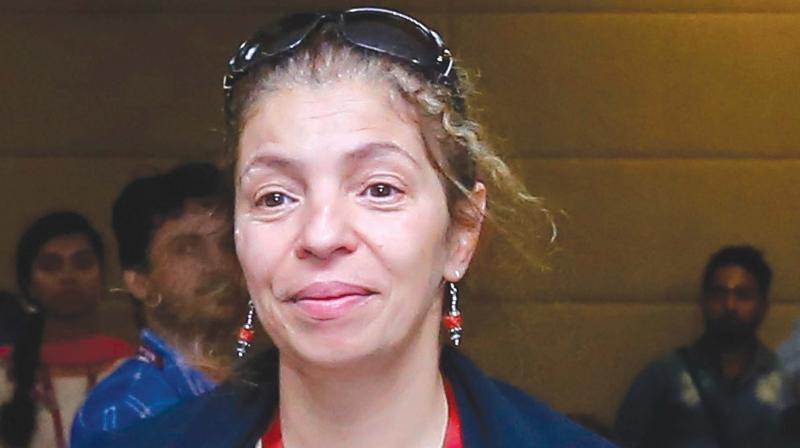
At the lobby of a hotel in Thiruvananthapuram, Rayhana was chatting with the girl holding her hands, laughing and hugging, inviting her to France, as if she had known her for ages. Once she settles down for a quick chat, she holds your hand and magically, you feel at home. That warm easiness with which she bonds with women reflects throughout her movie At My Age, I Still Hide to Smoke, which was screened to packed houses during all the three screenings at the IFFK. 

“We are all women. Speaking woman-to-woman is easy,” she says in bits of English. Wherever she screened the film, she has been greeted — with hugs and tears at many places and with death threats and abuses in many other places. But no threat or abuse will stand in her way of telling stories. 

In Algeria, her homeland, and later, in France, where she took asylum as a 35-year-old, she has faced threats from Islamists. Once, in Paris, she was doused in petrol by extremists and it was a narrow escape from an immolation bid. That was when her play was staged. “It was the same At My Age, I Still Hide to Smoke. I staged it for seven years. The play was in French; the actors — the nine women — kept on changing after they faced attacks and threats,” she recalls. 

Rayhana’s growth has been full of fights. She started off as a waitress, then became a theatre actor and after that, an author, a playwright and finally, a screenwriter and a filmmaker. It wasn’t an easy journey, but she’d make it sound cool. “After I married Ben, I had time to write and make a play and a film, because he fed me well,” she laughs. Her colleagues — Azzedin Medjoubi from theatre and Ali Tenkhi from films, were killed, the former in front of her. Her brother was assassinated in France by Islamists, apparently for homosexuality.


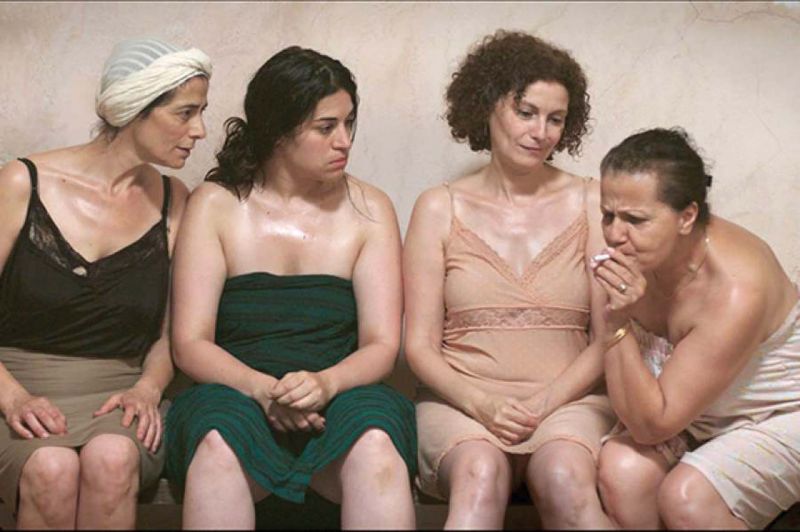
The film, her directorial debut at the age of 55, made in Arabic, set in a hammam (Turkish bath), has a group of women celebrating freedom — to speak, to walk naked, to express their dreams and political, personal and feminist views — protecting a pregnant teen from religious fundamentalists and misogynistic men. As the women take bath, get body massages and smoke together, there are confrontations, ‘blasphemous’ criticisms against religion, fun moments, talks about dreams, oppression, sex, rape, politics and references to the past of each one of them. 

“The film is about the world of women everywhere. Everywhere I screened the film, women told me this is their story, their life. That’s what I too wanted to tell the world. Men just announce ‘talaq, talaq, talaq’; it’s easy. After I made movies, I am being called a bitch, whore...,” Rayhana adds. 

The movie was banned in Algeria and all Arabic Muslim countries. The exteriors were shot in Algeria, but the hammam was set in Greece. “No Algerian actress was cast, because all of them rejected. All the actors were from Greece. The lead, played by Hiam Abbas, is a Palestinian. Apart from her, Biyouna (star in Tunisia and Algeria) and Nadia Kaci, all the other women are debutants. The actors, who appear as the extremists in the climax, are all Greek actors.” 

Only in Tunisia was her movie welcomed. “The situation is different there after the Jasmine Revolution. The rise of feminists has brought about gender equality in Tunisia and my film was praised a lot when screened there,” she says. 

In Kerala, people loved At My Age, I Still Hide to Smoke, but Reyhana says one-third of the film was ‘lost’ in translation. “The English subtitles were badly done; there’s a lot more you haven’t heard. I would like to screen it with proper subtitles in English and if possible, in other Indian languages,” she says. 

Rayhana says she has no qualms even if she doesn’t get an award at IFFK. “I have the audience award; the responses were so great. I make movies for the audience and this is the biggest award.” However, the film later went on to win the audience poll award at the IFFK that concluded on Friday.

 Published in Deccan Chronicle on December 16, 2017 

Monday, December 11, 2017

A sweet reward for Prem Shankar


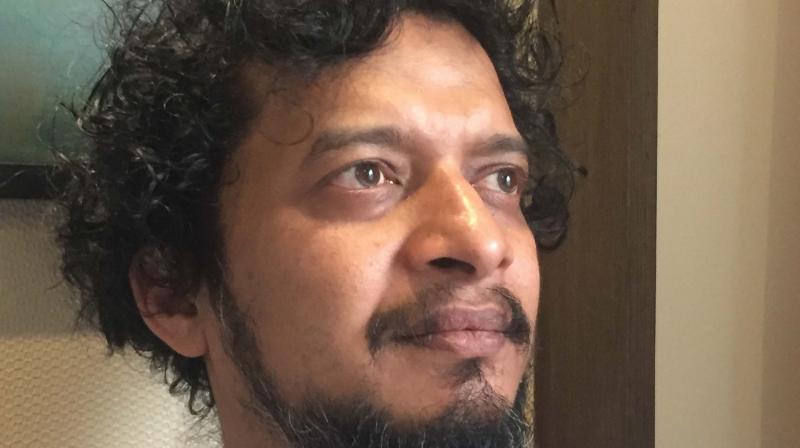
Prem Shankar sounds tense. His debut movie, Randu Per, is one of the two Malayalam movies selected for the competition section of the 22nd IFFK. “This should have been my fifth or sixth movie,” says the advertisement professional-turned-film maker, who gave up his lucrative job in Bengaluru to pursue his passion full time. Randu Per (Two Persons), starring Basil Paulose and Santhy Balachandran (Tharangam-fame), speaks about an urban-based romantic tale, of how the couple handles a breakup after a five-year-old relationship. Also Read - Leaked Photo of Prabhas from New Film Goes Viral; Makers Warn “Most of the scenes are inside a car, but it is not a road movie. It’s a love story, but more of a conversational one,” he says. The whole story happens over the night of November 8, 2016, the day demonetization was declared. But that too forms just another social premise. The man, a wannabe film maker, deeply disturbed by the breakup, documents the whole night using hidden cameras. As the lovers talk about it in a car, the man driving and conversing with the girl, it becomes an eventful journey.
The movie, which has a duration of 1 hour and 50 minutes, has Suraj Venjarammood, Alencier Ley Lopez and Sunil Sukhada too on board. The whole shoot happened at Bengaluru, but the movie has no mention about it. “It could be any place, anywhere in India. It’s not the place, nor the setting that is important. The focus is on the story, the content,” says Prem. 

According to him, it’s an era where movie making is no big deal. “We have a huge technological democracy with all sorts of gadgets and facilities in place. Anyone can make a movie. Finding the backup and support are the most difficult parts,” he says. 

For Prem, the struggle has been real. With film dreams, he knocked on every door to find the apt cast and the producer. Years went on and finally, his collegemate Arunkumar K.S. came forward to fund his dreams. “He didn’t even ask for the script or story. And I am glad that mine had the opportunity to compete in this prestigious festival with so many excellent world movies.” 

An actor, Basil had readily agreed to act and Prem found Santhy whose performance in Harold Pinter's play The Lover impressed him. “Watch the movie and you too will know that my choice of actors was right,” he adds. 

The world premiere of Randu Per is scheduled at 11.30 am on Tuesday at Tagore Theatre.

 Published in Deccan Chronicle on December 12, 2017

Sunday, December 10, 2017

Rohingyans an international issue: Edmund Yeo


Edmund Yeo, The Malaysian director, whose film Aqerat is awaiting its third screening on Tuesday, is glad to see the enthusiasm in the air. “During the opening screening of The Insult, I too was cheering with the crowd. It is great to see such a huge crowd of film-lovers,” he says. 

Aqerat, which means ‘we are the dead’, is his second film. It speaks about Rohingyan crisis. Yeo’s films have been about resistance and struggles. At this year’s Tokyo Festival where Aqerat was screened, Yeo became the first Malaysian film maker to have won the best director award at the prestigious venue. “That was an emotional moment. I broke down on the stage,” the 33-year-old director recalls with a laugh. 

Rohingyan crisis, Yeo says, is not a regional issue happening in Malaysia. “It is an international issue. They are innocent people – teenagers, kids and women; there is no reason for them to be killed due to hatred in the countries where they try to find lives.” Aqerat had just 20 people on board as actors and technicians, some of them who doubled up as extras. The whole film was shot over 12 days. The lead character, Hui Ling, excellently portrayed by Daphne Low is especially dear to Yeo. 

“Hui Ling is a bit of me and a bit of her. Biographical elements of my displacement woes as a Chinese person in Australia and Tokyo, where I had gone for studies, are there,” Yeo adds. “There is no platform for independent film makers,” he said. 

“Last year, the independent film makers organised Malaysia’s first film festival. The reception wasn’t that great, but we hope participation will increase in the future and that we can host a huge international film festival like the IFFK.”

 Published in Deccan Chronicle on December 11, 2017

Saturday, December 9, 2017

Left out of the picture


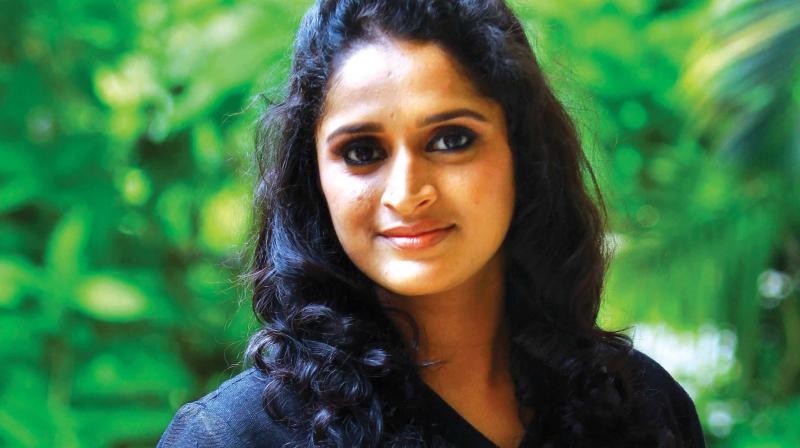
The opening event of the 22nd International Film Festival of Kerala on Friday, though devoid of ceremonial programmes, was nonetheless memorable with a candlelight tribute to Ockhi victims followed by a power-packed speech by Prakash Raj. The stage was graced by the likes of legendary actor Madhabi Mukherjee, director Aparna Sen, Oscar-winning sound designer Resul Pookutty and state award-winning actress Rajisha Vijayan. The absence of one person was very conspicuous — of Surabhi Lakshmi, who, through her performance in Minnaminungu, brought home the National Award for Best Actress this time, after 14 long years. 

Surabhi was nowhere in Thiruvananthapuram; she was in Narikkuni, her hometown, just back from the shoot of Selin’s Tovino Thomas-starrer Theevandi. Ask her why she wasn’t seen at the festival and the actress says, “I didn’t get a delegate pass; I tried applying, but couldn’t get one. I had asked Kamal sir (Chalachitra Academy chairman) and he told me that he would ask someone to call me, but nobody did.” 

However, the delegate pass is the least of her concerns and she admits that she didn’t follow up. That she wasn’t invited is a lesser pain. In a sombre voice, she says, “I don't know about the procedures or if Meera Jasmine was invited to a stage like IFFK when she got the National Award. But this was a national recognition an actress won after nearly one-and-a-half decades. My movie didn’t even get a platform; that is more painful.” 

A parallel screening of Minnaminungu is being planned in Thiruvananthapuram at 2.30 pm on Tuesday at Lenin Balavadi, next to the IFFK main venue Tagore Theatre. However, Surabhi says she doesn’t want to sound arrogant or greedy. “It’s not that I am trying prove that I am above all. Many had told me that we would watch the film at IFFK. Though we expected that our movie would get a screening space at IFFK, that didn’t happen. Even during the release, it was hurriedly pushed out of the theatres. With no favourable scene for distribution or screening, small films like ours are turned down everywhere. There was a last-minute inclusion of a category called ‘Films of Identity and Space’ in which even an Indian film made in 2013 was included. Ours too, fell under the same category; they could have easily included Minnaminungu,” she explains. 

When asked about the allegations, director Kamal says that no one was invited to the festival as there was no inaugural ceremony. “If she claims she hadn’t got the delegate pass, I’m sorry, no one can personally hand it over to her at her home. The passes are ready here and she could collect it any time if she comes here. All these are just allegations. There is this festival NFFK, National Film Festival of Kerala, organised by the Academy every year where National Award winners are honoured. Anyone who was on the dais, including yesteryear actress Sheela and Rajisha Vijayan, were not invited delegates. They were there because they had come to the festival. All the printed invites are lying in the office. With no official ceremony, how could we have invited anyone?” he asks. 

He adds that National Award winners Salim Kumar or Suraj Venjaramood, weren’t invited in the previous years. Regarding Minnaminungu being denied a screening space, Kamal says, according to the rules, a movie which doesn’t get selected in the competition category won’t be screened under any other category. “If I choose Minnaminungu for screening, bypassing the rules, someone can sue us. Would that be fine?” he asks. 

Surabhi says she had expected this. “I know they will have hundreds of reasons to not screen my movie at the IFFK; but there is only reason for them to screen Minnaminungu — this National Award.” 

The organisation of women members of the film fraternity, Women in Cinema Collective (WCC), has opened a stall at one of the festival venues with the tagline ‘Equal Space, Equal Opportunity’. When asked about the denial of opportunity to Surabhi and her movie at the fest, Rima Kallingal, a member of the outfit, expressed sadness over the turn of events. “I am really sad that Surabhi isn’t here. She deserved to be on the stage with the dignitaries; it was such a proud moment for all of us when she won the National Award. She must be the one to be the most celebrated person here at this festival. I am really disappointed that she is not here among us at this prestigious event,” she says. 

This year, the Chalachitra Academy stresses on 89 years of Malayalam cinema, with the IFFK signature film itself ‘welcoming 90 years’. With allegations like these cropping up, it is also a time for introspection, to know who all are left out in the celebrations.

 Published in Deccan Chronicle on December 10, 2017

Kabita Mukhopadhyay, Political All the Way

She was born in West Bengal and groomed at Santhiniketan during vibrant and turbulent times in Indian politics and culture, but Kabita Mukho...