Friday, December 8, 2017

Ode to Malayalam cinema


Every year, as curtains rise for the IFFK, along with the best movies from all over the world, excitement is high among cinephiles to know how the signature film is being made. This time, an aptly titled Sentimental Celluloid, directed by T.K. Rajeev Kumar, has won the hearts of movie buffs. The film opens to a tea stall of yesteryear, where a young lad sticks a poster on the wall. The poster keeps changing along with the movie names on the boy’s vest; together, the background music too varies from popular songs and punch dialogues of each era. As the attire and ambience varies as time progresses, the boy remains the same young guy with happy, curious eyes. And then, the credits roll in — ‘Welcoming 90 years of Malayalam cinema’. Rajeev Kumar, the man behind the signature film, says that it is more of a tribute to 90 years of Malayalam cinema. 

“I have tried to include all the milestones of Malayalam cinema. Any movie that comes to your mind has found a place in the film, either as poster, song or dialogues. The premises too change – there are people rallying carrying red flags, which subtly denotes the socio-political changes Kerala underwent. Towards the end, a crowd walks towards the boy who faces them as various movies play in the background. It represents hope; that films will always continue to motivate and entertain people,” he explains. 

The interesting factor that catches your eye is that this time, the film has not many animation or graphic elements. “That was a conscious decision. I wanted to add a human element to it. The theme is based on nostalgia. The flickering movie names on the boy's costume is a reference to the magic of visual language. That the boy never ages points towards the eternal youthfulness of Malayalam cinema. Whatever changes happen, movies are here to stay and will never die,” he clarifies. 

To criticism that the signature film focuses on just Malayalam films in a festival that caters to an international audience, Rajeev Kumar recalls how acclaimed South Korean filmmaker Kim Ki-duk was taken by surprise during IFFK 2013 when a bus on the road slowed down and the passengers screamed 'Kim Ki-duk'. “Our film literacy and passion are very high. It's a matter of pride for us as the hosts of IFFK that our cinema is turning 90 years old. Let the whole world too know that our movies are beyond the 'Malayalam Cinema Today' category.”

 Published in Deccan Chronicle on December 9, 2017

Thursday, December 7, 2017

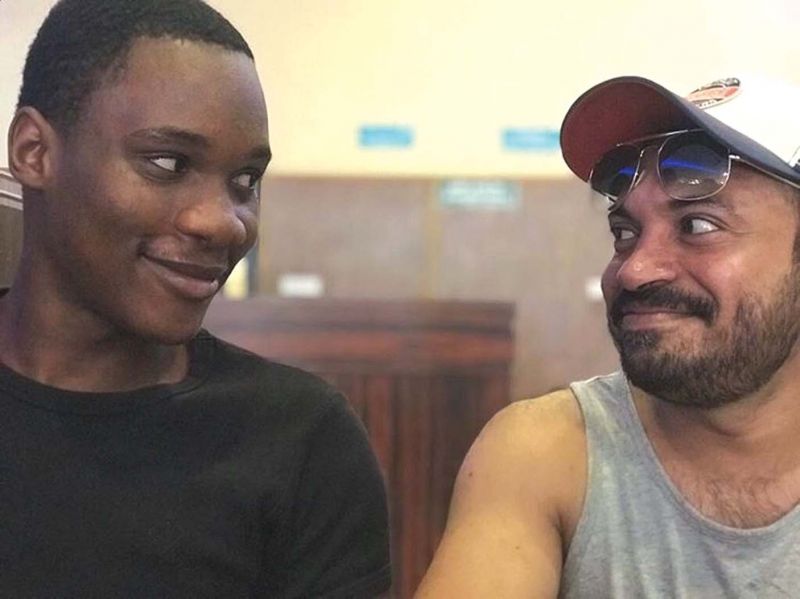
Soccer hero from Nigeria


From the fifth floor of the apartment, the view of Kochi is splendid. “It’s a beautiful city,” says Samuel Abiola Robinson. The name might not ring a bell for Malayalis, but the film he is acting in would definitely spread a smile on their lips. The upcoming movie Sudani from Nigeria directed by debutant Zakariya will see Samuel in the title role along with Soubin Shahir. For movie buffs here, Samuel is a newbie, but back in his homeland Nigeria, he is a famous actor who has starred in several movies and TV series. 

“This is my 14th movie, but my first foreign movie,” he reveals. His 2016 film Green White Green, representing the iconic colours of Nigerian national flag, was such a huge hit that it went places, including the prestigious Toronto International Film Festival. His ticket to fame was the web series Desperate Housewives of Africa. To play the footballer who is brought from Nigeria to Malappuram for the Sevens Tournament in his movie, Zakariya had tracked Samuel down with the help of a casting agency in Africa. 

However, busting the general perception that soccer comes natural to an African national, Samuel announced that he didn’t know how to play football. Laughing, he says, “I belong to the 0.001 per cent population of my country that is not interested in football.” But Kozhikode, where he stayed, and Malappuram, where the shoot happened, changed his perceptions about the game. “People there are in love with soccer. I underwent a week-long intense training and realised that once you get to know the game, you start enjoying it. It is like kanji; you’d be apprehensive when you are offered it for the first time, but once you know the taste, you can’t hate kanji,” he smiles. 

Shooting with Soubin, who plays the team manager Majeed, has been fun and a great learning experience. “Football is just the backdrop of the movie. It’s a humorous drama about the bond between Majeed and ‘Sudu’, an abbreviation of ‘Sudani’. With Soubin, I had great dynamics and I’m glad to have worked with him,” he says. The 35-day-long shoot was fun; it’s just Malayalam that was tricky. “It’s a very complicated language. The only Malayalam words I managed to learn are mathi (enough) and vellam (water),” he quips.


The way he speaks, the knowledge he shares, leave you baffled at the thought that Samuel is just 19, a teen who dropped out of school at 15 to pursue acting, but knows about everything. He admits to have an inquisitive mind. “I am more of a bookworm and love to learn new things every day,” he says. Before coming to Kerala, he did his bit of research and learned about Mollywood, the major actors and technicians. “I had the privilege of meeting filmmakers Anwar Rasheed and Amal Neerad. Though I tried watching a Malayalam movie starring Mammootty, I didn’t understand a word of it,” he adds. However, he hadn’t expected such high film literacy among Keralites. “I’m surprised that Malayalam is a very small industry in Indian cinema. Compared to Nollywood (Nigerian film industry), which has hardly 200 cinemas, Mollywood makes around 1,600 films every year and has theatres everywhere. In Nigeria, TV soaps are more popular than movies.” For Samuel, acting is something he chooses to stay in. “Many people ask me to pursue academics as Plan B just in case things don’t work in movies. Education is important, but I have no Plan B. Acting is always my Plan A,” he says. The shooting in Kerala has wrapped up; only a few portions to be shot in Nigeria are remaining. The dubbing is almost over and he will be going home on Sunday. “Kerala is a wonderful place; the people are very kind and friendly. It’s been a very pleasant experience and I would like to stay, but I have commitments back home. I would be coming back for the promotions in a few months,” he concludes.

 Published in Deccan Chronicle on December 8, 2017

Monday, December 4, 2017

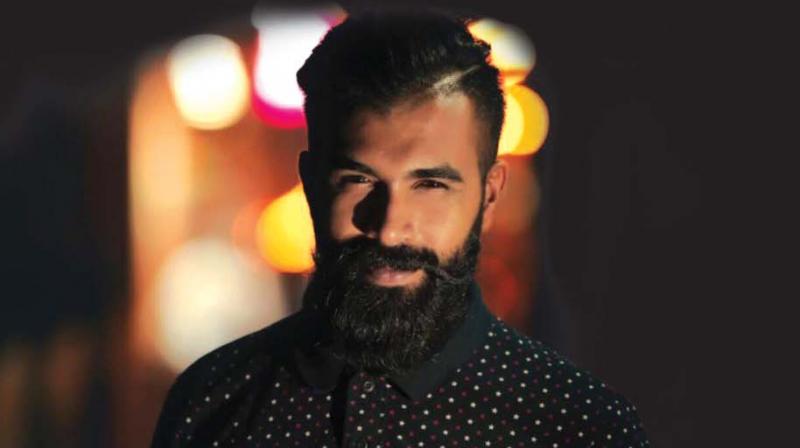
The beardiest of em all


‘Men who got a Beard live colourful lives’: reads a post on the Instagram profile of Dhanil Kumar. The 27-year-old hasn’t been so much in love with anything and he takes care of his seven-and-a-half-inch-long beard with great affection. However, when he walked into the international Beard Off contest in the UAE, never had he imagined that he would emerge the winner by beating around 50 contestants from all over the world. “I was the only Indian participant. After the first two rounds, they announced the top 5 contestants and I was surprised to find my name on the list,” says Dhanil, who looks after his family business in Dubai while pursuing his modeling passion. Born and brought up in Dubai, this automobile engineering graduate has his roots in Neeleshwaram, Kasaragod, and is currently on a vacation in Kerala

An active blogger with an Instagram following of over 22,000, Dhanil came to know about Beard Off organised by British-run Lucky Voice Club in Dubai, through his friends. Having modeled for various international clothing brands, the Beard Off photo shoot was a cakewalk for him. The contest was based on the length, thickness and style of the beard and the length of the moustache; the opponents were quite strong. “In the last round of on-stage interview, I was pitched opposite nationals from the US, Germany, Norway and Saudi Arabia. The man from New York gave me a tough fight with his rugged beard with white patches. But luckily, it was my answer that impressed the judges,” he says. So, what was the question they asked? Chuckling, Dhanil reveals, “It was, what would I do if the girl I married asked me to get rid of my beard.” He didn’t have to think twice before replying ‘I’d say I won’t’, thus winning the title and a year-long contract with a top modeling agency along with free beard grooming for a year at a high-end salon there.

Dhanil had been growing his beard since 2015, long before the trend of no-shave November became popular among Malayalis. His well-groomed beard caught the attention of his friends, who encouraged him. What about his family? Laughing, he says, “Achan was chill, but Amma was a bit worried about what people would say. After I won the title, she is somewhat okay with it. My sister is someone who is least interested in ornaments or makeup. It’s me who sports earring, nose pin, chain and goes to the parlour and makes up for it. Believe me, maintaining a beard costs a bomb!” Anyone can grow a beard but maintaining it requires patience and effort, feels Dhanil. 

“Every week, I take oil, wax, cream and balm treatment for my beard. Since it is very hot in Dubai, every two days, I trim the split ends. In Kerala, I have seen many people growing beards, but they lack awareness on grooming,” he opines. 

His unique hairstyle too was designed to complement the beard. Bearded men are in much demand in the modeling world and so is Dhanil. “I have got offers from international clothing and beard oil brands. The fashion, modeling industry is currently very beard-friendly, unlike Kerala,” says the youngster, whose parents P.K. Nair and Dharani hail from Kasaragod. His experiences in Kerala have been very nightmarish. “Anywhere else in the world, beards are welcomed with admiration and respect. But here, even though it is my homeland, people look down upon beards and piercings and term us ‘freakans’ or ‘ganja guy’. Last time, when I accompanied my dad to a hospital, I was caught by the police from the hospital premises for sporting a beard,” he laughs. 

Now that he owns one of the most beautiful beards in the world, Dhanil could try his luck in movies too. He says, “With so many people bombarding me with selfies and congratulatory messages every day, I already feel like a celebrity!”

 Published in Deccan Chronicle on December 5, 2017

Sunday, December 3, 2017

Off to the Arctic


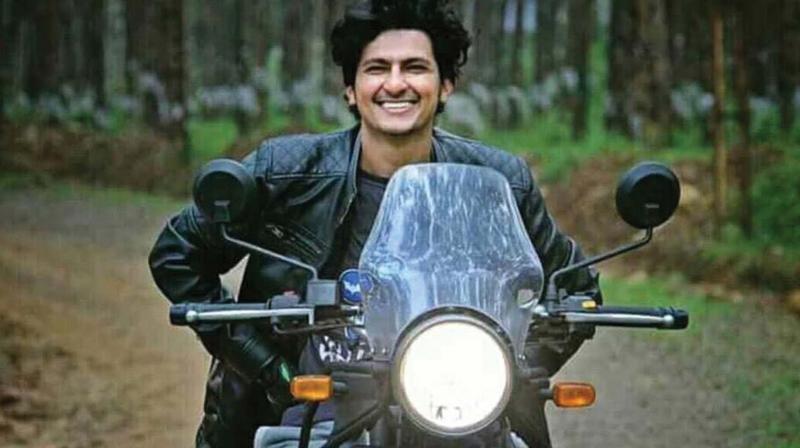
Fjällräven Polar is the dream of any globetrotter. The ultimate adventure of a lifetime, the 300-km Arctic expedition in minus 30 degree temperature offers a blissful journey along snow-capped, sun-drenched Polar landscape and above all, the experience of a unique endurance test. Twelve persons from all over the world are chosen and trained for the expedition happening in April every year, through online voting, and this time, it could be a Malayali. Niyog, a 26-year-old Punalur native, is leading the polls with over 20,000 votes in one among the 12 categories. 

Niyog was featured in Kochi Chronicle in mid-September, he was a penniless nomad hitchhiker who was on a journey across the country. How come he heads for the North Pole expedition in less than three months? “The journey hasn’t ended yet. I have reached Delhi and have covered 180 days without money. Hopefully, I’d complete the all-India trip before the voting ends,” he says. 

How did a person, who is on and off the Internet due to his journeys, come to know about the Fjällräven Arctic expedition? “Fjällräven Polar is quite popular among travel buffs. The expedition has been happening since 1997. This year’s application process had begun on November 16. I had applied only four days back and my name was not even in the first thousand. But my followers and friends on Facebook were very excited and started campaigning through trolls, WhatsApp, etc and in four days, I topped the list. It all happened in a flash,” he recalls. 

Just a day ago, it was a Pakistani national who topped the voting. It was a virtual Indo-Pak war with celebrities and politicians seeking votes for their country’s representative. “It was just a contest and things were getting out of hand. It was painful to see the war-mongering and I requested my friends to stay away from using ‘nationalism’ to promote me. After all, journeys are about breaking boundaries, no?” he asks. 

The Polar expedition, though exciting, is not easy as it seems. From Norway to Sweden, you travel in a sled pulled by 10 highly-trained dogs – Alaskan or Siberian Huskies. More than 200 dogs accompany the travellers. The trip is impossible without these dogs which are brought from leading kennels across the world. “Inexperienced in sleighing, the journey by balancing the dogs will be difficult. But there are other risks – like travelling along the frozen sea areas where only the top layer might be frozen. There are also hurdles like hypothermia and frostbite,” says Niyog, who is not worried about the sub-zero temperature or even the mandatory fitness. He has a few Himalayan expeditions and extreme treks to his credit, so fitness is the least of his concerns. 

The voting is on for 10 more days and anything could happen, but Niyog takes it calmly. “I hadn’t expected even this. I’d be happy if I get the chance, but even if I don’t, it’s great to know that so many people love you.”

 Published in Deccan Chronicle on December 4, 2017

Saturday, November 18, 2017

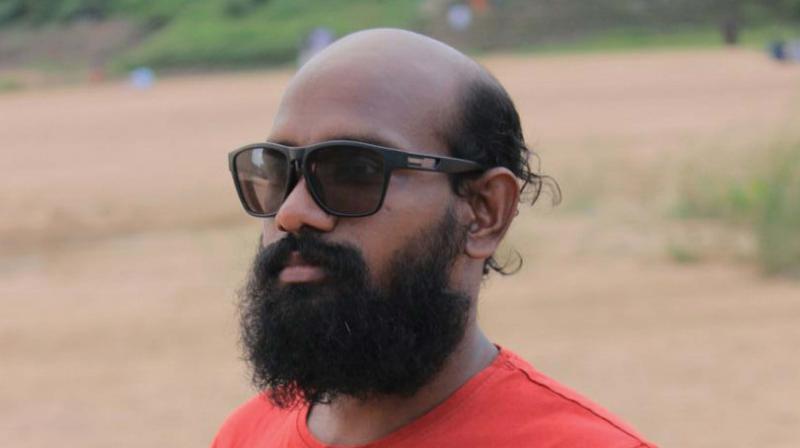
Jimbroottan returns


Five years after spreading optimism and inspiring youngsters, Joy Thakkolkaran is back to cinemas. So is his employer Jimbroottan, another character from the much-acclaimed Punyalan Agarbathis. Reprisal of the comic role in the just-released sequel – Punyalan Private Limited – is a matter of joy for Gokulan. 

“At the beginning of Punyalan, I was told that my role was that of a nameless labourer in Joy’s factory. Jimbroottan was the name suggested by Jayasurya and the name got stuck,” laughs the Kochiite, who is known by the same name. 

On screen, Gokulan is someone who cracks jokes without meaning to do so, but off screen, he is different. He confesses that he was an introvert during school days. “I had stammer which made me a loner,” he says. But there is no trace left now. Gokulan owes it all to theatre. What started as skits during school days and NSS camps caught up with him as he joined college. “Campus theatre has made a confident youngster out of the old me,” he smiles. 

Being the youngest son in the family – he has three brothers and a younger sister – he was free to choose his path and Gokulan opted for theatre, on just one condition – ‘Do not drop studies’. “I did a journalism diploma, two post-graduation courses and an MPhil, only to act in plays,” he says. 

He was part of campus theatre, performed in college youth festivals and got selected to several state and national-level fests. He also performed as part of small theatre groups in the city. Don’t mistake him as an irresponsible youth. At 21, he was working for Bill Gates! Explaining, he says, “We used to perform street plays on AIDS awareness as part of an NGO funded by the Bill Gates Foundation. Back then, earning Rs. 8,000 a month was a big thing.” 

Movies were nowhere in his plans, but the inevitable twist happened in the form of Basheer’s Premalekhanam! He was playing Kesavan Nair in a play based on the novel. The practice was held at the open theatre in CUSAT. Director Kiran spotted him and impressed, offered him a small role in his movie Kudumbashree Travels. That was the beginning. He starred in a friend’s short film Mangandi, which won various awards. 

Then came the role that changed his life – of the coconut plucker, the representative of God, in Lijo Jose Pellissery’s Amen. “There’s an interesting back story. I was originally cast as a barber, but when I reached the location, the role had gone to another person and I was given the coconut plucker’s role. I was hurt and thought of leaving, firstly because of this and secondly because, I had no idea about climbing a coconut tree. It was Sudhi Koppa who talked me into acting. I somehow managed to climb the tree and the shot was okayed in the first take. There were scratches all over my chest, but it was worth it. The movie gave me an identity and the barber’s character didn’t make it to the final cut,” he recalls. 

More coconut plucker roles followed – in an advertisement and another movie, but he has no qualms. “It has all done me good,” he says. His association with Ranjith Shankar began with Molly Aunty Rocks and then, Jimbroottan happened. Jayasurya took a liking to Gokulan and soon he bagged roles in his movies Lal Bahadur Sasthri and Mathai Kuzhappakkaran Alla, followed by Ranjith’s Su Su Sudhi Vatmeekam and Ramante Edenthottam. 

Movies haven’t let theatre take a backseat. “I have a deep emotional connect with theatre. I can’t let go of it just like that.” The 33-year-old will next play the father of a young boy in the art house movie Lali Bela. Also coming up are Kuthirappavan and Vinayan’s Chalakkudikaaran Changathi. “I am a man of simple dreams. I don’t want to do big roles, but the ones that give me happiness. Anything I do, I want happiness in return and nothing else matters,” he concludes.

 Published in Deccan Chronicle on November 19, 2017

Saturday, November 4, 2017

Globetrotting shutterbug


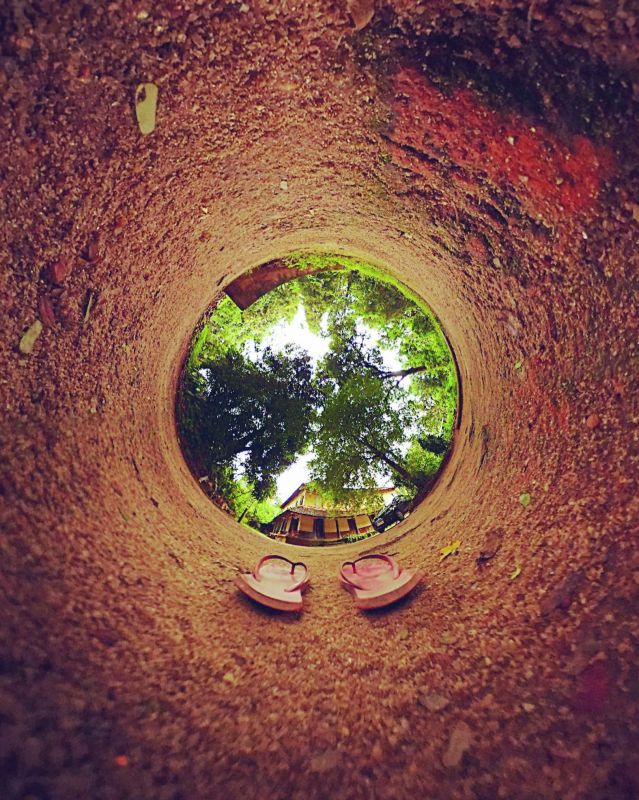
Prasanth Chandran can’t get enough of globetrotting. Every year, he goes on at least three international journeys, at times solo, or with his family. A digital marketing professional in Kerala, he is passionate about capturing life and culture in various parts of the world in his camera. His clicks prove that he is slightly unconventional — it’s not always you see aerial 360 degree photographs brimming with life and beauty.


“I do not manipulate my photos. I love to experiment with my camera and click using multiple exposure technique. 40 to 60 images are superimposed and stitched sometimes. Being an avid traveler, I love to shoot landscapes,” he reveals.


Another favourite subject of his is photographing sparks from a spinning ignited steel wool. For clicking spherical panoramic shots, he has his imported gears — his Sony A7R2 and 360 degree cameras, which are not much popular here. One of the 30 Google-certified photographers in the country, Prasanth also owns a contributor license to Getty images.


Of all his journeys so far, the most memorable one has been two years back to first nuke victim land Hiroshima. “The visit to the A-bomb dome, the only structure that was left standing at the epicenter of the blast, is preserved as ruins. A whole new city has resurrected around it. The visitors are greeted with badges and souvenirs. That was a memorable sight — an iconic dome — a reminder of the biggest tragedy that struck mankind — standing amidst a city that literally rose from the ashes,” he recalls.

The landscapes of Thailand, Laos and Cambodia have wooed him. Unlike Europe, which he calls a city of structures, South East Asian countries have a special charm — of greenery, a peculiar culture with lots of similarities with Indian culture and lifestyle. “There are several temples there. Everywhere around, it is beautiful frames and sights that would never satiate one’s passion for photography. I would be going back there again, there’s lot more to click,” he says.


In India too, sights never stop wooing. Leh, Ladakh, Hampi to lesser-known spots like Chellarkovil near Thekkady, he has gone everywhere with his best friend — his third eye, the camera.

 Published in The Asian Age on November 5, 2017

Monday, October 30, 2017

The space girl Life

Ashna Sudhakaran, a village girl whose father is a farmer, is back from her three-month internship in NASA. she tells her story.


I know nothing with any certainty, but the sight of the stars makes me dream — these words of Vincent van Gogh on her Facebook profile summarises Ashna Sudhakaran’s dream. The 27-year-old is just back from Washington DC — from NASA, where she was an intern for three months at the Goddard Space Flight Centre. For the daughter of a farmer who studied in a government school, it has been a proud journey from a little village named Koduvalli in Kozhikode to the prestigious space research centre. 

“NASA was nowhere in my plans. My dream destination was either the ISRO or the Vikram Sarabhai Space Centre,” Ashna begins excitedly. Words gush out as Ashna talks about her family, school, teachers, research, sun, love for literature and travel, deep admiration for APJ Abdul Kalam, high regard for Kalpana Chawla and about her NASA days. The self-confessed chatterbox reveals, “I was never the studious type. All I did was read novels, stories and poems. A very weak student in Mathematics, I had no idea about even a branch named Space Physics then!” Space Physics, her area, is the study of everything above the earth’s atmosphere up to the edge of the solar system. 

Ashna was a ninth-grader when Indo-American astronaut Kalpana Chawla died in the Columbia space shuttle disaster. Reading about her and her space venture, Ashna started idolising Kalpana and carried her photograph all the time. Her friends teased, calling her ‘the space girl’. Ashna was in class X, when former President and India’s Missile Man Dr A.P.J. Abdul Kalam visited Kozhikode where he gave an inspiring talk for three hours. Listening to him among the audience, Ashna — who says she didn’t even know that he was a scientist — found her second idol. 

After graduating in physics with 80 per cent marks, she joined a college in Tiruchy for post-graduation. “I came to know that St Joseph’s College, where Kalam had studied, was nearby and went there,” she recalls. Walking along the corridors of his school and sitting in his classroom filled her with energy. Once, she went on a solo ‘pilgrimage’ to Rameshwaram, the abode of her icon, visited Kalam’s ancestral home and interacted with his brother and relatives. 

For the M. Sc. internship, students had to submit a thesis. When most of them chose to stay at home and submit a ‘purchased’ project, Ashna stayed on the campus alone and worked in the library for hours to come up with hers. For the mandatory internship, she applied to VSSC, but got rejected as they had no place for M. Sc. students. She tried again and again even as she lost one whole month waiting, and finally, impressed by her letter of interest, they took her in. 

“There, I worked on gravity and ionosphere physics. The experience there ignited my passion and thus began my research career. For MPhil thesis internship, I applied to the 100-year-old Solar Physics Observatory in Kodaikanal. Again, they didn’t entertain a woman in their campus which had four to five staff, all of them men. I couldn’t give up and kept sending mails. After a rigorous interview, I was let in. The six months I spent there were very surreal. I was the only person who stayed on the campus at night; everyone else was staying outside. Later, when I read C. Radhakrishnan’s Pullippulikalum Vellinakshatrangalum about his stay at the observatory as the sole person on the campus back in the 60s, I could very well relate to it. That was my story!” laughs Ashna who later also interned at the Aryabhatta Research Centre, Nainital. 

Her journeys were not limited to laboratories and internships; she travelled all over India alone wherever there were summits, conferences or anything that discussed Space. One such journey took her to Maharashtra where she attended a 15-day programme and learnt about the SCOSTEP Visiting Scholarship offered by NASA. “Under the programme, young scientists and graduates were trained in solar-terrestrial physics labs. My research was on the geo-effectiveness of the energetic phenomena of the sun. Getting selected was not easy as they offered it to only four persons every year, and so, I had not much hope,” she says. 

It was on her wedding eve that Ashna received the email announcing her selection to the Heliophysics Division of the Goddard Space Flight Centre; she had 10 days to submit her research proposal for the fellowship. Her husband Umesh, an environment officer at a tiger reserve in Tirunelveli, was very supportive of her dreams and passion. 

With everyone’s wishes and support and her hard work, Ashna bagged the Rs 7-lakh fellowship from NASA which covered her travel, accommodation expenses for the duration of the stay. “My little village celebrated it and for my family, there could be no prouder moment. But all my worry was about my first flight,” she chuckles remembering the nervousness. NASA was a new world to this small-town girl — scientists constantly inspiring each other, friendly people, experts who guided her through mistakes. “My work was on solar radio burst and it was no 9-to-7 research. The Centre was open 24x7. I explored the organisation, observatories and departments, attended various workshops, interacted with space weather researchers from around 50 countries… it was an inspiring, memorable opportunity.” 

Ashna had moments of doubt too. “I am not academically bright; I am just driven by passion. I was demotivated at times, but my fellow researchers said that the world of science needs both intelligence and passion and asked me to never lose the passion. I won’t,” she says. 

She wants to spread the word — that opportunities are always there before you; you just need to look for it. “Every child should know that despite their background — even if their parents are poor, even if they study in Malayalam medium schools or are not brilliant, they could make it there if they have strong passion. I am planning to do a space physics outreach programme at my school to share my experience with kids who want to become another Kalpana Chawla,” she explains. 

Ashna would be back in NASA — she could go back any time — after completing her research in two and a half years. Happiness is double now as Ashna and Umesh are awaiting their first child who will be born in a couple of months. Marriage and motherhood will never stand in the way of her dreams. “People around me have influenced me a lot. My sole dream is to go to Space. I know that 99 per cent of the work happens on ground and astronauts are just a tool. But I’d definitely go there.” 

The Space girl she is, she knows her path to the stars. 

 Published in The Asian Age on October 31, 2017
Kabita Mukhopadhyay, Political All the Way

She was born in West Bengal and groomed at Santhiniketan during vibrant and turbulent times in Indian politics and culture, but Kabita Mukho...