Sunday, December 3, 2017

Off to the Arctic


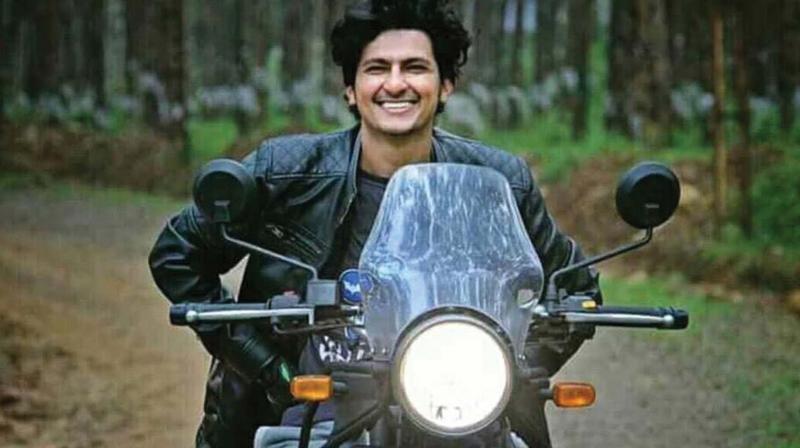
Fjällräven Polar is the dream of any globetrotter. The ultimate adventure of a lifetime, the 300-km Arctic expedition in minus 30 degree temperature offers a blissful journey along snow-capped, sun-drenched Polar landscape and above all, the experience of a unique endurance test. Twelve persons from all over the world are chosen and trained for the expedition happening in April every year, through online voting, and this time, it could be a Malayali. Niyog, a 26-year-old Punalur native, is leading the polls with over 20,000 votes in one among the 12 categories. 

Niyog was featured in Kochi Chronicle in mid-September, he was a penniless nomad hitchhiker who was on a journey across the country. How come he heads for the North Pole expedition in less than three months? “The journey hasn’t ended yet. I have reached Delhi and have covered 180 days without money. Hopefully, I’d complete the all-India trip before the voting ends,” he says. 

How did a person, who is on and off the Internet due to his journeys, come to know about the Fjällräven Arctic expedition? “Fjällräven Polar is quite popular among travel buffs. The expedition has been happening since 1997. This year’s application process had begun on November 16. I had applied only four days back and my name was not even in the first thousand. But my followers and friends on Facebook were very excited and started campaigning through trolls, WhatsApp, etc and in four days, I topped the list. It all happened in a flash,” he recalls. 

Just a day ago, it was a Pakistani national who topped the voting. It was a virtual Indo-Pak war with celebrities and politicians seeking votes for their country’s representative. “It was just a contest and things were getting out of hand. It was painful to see the war-mongering and I requested my friends to stay away from using ‘nationalism’ to promote me. After all, journeys are about breaking boundaries, no?” he asks. 

The Polar expedition, though exciting, is not easy as it seems. From Norway to Sweden, you travel in a sled pulled by 10 highly-trained dogs – Alaskan or Siberian Huskies. More than 200 dogs accompany the travellers. The trip is impossible without these dogs which are brought from leading kennels across the world. “Inexperienced in sleighing, the journey by balancing the dogs will be difficult. But there are other risks – like travelling along the frozen sea areas where only the top layer might be frozen. There are also hurdles like hypothermia and frostbite,” says Niyog, who is not worried about the sub-zero temperature or even the mandatory fitness. He has a few Himalayan expeditions and extreme treks to his credit, so fitness is the least of his concerns. 

The voting is on for 10 more days and anything could happen, but Niyog takes it calmly. “I hadn’t expected even this. I’d be happy if I get the chance, but even if I don’t, it’s great to know that so many people love you.”

 Published in Deccan Chronicle on December 4, 2017

Saturday, November 18, 2017

Jimbroottan returns


Five years after spreading optimism and inspiring youngsters, Joy Thakkolkaran is back to cinemas. So is his employer Jimbroottan, another character from the much-acclaimed Punyalan Agarbathis. Reprisal of the comic role in the just-released sequel – Punyalan Private Limited – is a matter of joy for Gokulan. 

“At the beginning of Punyalan, I was told that my role was that of a nameless labourer in Joy’s factory. Jimbroottan was the name suggested by Jayasurya and the name got stuck,” laughs the Kochiite, who is known by the same name. 

On screen, Gokulan is someone who cracks jokes without meaning to do so, but off screen, he is different. He confesses that he was an introvert during school days. “I had stammer which made me a loner,” he says. But there is no trace left now. Gokulan owes it all to theatre. What started as skits during school days and NSS camps caught up with him as he joined college. “Campus theatre has made a confident youngster out of the old me,” he smiles. 

Being the youngest son in the family – he has three brothers and a younger sister – he was free to choose his path and Gokulan opted for theatre, on just one condition – ‘Do not drop studies’. “I did a journalism diploma, two post-graduation courses and an MPhil, only to act in plays,” he says. 

He was part of campus theatre, performed in college youth festivals and got selected to several state and national-level fests. He also performed as part of small theatre groups in the city. Don’t mistake him as an irresponsible youth. At 21, he was working for Bill Gates! Explaining, he says, “We used to perform street plays on AIDS awareness as part of an NGO funded by the Bill Gates Foundation. Back then, earning Rs. 8,000 a month was a big thing.” 

Movies were nowhere in his plans, but the inevitable twist happened in the form of Basheer’s Premalekhanam! He was playing Kesavan Nair in a play based on the novel. The practice was held at the open theatre in CUSAT. Director Kiran spotted him and impressed, offered him a small role in his movie Kudumbashree Travels. That was the beginning. He starred in a friend’s short film Mangandi, which won various awards. 

Then came the role that changed his life – of the coconut plucker, the representative of God, in Lijo Jose Pellissery’s Amen. “There’s an interesting back story. I was originally cast as a barber, but when I reached the location, the role had gone to another person and I was given the coconut plucker’s role. I was hurt and thought of leaving, firstly because of this and secondly because, I had no idea about climbing a coconut tree. It was Sudhi Koppa who talked me into acting. I somehow managed to climb the tree and the shot was okayed in the first take. There were scratches all over my chest, but it was worth it. The movie gave me an identity and the barber’s character didn’t make it to the final cut,” he recalls. 

More coconut plucker roles followed – in an advertisement and another movie, but he has no qualms. “It has all done me good,” he says. His association with Ranjith Shankar began with Molly Aunty Rocks and then, Jimbroottan happened. Jayasurya took a liking to Gokulan and soon he bagged roles in his movies Lal Bahadur Sasthri and Mathai Kuzhappakkaran Alla, followed by Ranjith’s Su Su Sudhi Vatmeekam and Ramante Edenthottam. 

Movies haven’t let theatre take a backseat. “I have a deep emotional connect with theatre. I can’t let go of it just like that.” The 33-year-old will next play the father of a young boy in the art house movie Lali Bela. Also coming up are Kuthirappavan and Vinayan’s Chalakkudikaaran Changathi. “I am a man of simple dreams. I don’t want to do big roles, but the ones that give me happiness. Anything I do, I want happiness in return and nothing else matters,” he concludes.

 Published in Deccan Chronicle on November 19, 2017

Saturday, November 4, 2017

Globetrotting shutterbug


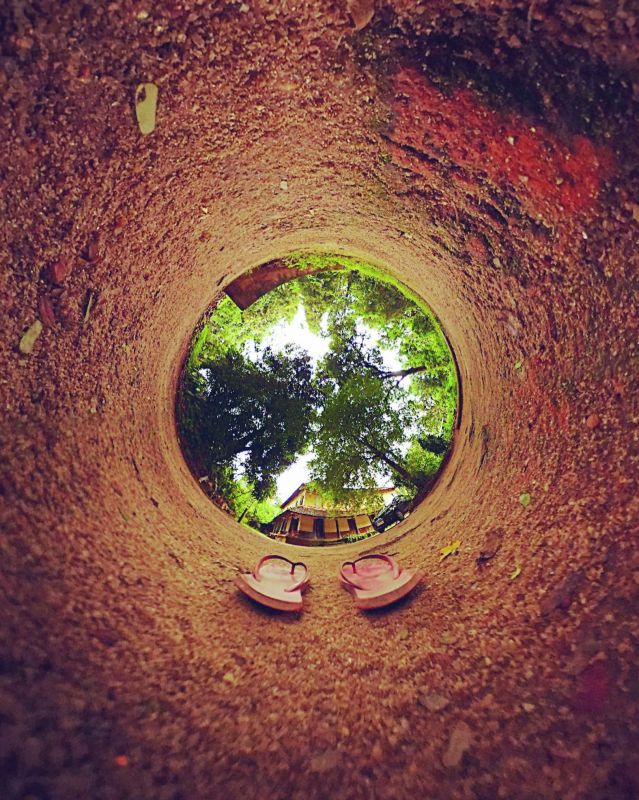
Prasanth Chandran can’t get enough of globetrotting. Every year, he goes on at least three international journeys, at times solo, or with his family. A digital marketing professional in Kerala, he is passionate about capturing life and culture in various parts of the world in his camera. His clicks prove that he is slightly unconventional — it’s not always you see aerial 360 degree photographs brimming with life and beauty.


“I do not manipulate my photos. I love to experiment with my camera and click using multiple exposure technique. 40 to 60 images are superimposed and stitched sometimes. Being an avid traveler, I love to shoot landscapes,” he reveals.


Another favourite subject of his is photographing sparks from a spinning ignited steel wool. For clicking spherical panoramic shots, he has his imported gears — his Sony A7R2 and 360 degree cameras, which are not much popular here. One of the 30 Google-certified photographers in the country, Prasanth also owns a contributor license to Getty images.


Of all his journeys so far, the most memorable one has been two years back to first nuke victim land Hiroshima. “The visit to the A-bomb dome, the only structure that was left standing at the epicenter of the blast, is preserved as ruins. A whole new city has resurrected around it. The visitors are greeted with badges and souvenirs. That was a memorable sight — an iconic dome — a reminder of the biggest tragedy that struck mankind — standing amidst a city that literally rose from the ashes,” he recalls.

The landscapes of Thailand, Laos and Cambodia have wooed him. Unlike Europe, which he calls a city of structures, South East Asian countries have a special charm — of greenery, a peculiar culture with lots of similarities with Indian culture and lifestyle. “There are several temples there. Everywhere around, it is beautiful frames and sights that would never satiate one’s passion for photography. I would be going back there again, there’s lot more to click,” he says.


In India too, sights never stop wooing. Leh, Ladakh, Hampi to lesser-known spots like Chellarkovil near Thekkady, he has gone everywhere with his best friend — his third eye, the camera.

 Published in The Asian Age on November 5, 2017

Monday, October 30, 2017

The space girl Life

Ashna Sudhakaran, a village girl whose father is a farmer, is back from her three-month internship in NASA. she tells her story.


I know nothing with any certainty, but the sight of the stars makes me dream — these words of Vincent van Gogh on her Facebook profile summarises Ashna Sudhakaran’s dream. The 27-year-old is just back from Washington DC — from NASA, where she was an intern for three months at the Goddard Space Flight Centre. For the daughter of a farmer who studied in a government school, it has been a proud journey from a little village named Koduvalli in Kozhikode to the prestigious space research centre. 

“NASA was nowhere in my plans. My dream destination was either the ISRO or the Vikram Sarabhai Space Centre,” Ashna begins excitedly. Words gush out as Ashna talks about her family, school, teachers, research, sun, love for literature and travel, deep admiration for APJ Abdul Kalam, high regard for Kalpana Chawla and about her NASA days. The self-confessed chatterbox reveals, “I was never the studious type. All I did was read novels, stories and poems. A very weak student in Mathematics, I had no idea about even a branch named Space Physics then!” Space Physics, her area, is the study of everything above the earth’s atmosphere up to the edge of the solar system. 

Ashna was a ninth-grader when Indo-American astronaut Kalpana Chawla died in the Columbia space shuttle disaster. Reading about her and her space venture, Ashna started idolising Kalpana and carried her photograph all the time. Her friends teased, calling her ‘the space girl’. Ashna was in class X, when former President and India’s Missile Man Dr A.P.J. Abdul Kalam visited Kozhikode where he gave an inspiring talk for three hours. Listening to him among the audience, Ashna — who says she didn’t even know that he was a scientist — found her second idol. 

After graduating in physics with 80 per cent marks, she joined a college in Tiruchy for post-graduation. “I came to know that St Joseph’s College, where Kalam had studied, was nearby and went there,” she recalls. Walking along the corridors of his school and sitting in his classroom filled her with energy. Once, she went on a solo ‘pilgrimage’ to Rameshwaram, the abode of her icon, visited Kalam’s ancestral home and interacted with his brother and relatives. 

For the M. Sc. internship, students had to submit a thesis. When most of them chose to stay at home and submit a ‘purchased’ project, Ashna stayed on the campus alone and worked in the library for hours to come up with hers. For the mandatory internship, she applied to VSSC, but got rejected as they had no place for M. Sc. students. She tried again and again even as she lost one whole month waiting, and finally, impressed by her letter of interest, they took her in. 

“There, I worked on gravity and ionosphere physics. The experience there ignited my passion and thus began my research career. For MPhil thesis internship, I applied to the 100-year-old Solar Physics Observatory in Kodaikanal. Again, they didn’t entertain a woman in their campus which had four to five staff, all of them men. I couldn’t give up and kept sending mails. After a rigorous interview, I was let in. The six months I spent there were very surreal. I was the only person who stayed on the campus at night; everyone else was staying outside. Later, when I read C. Radhakrishnan’s Pullippulikalum Vellinakshatrangalum about his stay at the observatory as the sole person on the campus back in the 60s, I could very well relate to it. That was my story!” laughs Ashna who later also interned at the Aryabhatta Research Centre, Nainital. 

Her journeys were not limited to laboratories and internships; she travelled all over India alone wherever there were summits, conferences or anything that discussed Space. One such journey took her to Maharashtra where she attended a 15-day programme and learnt about the SCOSTEP Visiting Scholarship offered by NASA. “Under the programme, young scientists and graduates were trained in solar-terrestrial physics labs. My research was on the geo-effectiveness of the energetic phenomena of the sun. Getting selected was not easy as they offered it to only four persons every year, and so, I had not much hope,” she says. 

It was on her wedding eve that Ashna received the email announcing her selection to the Heliophysics Division of the Goddard Space Flight Centre; she had 10 days to submit her research proposal for the fellowship. Her husband Umesh, an environment officer at a tiger reserve in Tirunelveli, was very supportive of her dreams and passion. 

With everyone’s wishes and support and her hard work, Ashna bagged the Rs 7-lakh fellowship from NASA which covered her travel, accommodation expenses for the duration of the stay. “My little village celebrated it and for my family, there could be no prouder moment. But all my worry was about my first flight,” she chuckles remembering the nervousness. NASA was a new world to this small-town girl — scientists constantly inspiring each other, friendly people, experts who guided her through mistakes. “My work was on solar radio burst and it was no 9-to-7 research. The Centre was open 24x7. I explored the organisation, observatories and departments, attended various workshops, interacted with space weather researchers from around 50 countries… it was an inspiring, memorable opportunity.” 

Ashna had moments of doubt too. “I am not academically bright; I am just driven by passion. I was demotivated at times, but my fellow researchers said that the world of science needs both intelligence and passion and asked me to never lose the passion. I won’t,” she says. 

She wants to spread the word — that opportunities are always there before you; you just need to look for it. “Every child should know that despite their background — even if their parents are poor, even if they study in Malayalam medium schools or are not brilliant, they could make it there if they have strong passion. I am planning to do a space physics outreach programme at my school to share my experience with kids who want to become another Kalpana Chawla,” she explains. 

Ashna would be back in NASA — she could go back any time — after completing her research in two and a half years. Happiness is double now as Ashna and Umesh are awaiting their first child who will be born in a couple of months. Marriage and motherhood will never stand in the way of her dreams. “People around me have influenced me a lot. My sole dream is to go to Space. I know that 99 per cent of the work happens on ground and astronauts are just a tool. But I’d definitely go there.” 

The Space girl she is, she knows her path to the stars. 

 Published in The Asian Age on October 31, 2017
Saturday, September 23, 2017

A legacy in frames

Photographer extraordinaire Raghu Rai has been capturing exceptional images for decades now.


At a corner of the restaurant sat a man in his 70s, eating his dessert slowly, relishing every little bit of it. His deep, brown eyes had an oceanic calmness as he spoke. These are the eyes that first saw, before anyone else in the world, the hundreds of images that went on to be icons etched to our memories. This is Raghu Rai, the man behind the camera that’s facing history. 

“Photography is history, not art,” he begins. “Art by itself is useless and meaningless. The purpose of photography is not to become art; it is bigger than art. History, can be rewritten, but photographs can’t be. It’s a responsibility.” 

Even while talking and savouring the caramel sprinkles, he clicked photos of the city through the glass window near him. Below was the bustling city, people and vehicles hurriedly moving to their destinations trying to flee from the hot sun in the noon, but his camera was facing elsewhere — at the Metro workers toiling hard, ignoring the dust, heat and commotion to raise a metropolis. Very much like a Raghu Rai frame. “Kochi,” he says, “is a special place with its backwaters, rains, lighting, islands, architecture… especially the Old Cochin. There is so much spirit and heritage all over the place. But sadly, it is not preserved properly.” 

A person who has been to the city several times in the past, Rai is unhappy about its current status. Pointing at the Metro rail, Rai says, “This is a huge monster snake running through the city seamlessly. Kochi is not a city that needs a Metro, but politicians need a reason to make money, no?” 

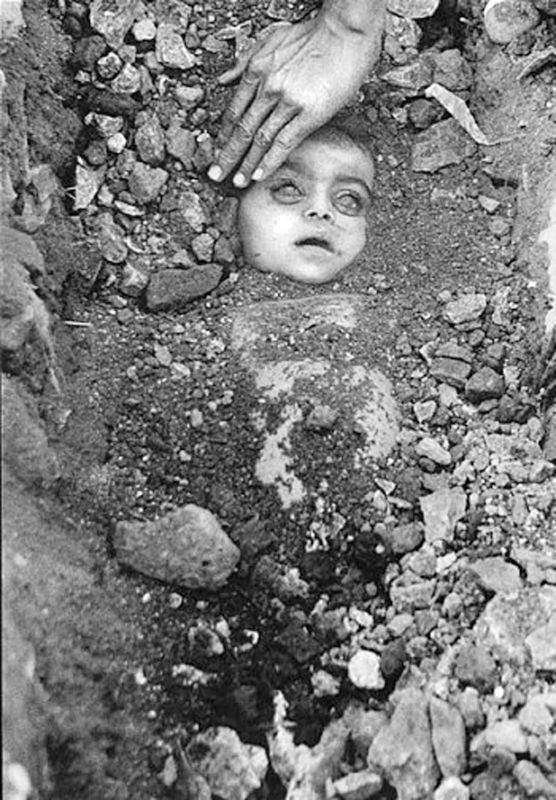
Rai has always been inspired by what he calls “the ever-changing spirit of life”. “Life on the streets, backwaters, inside and outside monuments are inspiring and challenging.” The great ‘visionary’ has immensely contributed in changing the face and definition of photojournalism over five decades. Everything he clicked – the Bhopal Tragedy, people around the Taj Mahal, the myriad expressions of Mother Teresa, Indira Gandhi, HH the Dalai Lama — were more than just frames. 

For the perfect click, he goes with his instinct. “A photograph, to me, is a moment of realisation and experience. It’s the same for a painter or a writer. A photographer should be an observer with sensitivity and responsibility. He should connect with the space, feeling and experiencing the wholesomeness of the place,” he states.


A witness to Bhopal tragedy, which he has chronicled a lot as photos, documentaries and writings, that iconic photograph must have been a painful memory. But Rai surprises, “No, it isn’t. It was shocking and numbing, but one needs to rise to the occasion and be responsible to share it to the world. Numbness and shock won’t take you anywhere. Journalism is not that simple.” 

The first Indian photographer to join Magnum Photos, an international photographers' cooperative formed by masters like Henri Cartier-Bresson, Robert Capa and David Seymour, Rai’s photos have been published in all international publications. The Padma Shri awardee has been through the transition ages of the camera, but he is not a nostalgic guy stuck in the past. 

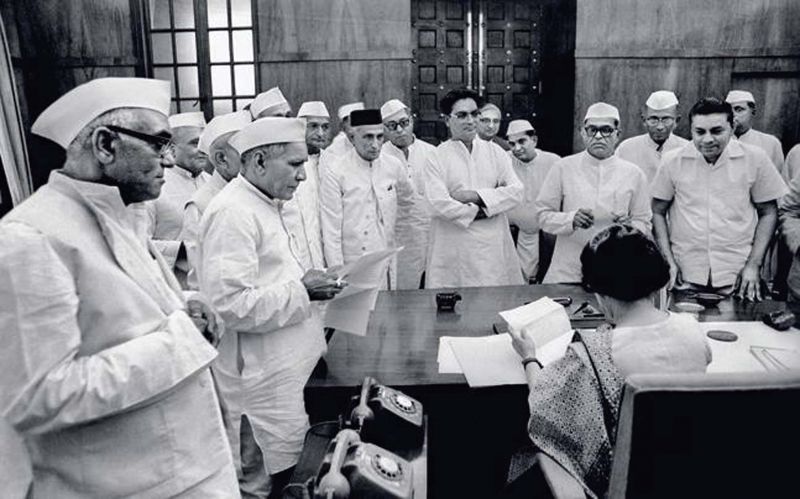
“I have used the film camera for 35 years, but the day I started clicking with the digital camera, I couldn’t go back; it gave me such a control and freedom. This (caressing his camera) gives me the ability to penetrate, concentrate, meditate and capture life and nature,” he explains. His photographs of former Prime Minister Indira Gandhi are very famous. He has admitted that he had been photographing her almost on a daily basis. Over the regimes, leaders and their persona have changed; so has access to them. “Earlier, photographers could be five-eight feet away from the PM. If any security stopped us, we could say Dekhiye Indiraji… and she’d glare at them and without speaking a word, would make them run away,” he laughs, adding, “Today, due to security issues, we are at least 100 feet away from them. That’s why there are no intimate moments with the PM and other ministers. They are no longer humans; they have become just dry political situations on the dais.”


Mother Teresa, for Rai, is a mother and a teacher. “Dedicated to serving the poorest of the poor, she is a mother to anyone who met her. With so much love and concern, her service was amazing. She has taught me many things,” he recalls. In the age of Insta-photographers, he has some advice for wannabe photographers. “Unless you have something specific to capture, do not click. It has to be love and passion. Practise every minute. Carry your camera always. Being there and now is the key. Instead of creatively reproducing memories, connect eyes to heart,” he says. He is always clicking and documenting — currently on the Himalayas, sacred rivers, a book on Sadhguru Jaggi Vasudev and his Rally for Rivers, on HH the Dalai Lama…. Many of his famous clicks are in black and white. Does her prefer black and white to colour? “Not necessarily. It’s about expression. Where I find lots of colour and it’s uncontrollable to restrict, I go with black and white. Rivers are in colour. But the Himalayas, Sadhguru and the Dalai Lama are not,” he says. Having travelled all over India, a paradise for photographers, there is more to learn and chronicle. He animatedly explains, “The more you know and understand India, you discover how little you know and how small you are. Knowing India is an endless process. You have to inhale the whole world into it and deliver. There is so much left to know.”

Published in Deccan Chronicle on September 23, 2017 

Saturday, September 16, 2017

Journey sans money

Life has changed for Niyog ever since he embarked on his penniless road trip across the country.


Niyog has been on the road for 107 days. He has been penniless all these days, but he is not worn out. “In fact, I have become rich,” he says, “with ample experience, happiness and friends.” 

The Kerala native started hitchhiking from Kanyakumari on June 1, planning to cover the whole nation. Somewhere during the solo journey, he turned another year older with an experience of a lifetime. 

Speaking from a remote village in Ajmer, Rajasthan, through calls interrupted by coverage issues, the 26-year-old sounded cheerful. “This is my longest stopover. I will be staying here for a week, collaborating with an NGO named Manthan, which is providing education and lifeskills training for people whose lives are marred by water crisis,” says Niyog, who is mesmerised by Rajasthan’s colours, contrasts, mysticism, qawwali, rich folk, Hippie-influenced foreigners and their Bohemian lifestyle. 

So far, he has covered Tamil Nadu, Karnataka, Maharashtra, Goa, Madhya Pradesh and Gujarat before reaching the desert state. “Seven states and three Union Territories,” he stresses. The road he chose to tread has been his dream for some years. His family — mom, grandmothers and sister — weren’t aware that it was a penniless trip. When they came to know about it, they panicked. “Mom asked me to carry at least a debit card. I didn’t want to. As the days went by, she realised I would survive without money,” he says with a laugh.

Was there any moment he regretted the decision? “Actually, yes. The first three-four days were tough. I couldn’t bring myself to ask random people for food. I wished I had money. But hunger helps you lose all inhibitions. You won’t get free food at hotels. I banked on families, temples and dargahs. I just had to come out of my comfort zone,” he recalls. 

The responses were interesting — many felt he was crazy, some others thought he had left his home and advised him to go back to his family. Yet there were many who surprised him with their hospitality — like the host at Usilampatti, Tamil Nadu, who offered him a bed and food, despite them fetching water from a well 4-5 km away; the stranger who sheltered him at an illegal liquor godown at Ambaji, a town on Gujarat-Rajasthan border. All are memorable moments; the bad ones are negligible, he says. 

For Niyog, this journey is a process of learning and unlearning. He calls it “unlearning materialism and relearning life”. “Each day has brought changes to my perspective. I have learned to appreciate little pleasures — like a cup of tea. Difficulties have become subjective. I now know that a life free of illusions is possible,” he explains. 

Coming from a state with lush greenery, monsoon, high literacy and higher living standards, the Indian reality — of poverty, patriarchy and ignorance — hit him hard. At a panchayat meet in Rajasthan, he saw people are seated on the basis of their caste. The sarpanch is a woman, but it is her husband who does the talking; she sits far behind the crowd among other women. In Mumbai, he saw two families — eight of them — sharing a dingy room that they call home. 

“It is a learning beyond academics. This is not the India we were taught in textbooks; reality is at the extreme. The lives of people are worse than even the poorest tribal settlements in Kerala. There are people who have no idea about the government, their rights or even the Constitution. An area that was a forest and later agricultural land, was lying barren, slowly turning into desert,” rues Niyog, a law graduate and a budding filmmaker. 

However, his focus will be on journeys — at least two every year. “Films will happen only in between those,” Niyog says. A lot of faces, lives, stories have come up. He is working on the screenplay of a road movie. He also has plans to make a documentary. He already runs a Facebook page Road to Magic that chronicles his travel. The next halt is at Jaisalmer and from there, off to Punjab. He just can’t wait to get on the road.


 Published in The Asian Age on September 17, 2017

Thursday, September 7, 2017

Lessons from jungles

Aparna Purushothaman, whose only dream was securing a government job, is now a school teacher and a passionate wildlife photographer.


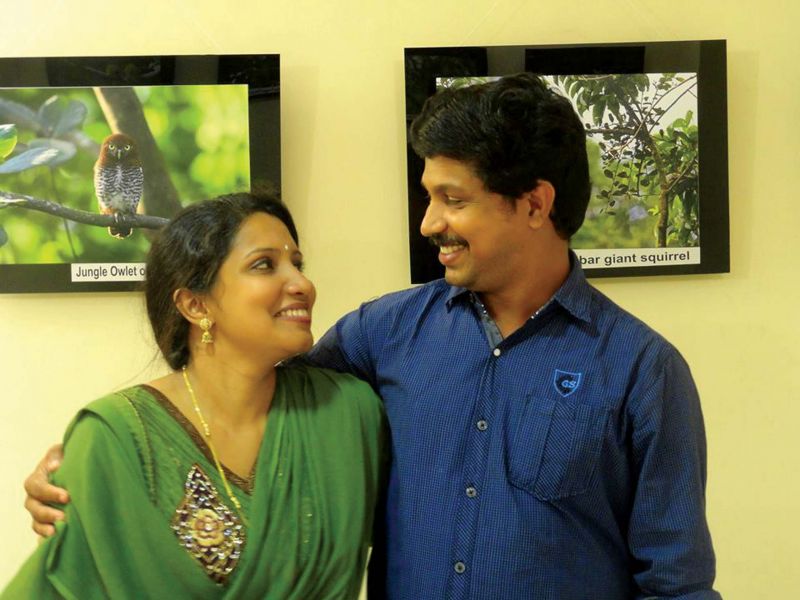
For most girls, wedding marks the end of their dreams as their world shrinks and limit to their homes and for a few fortunate, their office. For Aparna Purushothaman, it’s just the opposite. Marriage opened before this school teacher new avenues; from a bookworm whose only aim was securing a job, she turned into a wildlife photographer who explores the forests looking for rare sightings and exquisite clicks.


Looking back at those days, the 33-year-old can’t hide her surprise. “As a child, camera was a rare and precious object kids weren’t allowed to touch. Also, I was a sick child and hadn’t gone for even a study tour. I was a padippist with no dreams beyond a secure government job.” Her only extracurricular activity was glass painting, which she claims, anyone can do.

It was when she was doing her MPhil in 2010 that she got married to Ashok Damodaran, an assistant engineer at KSEB. On seeing her glass painting works, an impressed Ashok asked her to focus on art and she hesitantly tried her hands at painting. Soon, she discovered that she was ‘not bad’. On their first wedding anniversary, Ashok gifted her a Sony Cybershot camera remembering her mentioning once that she wished for one. The excitement is still there in her voice when Aparna remembers those first clicks, “It was a small red one. I clicked everything I saw. My practice ground was the lonely Kattoor Beach near his home at Pala.”


One day, in the garden outside her lab, she spotted two Red-whiskered bulbuls building a nest. She clicked their activities every day as they built the nest, laid two eggs, guarded those till they hatched, the nestlings were fed, taught to fly and finally, left their home. “After my husband posted it on Facebook, the response was very encouraging. That was the beginning of photographing wildlife. He was working in Sholayar back then. I went there with him and clicked the photos of a lot of birds and posted it on Facebook. Many said I had a frame sense and could try a DSLR camera. Ashokettan was waiting for such a response and he literally rushed out to buy me one,” she recalls.


Aparna learned the techniques from the manual and help from photographer friends. Caught in the web of wildlife photography, she began to keenly follow professionals like Rathika Ramasamy and their beautiful action shots. “My interest was in avian photography. Animals came only secondary,” she confesses. Then came the huge turning point. The couple was roaming in the forests in Sholayar when they came across an animal which resembled a mongoose. She was reluctant to capture it on the camera as her focus was on birds, but on Ashok’s insistence, she took a few ‘lazy clicks’. The shocking revelation came when she asked a friend what the animal was. It was the endangered carnivorous Nilgiri Marten that featured in the IUCN Red List of Threatened Species. No one knew that it existed in Sholayar! It was her ticket to fame in wildlife photography and zoologist circles. “It also boosted my confidence. Then on, it has been journeys and clicks,” she says.

Ashok got a transfer to Kottayam and Aparna’s school was in Kannur, but whenever they got a holiday, the duo escape into the wilderness. They had been to forests all over Kerala and the borders of Tamil Nadu and Karnataka. No jungle has frightened her. “Forests are the safest place on earth. Animals are very harmless, far more than human beings. You just have to stay on the forest path. For a sharp click, you need good lighting, so a photographer always stays in well-lit open areas.”


Ashok got a transfer to Kottayam and Aparna’s school was in Kannur, but whenever they got a holiday, the duo escape into the wilderness. They had been to forests all over Kerala and the borders of Tamil Nadu and Karnataka. No jungle has frightened her. “Forests are the safest place on earth. Animals are very harmless, far more than human beings. You just have to stay on the forest path. For a sharp click, you need good lighting, so a photographer always stays in well-lit open areas.”


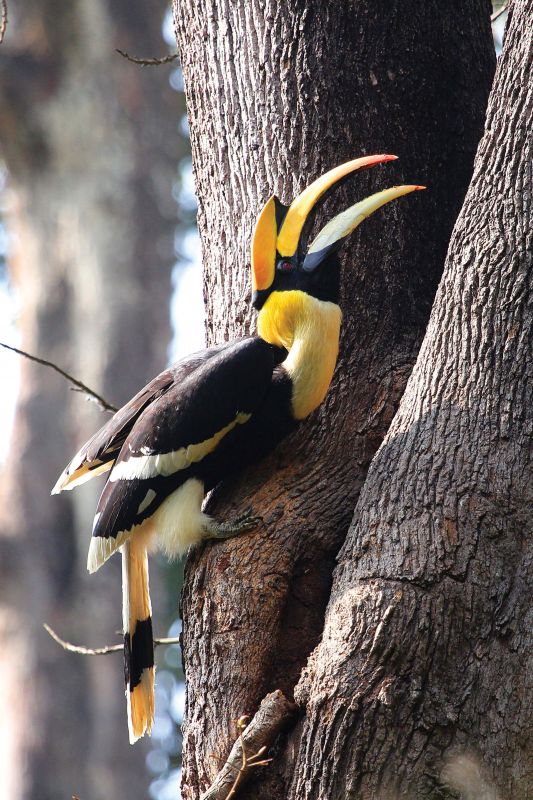
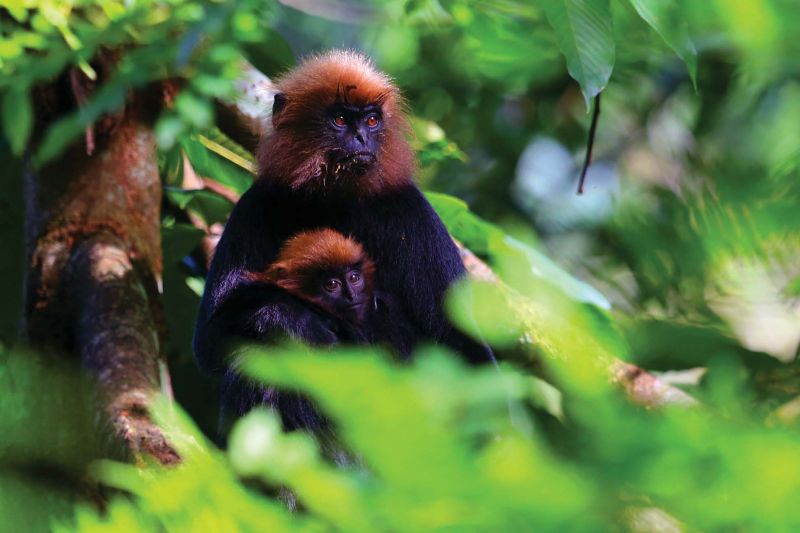
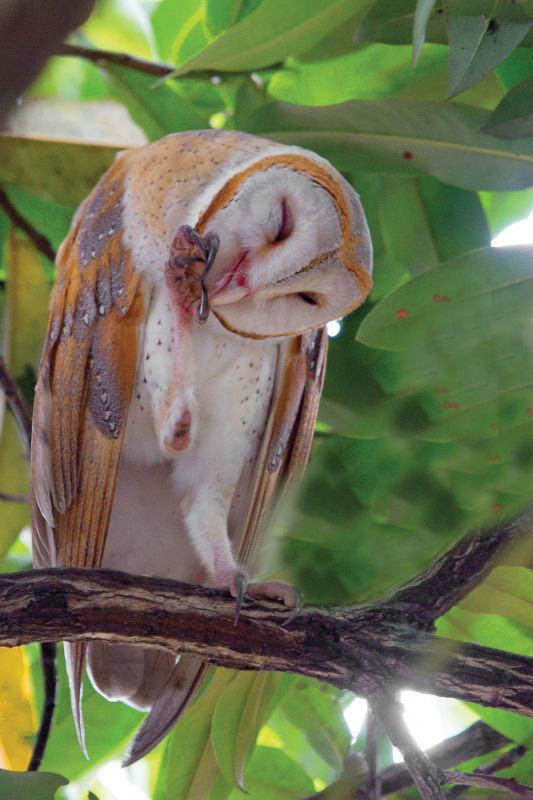
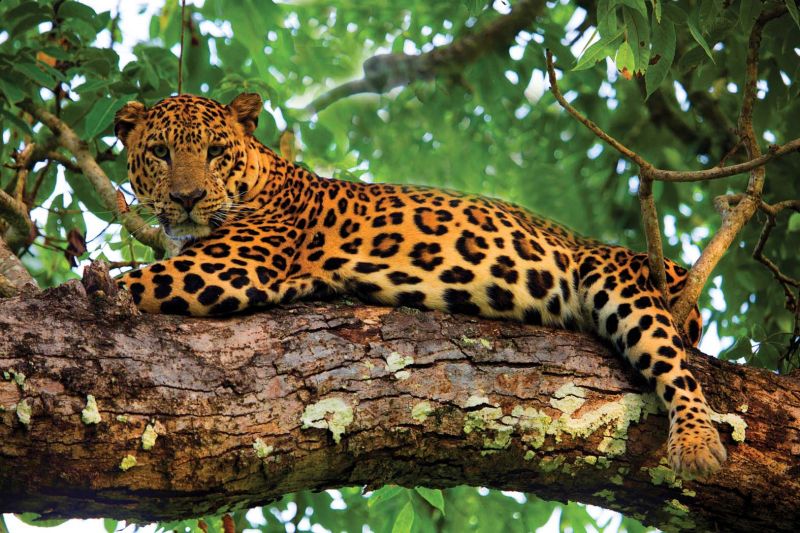
Asked about her best shots, Aparna is confused. There are so many — the leopard that won her an award, the lizard that was chosen by Lalithakala Akademi, the Great Indian Hornbill feeding its mate, the frightened Nilgiri Langur holding its baby, so on. But her all-time favourite is owl. She has already photographed eight of the 10 owl species spotted in Kerala. “We are setting out next week to spot the Indian Eagle Owl. I am also looking for a black panther,” she says.

Inspired by their ‘Physics miss’, a lot of her students want to become like her. Aparna is happy about them pursuing wildlife photography as a passion, but won’t advise it as a career choice. “It earns only happiness, not money. Jungles offer a lot of sights and inspire you to explore more, but the income is zero.” She has more plans — to spread awareness on nature conservation and various rare wildlife species through exhibitions, to write a book, to go on that long-pending international wildlife expedition and photograph the Bird of Paradise species in Papua New Guinea.


 Published in The Asian Age on September 8, 2017

Kabita Mukhopadhyay, Political All the Way

She was born in West Bengal and groomed at Santhiniketan during vibrant and turbulent times in Indian politics and culture, but Kabita Mukho...