89 years after Rosy’s disappearance, a group of women from Malayalam film industry launched a film society in Kochi and named it after their forgotten first heroine
1930: The year the first Malayalam feature film, Vigathakumaran, released. The year J.C. Daniel, father of Malayalam film industry, made his directorial debut with the country’s first social drama feature film. The year P.K. Rosy, a Dalit labourer and a Kakkarasi theatre artist, became Malayalam’s first heroine. The year when Rosy and family were attacked and their hut burned down by feudal Nairs, irked by a Dalit woman portraying an upper caste in the film, forcing Rosy to flee and to never return.
2019: 89 years after Rosy’s disappearance, a group of women from Malayalam film industry launches a film society in Kochi and names it after their forgotten first heroine. P.K. Rosy Film Society, according to the Women in Cinema Collective (WCC), the organisation of woman professionals in Mollywood, is an attempt to restore the name of all those who failed to find a place in the annals of film history for their caste, gender, religion or opinions.
The lost heroine
Vigathakumaran (The Lost Child) was the story of a child who goes missing and years later, accidentally gets back with his family. Call it irony, the heroine Rosy too vanishes, but her history is traced years after her death. Rosy belonged to a Dalit family in Thiruvananthapuram who was discovered by Daniel while she was playing a part in Kakkarasi theatre, a Tamil Dalit art form, and convinced her to play the lead in his debut movie. At an era where caste system was practiced openly in Kerala, a Dalit actor acting as an upper caste woman enraged the Nair community, who pelted stones at the screen, disrupted the movie’s screening and went on to ostracised Rosy’s family. They were manhandled and their hut was set afire, forcing Rosy and family to flee their native. The actor fled to Tamil Nadu where she is believed to have lived and died assuming a different identity, without letting anyone know about her past. No print of Vigathakumaran exists anywhere, leaving no proof of Rosy’s acting career.

A memorial could be anything – a statue, award or building, but for a woman who was hounded for her identity and forced to vanish, what better way than a platform to remember everyone who has been shown the door from history! The WCC, formed in 2017 in support of a female actor who was assaulted in an incident allegedly masterminded by Mollywood actor Dileep, has been supporting movements and activities to support the marginalized and oppressed, both inside and outside the industry. The formation of P.K. Rosy Film Society is yet another huge step from the collective to celebrate the voices that have been silenced.
All the founders and members of the society are ciswomen and transwomen and together, they will hold screenings films made by women and discourses on feminist cinema. Archana Padmini, film curator and one of the founders of the society, explains, “Kerala can be considered very rich in terms of film societies, but there are very few who engage films academically. Launching a film society was an idea that came up during one of the general body meetings of the WCC. Our major focus being representation of women and intervention in issues of all sorts of marginalization, we had to create a platform for discourses and never let those die. When we thought of a name, history gave us no choice other than P.K. Rosy, a woman who deserved justice.”
Rosy’s life story was pieced together from books penned by film historian Kunnukuzhy S. Mani (who wrote the booklet P.K. Rosy), Chelangatt Gopalakrishnan (biographer of J.C. Daniel) and Vinu Abraham (who penned Nashta Nayika). Based on these accounts, director Kamal made the Malayalam film Celluloid in 2013, depicting the tragic life of J.C. Daniel, Rosy and their ‘lost film’.
Director K.J. Jeeva, another founding member of P.K. Rosy Film Society observes that Rosy has been denied even after all these years, “The government hasn’t yet instituted an award in her name. Just look at her personal life. She vanished into oblivion, lived under another name, assumed her husband’s upper caste surname. Now, even her children or grandchildren do not want to talk about her Dalit identity.
“Rosy is not the first and last Dalit woman in the industry who is ostracized for her identity. Even now, many hide their Dalit identity fearing that revealing it would cost them their career; that has to end in the long run. The society aims at initiating public discourses, against stereotyping, ostracism and toxicity in the industry. Film is a woman’s world too; we have been here since the beginning and we have to reassert that this space is as ours as yours. Many sensitive contents made and issues addressed through films have not reached the public. Our mission is to bring those films to people and trigger forgotten memories,” Jeeva stresses.
The events of the film society will be open to all, but only women qualify to be the members. Any woman who wish to be part of the screenings and discourses can register with the society. As Archana puts it, their aim is to discuss genuine, sensible, political content through films, watching it together and let discourses happen. “Film societies,” she adds, “have played a huge role in shaping up the gender perspectives, critical thoughts and film viewing culture of film viewers in Kerala. (According to the Federation of Film Societies of India, the state is home to over 125 film societies). P.K. Rosy Film Society is a platform for those who view film as an art form in both aesthetic and academic terms. And we will associate with various fields for fruitful interactions.”
The first event held by P.K. Rosy Film Society was the screening Leela Santhosh’s short film Paikinjana Chiri made in Paniya Malayalam and Jeeva K.J.’s feature film Richter Scale 7.6 on displacement woes of kolam thullal (a ritual dance form) artists, followed by discussions. In November 2019, the society screened Agnes Varda’s 1961 film Cléo from 5 to 7, noted for its French feminism narrative. Four days before New Year, they screened Deepa Dhanraj’s multi-lingual documentary We Have Not Come Here to Die, that chronicles the suicide of Dalit research scholar Rohith Vemula in the University of Hyderabad which triggered a huge anti-caste movement across the country. In January 2020, they co-organised Samabhav, a two-day film festival on gender, masculinity and relationships.
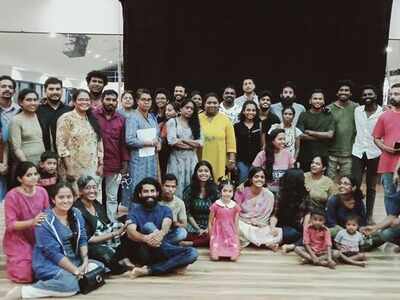
The women have more plans for 2020. “We will be holding monthly film screenings, appreciation classes, workshops, curated packages and more discourses,” Archana says.
Each film is a learning; it’s not meant to be watched and forgotten. As the end credits scroll and the lights turn on, it fills in the minds of audience too, sometimes as revelations, and at times, as revolution.
Published in Deccan Herald on January 19, 2020


