Wednesday, February 7, 2018

Breaking the mould

A lone warrior who defies gender, racial and hegemonic stereotypes of classical dance, Guru Manu's life is a textbook
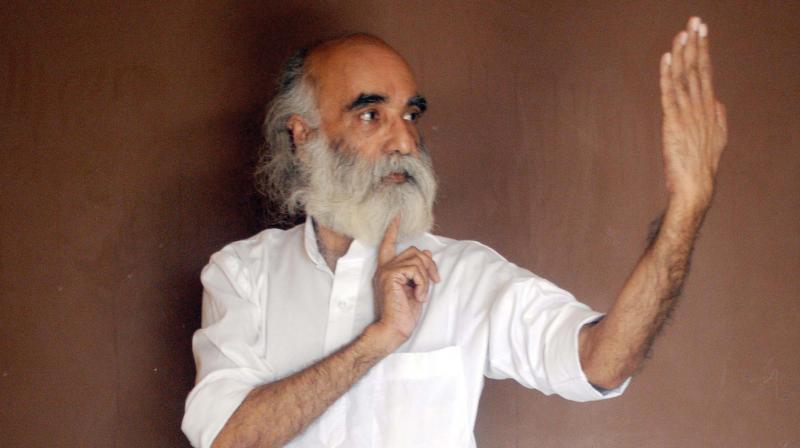

The first feature you notice about Guru Manu is his eyes — deep, calm, filled with mystery. Sporting a long silver beard, a spotless white kurta and saffron mundu, one would easily mistake him for a yogi. But when he starts talking, the Guru’s arms move gracefully, forming mudras and as if in a recital, he pulls you in, to his world of sadir. “Bharatanatyam is Sadir attam in Tamil-speaking regions. Widely considered a temple art form, it is actually based on Tantric philosophy. It’s an art form based on straight line movements involving all the eight directions,” he says as he gestures, demonstrating the hastas with arms forming a straight line. 

A lone warrior who defies gender, racial and hegemonic stereotypes of classical dance, this man’s life is a textbook. Born into a middle class Muslim family in Kodungallur as Abdul Manaf, his penchant for dance was spotted by his brother-in-law Aboobacker, who used to take little Manu to Kathakali recitals and Kutcheris. Falling in love with dance, Manu used to jump across the compound wall of a school near his home to watch a dance teacher training the children. Aboobacker enrolled him for Bharatanatyam classes, but the inevitable storm brewed and he soon became an outcaste. “It wasn’t from the Muslim community. Protests came from within my extended family and people around me,” he recalls. 

His fort, back then, was Irinjalakuda, where he attended concerts and recitals, rubbed shoulders with maestros and got trained under masters like Kalamandalam Raghavan asan. “I learned Kathakali, Kathak and Mohiniyattam, but my heart lies in Bharatanatyam. I left Kerala to learn more and travelled across Tamil Nadu and Karnataka, where sadir followed the lasya-based Thanjavur system, and then to the North. I halted at many places, at times, spent years at one spot. My return to Kerala was after 30 years,” he says. At Madhya Pradesh, where he spent many years, he trained children in Bharatanatyam. 

There, he got to associate with Bharatanatyam exponent Shankar Hombal, a direct disciple of Kalakshetra founder Rukmini Devi Arundale. Hombal considered him as his son and together, they run Kala Padma Institute in Bhopal. As years passed, he decided to take the learning further, outside books and scriptures, and went out to get first-hand experience from temple art works. His references were the temple sculptures in Tamil Nadu and south Karnataka, which immortalised dance moves on it. It was time for Guru Manu to make the move. In a transgressive attempt, he revolutionised Bharatanatyam, which is known for its fixed upper torso and spectacular footwork, by introducing bhangas and bhangis of sculptures to the dance form. 

“What I have learned is that sadir has no original form. An art form that projects femininity, sadir is being traditionally practiced with no hip movements. But in every temple sculpture, the hip had bhangas and bhangis and I inculcated it in performance,” he says, demonstrating the posture of Krishna in traditional pose and his reformed version. 

He researched through paintings and sculptures in temples across the country, came across long-lost dance forms like Laavan. A wanderer, he took his artistic rebellion to places and trained children in his own style. He is not a strict guru but is very particular that his disciples should give their whole heart to the art. “I do not train anyone who eyes competitions. Only a limited number of dancers take forward their passion. A lot of dancers are doing research and coming out with doctorates. Does anyone know what they have researched and found out?” 

In Kochi, where Guru Manu is on a halt between travels, he is training a small group of women — homemakers and artistes who are passionate about Bharatanatyam. He also conducts workshops for students. “My training technique involves developing inquisitiveness in my students so that they too get out of the fixed structures to explore more and experience the real sadir,” he concludes.


 Published in Deccan Chronicle on February 7, 2018

Tuesday, February 6, 2018

A life-changing journey

Years ago, when Kevin Cherian read an article on Ziro Festival, he was impressed and decided that someday he would go to Arunachal Pradesh to attend the annual music fest. He knew that the journey wasn’t easy — there are no direct flights or even efficient transport facilities. 

At 27, while running a computer business in Kottayam, his hometown, Kevin decided to take the plunge. Kevin says, “I didn’t know Hindi or have a proper idea of the Indian map.” He planned it as a week-long trip, but didn’t expect that it was going to be a life-changing three-and-a-half-month solo journey, shattering every single idea he had about a safe, happy world. 

The trip, as expected, was tough. He travelled by train and share taxis, hitchhiked and finally reached Ziro. “The festival was a wonderful experience…meeting people from all over the world, it was a big revelation for me,” says Kevin, in an excited voice. From there, a friend suggested that he travel all around the Northeast and he thought of giving it a try. But he didn’t have much money left and whenever he ran out of money, did menial jobs and earned enough to continue the journey. 

At Tawang, he worked as a waiter in a cafĂ© for a fortnight and earned Rs 1,000 with which he covered the northeast states except Nagaland. “Their lives are very different. Everyone has an iPhone and by the time they turn 18, they move in with their partners, away from their parents. The women are the decision-makers there,” he recalls. 

His next destination was Punjab, where he stayed in a rural area in Amritsar with farmers for a month. He also took tuition for children there. 

From there, he went to Jammu and Kashmir. In Jammu, he was looking for a place to stay when a driver offered him a lift. “He appeared very friendly at first, but the ride was very long. After covering almost 40 km, I smelt something fishy and asked him to stop, but he wasn’t paying heed. I realised that I was being kidnapped.” 

On reaching a place called Avantipura, Army officials stopped the vehicle. The two were stripped and searched and asked why they were there. 

“I was relieved actually and told them that I am from Kerala. Suddenly, they pointed their guns towards me. They told me that there was no reason for a Keralite to come to Avantipura. I explained my journey to them and showed them my ID cards. They must have been convinced and let me go. Only then did I realise that we had walked in to an encounter where IS militants were gunned down. They thought that I too was one of them!” 

He was safely taken to Srinagar that night. But that incident didn’t deter him; he continued the journey to Hasinapur, 30 km away from Meerut, UP. “The villagers are mostly farmers. They have a lot of money but no toilets, schools or phones. They live according to khap panchayat diktats and the caste system. I couldn’t even convince them that there is a state named Kerala,” he exclaims. 

The journey taught him a lot. Raised by his mother Leena after the demise of his dad, Kevin has never been out of his comfort zone. “The journey taught me so many things, including Hindi, cooking and the Indian map. Both my mind and body were cleansed during the journey; I lost oodles of weight. Above all, I realised that Kerala is heaven. There are still underdeveloped places in our country,” he says. 

It has been just a few weeks since he returned, but Kevin wants to go on his next trip — to Varanasi with a travel group, working for them. “But my mother is furious and I am grounded now as she fears that I would disappear again,” he laughs.

 Published in The Asian Age on February 6, 2018

Monday, February 5, 2018

Bringing Malabar stories on stage

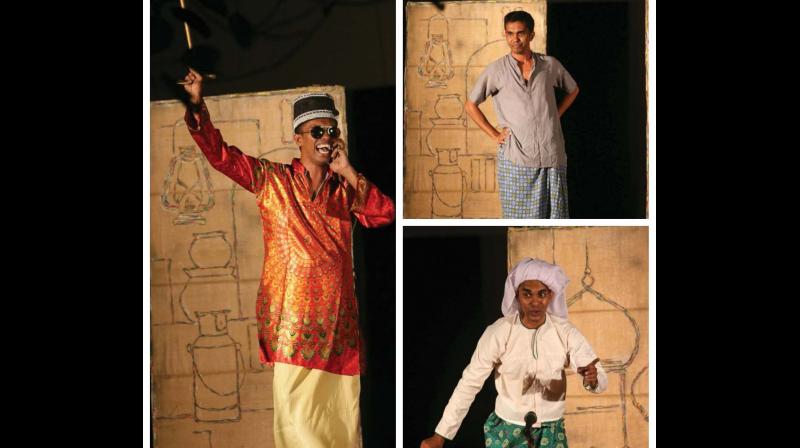
On the stage, when Sulaiman talks, jokes, laughs and emotes, there’s no trace of Binoy Nambala in him. When he walks in and out of stage playing six characters during the hour-long show Sulaimante Payakkam Parachilukal, the audience, surprised by the unique, humorous presentation in North Malabar dialect stay hooked on to it till the curtains fall. Binoy would say that the show is not a novel idea and has been here for long. 
“Payakkam Parachil is an age-old Mappila art form popular in Malabar region, especially Vadakara, till the 1960s. It is more of a satirical storytelling. An artiste would perform before a small crowd in a village by talking about several issues, both social and regional, in humorous language. At times, they take the performance to another level by amicably settling petty issues between neighbours and villagers,” recalls Binoy, who hails from Parappanangadi in Malappuram. 
He was attracted to the long-lost art form while preparing his PhD thesis at Sree Sankaracharya University of Sanskrit, Kalady, where he is a theatre student. Chakyar Koothu or the new-age standup comedy can be considered a closer version of Payakkam Parachil — which has been either a storytelling technique for a region or a means to attract people to the mosque to attend preaching sessions during the holy month of Ramzan. 
“What I perform now is an improvised version of the original with the accompaniment of music. I discuss current affairs and social issues laden with jokes and funny dialogues in various costumes,” he says. 
Directed by Gopan Chidambaram, who penned the story for Amal Neerad’s Iyyobinte Pusthakam, Sulaimante Payakkam Parachilukal has been to several parts of the world where people welcomed the show gladly. “The responses have been very helpful. Elders who have watched the original format are of great help by giving proper suggestions and guidance,” he adds. Since there are minimum cast members and props - himself and his musician - and the sets which would fit in his car, Binoy has been taking Sulaiman to various stages across Kerala for the past one year. 
On the movie front, last seen in a comic role in the super hit Aadu 2, Binoy is also part of the upcoming Anwar Rasheed directorial Trance. Theatre too has never taken a backseat for the actor, who, last year, won the second best actor award instituted by the Kerala Sangeetha Nataka Akademi for Bombay Tailors. 
On Monday, Binoy will perform his Payakkam Parachil at Mahatma Gandhi Beach, Fort Kochi, at 7 pm.


 Published in Deccan Chronicle on February 5, 2018

Saturday, February 3, 2018

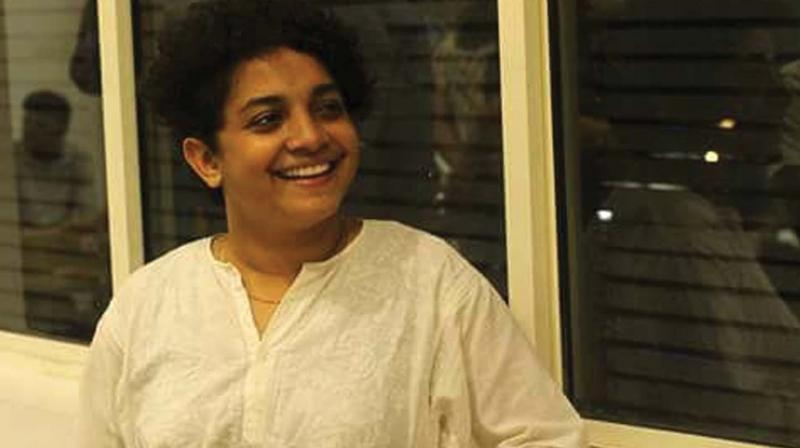
For Sou Sadanandan, Rabbit Hole is a redemption


Rabbit hole. The word comes from a story, a much-loved one – Lewis Carroll’s Alice in Wonderland, where little Alice falls into a strange, fantasy world through a rabbit hole. The dictionary defines rabbit hole as a situation that is strange, confusing or illogical, and often hard to escape from. 

Sou Sadanandan’s short film Rabbit Hole takes you through a similar situation, where you feel the trauma, sadness and aloofness felt by Christy, a woman who comes to a psychiatrist on his day off to discuss depression. 

A topic that needed to be brought to the attention of Malayalis who consider mental health a taboo subject, depression sank in well with the audience. A beaming Sou is happy about the responses. “I have received more than a hundred messages and mails, all of them ending with the word ‘Thank you’. Either they had been there or they are going through it. I think the short film could spread awareness on depression... that like cancer, it too needs to be treated at the earliest.” 

The conversation between the doctor and the patient, played to perfection by Alencier Ley Lopez and Gilu Joseph, is so convincing and relatable. 

So, has she ever gone down the rabbit hole? “I have seen a lot of friends struggling with depression but I couldn’t do anything to help them as they never let anyone near them. I really wanted to know what they were going through and help them. At one stage, I too stumbled into depression and experienced it. It took me more than a year-and-a-half to get over it. This short film is a sort of redemption for me,” she reveals. 

The idea of a short film on depression struck her when she read the story of the sad clown who spreads laughter, suppressing agony. A person who finds life in all art forms based on literature, Sou decided to make a small film on the story. 

“I was sure about not writing the dialogues myself. All my characters would be like me and I couldn’t bring to fore the conflict between the characters,” she recalls. She bestowed the task with Vinu Janardanan, who had co-written her National Award-winning documentary Chembai, My Discovery of a Legend. The screenplay was reworked over and over till they felt satisfied. 

Alencier readily accepted to play the part and Gilu was referred to by a friend. She says, “I had no money to offer. All I said was that it would be a wonderful role and she gladly agreed. After the first cut, we took a break to analyse how we could better the work.” 

It was then she made a discovery – that her friend, playback singer Sayanora Philip, could become a good dubbing artist. “We had felt that for Gilu, a voice one grade up than hers would be nice. While talking to Saya, suddenly I felt she could do it well. She too agreed and perfected the dubbing by working on it for two days. I hope our training did her good. After Rabbit Hole, she is dubbing for Trisha in Hey Jude,” says Sou, who also had on board actors Maala Parvathy and Ramesh Pisharody as voice actors. 

Currently, Sou is working on her debut feature film, a family satire starring Kunchacko Boban and Nimisha Sajayan, which is expected to go on the floors in April.

 Published in Deccan Chronicle on February 3, 2018

Kabita Mukhopadhyay, Political All the Way

She was born in West Bengal and groomed at Santhiniketan during vibrant and turbulent times in Indian politics and culture, but Kabita Mukho...