Wednesday, January 31, 2018

Striking a chord


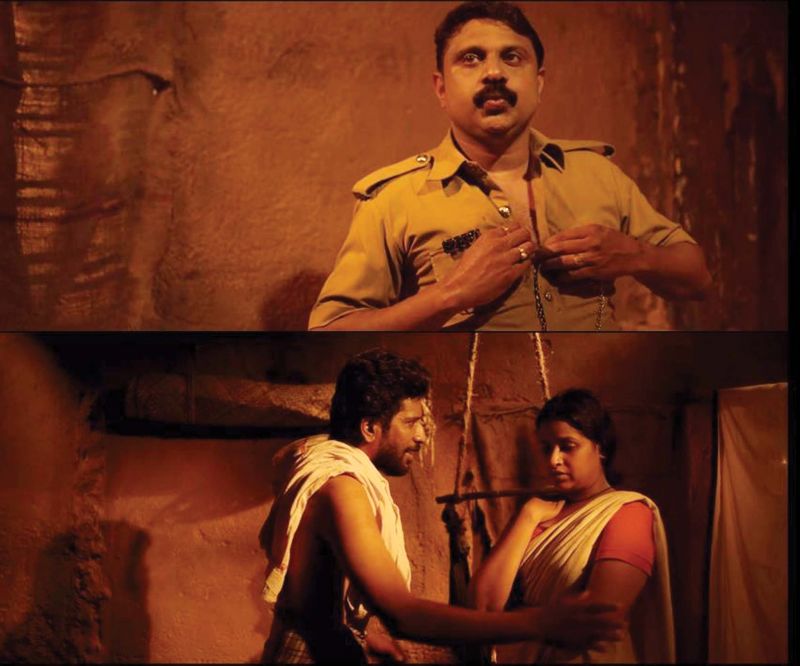
One night, three characters, hardly 13 minutes — that’s all Ranthal is about. The setting is the dingy house of a prostitute, where two visitors — a thief and a cop in pursuit — arrive. The woman, Ambily, shelters the thief and is about to serve him dinner when the cop arrives. He scornfully gazes at her crying baby and orders her to serve dinner. He finishes it all, leaving her hungry and proceeds to make out with her on the bed as the thief hides under the cot. Then comes the moment the cop reveals that there’s a price on the thief’s head. Tense moments follow… 

Released three days ago, Ranthal, featuring Balaji Sarma, Krishnan Balakrishnan and Sadhika Venugopal, has earned around three lakh views and hundreds of responses. Actors Jayaram, Aju Varghese, Mia George, Honey Rose and Neeraj Madhav have shared the short film on their social media accounts too. The director, Sujith Govindan, can’t be happier. “Many people told me that they felt like reading a touching short story. Our whole team is honoured by the comments,” he says. 

Scripted by Arun A.R. and Ajay Rahul, the short film has its cinematography handled by Sujith’s friend Faiz Siddique and the soothing BGM is composed by Jayhari P.S. “All of us are bonded by the common dream – of landing in the world of feature films one day. This is my first directorial that I planned to feature in my profile and I am glad that people loved it,” says the Kozhikode native. 

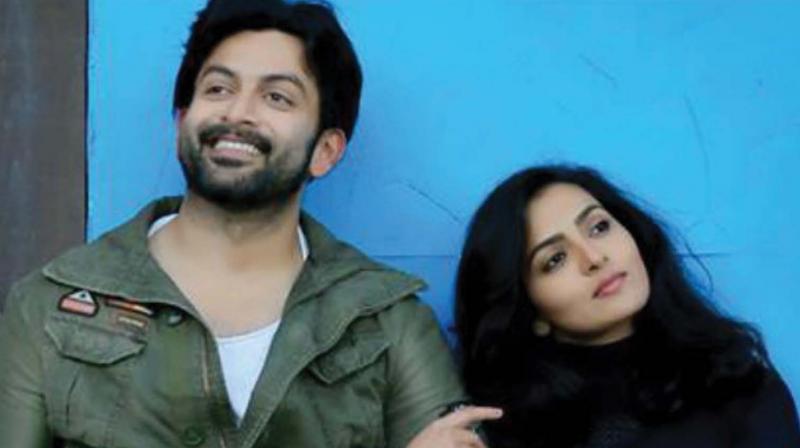
A still from Ranthal Recalling how they found the perfect cast, Sujith says, “When Arun and Ajay narrated the story, the first face that popped up in my mind as the cop was Balaji’s. Krishnan was recommended by a friend and Sadhika was a last-minute discovery after another actress backed out of the project. All of them performed excellently and made us all proud.” 

The shooting happened over one-and-a-half rainy nights, but the film doesn’t give away the climate. Much to one’s surprise, Sujith says that the whole house was a set. He and 11 of his friends have together formed a production house OMA to fund feature films and they are hunting for the right script. 

“Meanwhile, we are working on ours too. We hope to make our big screen debut soon,” he concludes. 

 Published in Deccan Chronicle on January 31, 2018

Sunday, January 28, 2018

Artist extraordinaire


The self-trained maestro makes art of everything and the house he built himself talks volumes about it. Parameswaran finds art in everything from a banana flower to a little stone. Everything about the little village of Kallur in Thrissur is serene – the chirping birds, smiling people, small and cozy houses, ancient temples... A villager gladly directs to the destination, saying, ‘Go straight; you won’t miss the house’. 

A bumpy ride along the untarred road leads to a greener ambience but no one would miss the house – the brick red hexagon structure with tiled roof and a semicircular sit-out, a brass bell hanging at the entrance – exactly like a temple. 

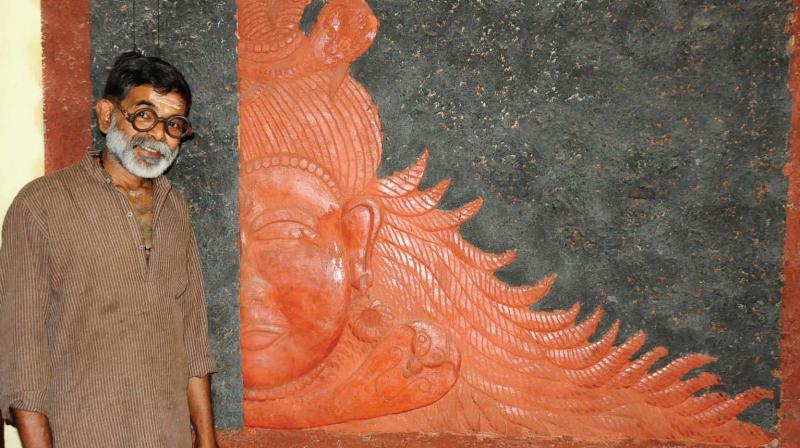
The man of the house, Parameswaran Kallur, stands there greeting with a smile. “I built this home all by myself, 22 years ago,” he says, inviting the guests in. Inside, the temperature magically goes down as if it’s an air-conditioned space. The walls adorned by mural relief works, the red oxide flooring and the peculiar roof – with a hexagonal grilled ventilator window in the centre of the roof together offer a unique setting. “That is my idea. The window lets in the wind from all sides keeping the whole house cool always,” Parameswaran says, adding that except for the cast iron support of the roof, everything else including the handcrafted viswavyaleemugham at the entrance, the cement-gravel wall art, the relief murals of Lord Siva, the hollow walls, the grilled doors and windows, wooden, bamboo, reed mat furniture and the smokeless traditional oven made using mud and plantain shoot are his innovations. Even the well in the backyard was dug all by himself. 

For this artist extraordinaire, everything is art – a banana flower, a piece of carrot, a garlic pod, a coconut shell, a bamboo piece, a palm leaf or even a little stone. He can make excellent art pieces out of them. Bearing a signboard titled ‘Kera Craft’, his work area in the little courtyard is full of craft works – a huge shivalinga made out of coconut wood, a three-feet-tall coconut tree using coconut shell , pens, camera, utensils, cookware, birds, mural replicas, epic characters – all made using coconut shells, wood, bamboo, mud, banana flower and palm leaves. 

Even the frame of the spectacle he wears is his creation – the frame is made out of coconut shell and it has a curve, intentionally made to adjust his vision! “I haven’t been formally trained in any of these. I started making these out of sheer interest and am inspired by artists around. There’s no such thing called waste material. Everything can be made into an artwork,” he says, pointing at his wall – the relief works are made using the ‘waste’ gravel from sieved sand. 

Born to a family of nine, Parameswaran had an impoverished childhood. He wanted to join College of Fine Arts after school but couldn’t secure an admission there. “There’s no job I haven’t done: I have worked as a farm labourer, well-digger, salesman, cook, theatre person and even a manual scavenger!” But he never left his craftsmanship. He actively took part in every cultural activity in and around Thrissur, be it temple festival or theatre performance. 

Having associated with Kerala Sasthra Sahithya Parishad for more than a decade, Parameswaran could hang out with many a big names such as legendary architect Laurie Baker, poets Kunjunni mash and Mullanezhi and writer Madambu Kunjukuttan. His own house built on the five-cent ancestral land was his first experiment inspired from Laurie Baker’s Nirmiti model of architecture. The house where he lives with his wife Latha and children Vyshakh, Vivek and Vineeth was an instant hit and people invited him to provide ideas for their under-construction houses. 

“I have built around 350 similar low-cost ovens for others and even after so many years, those are still in perfect condition, ensuring faster heating and complete utilisation of firewood,” he says. Not just that: Parameswaran has made relief art works and sculptures mainly for temples – like Ananthashayanam relief works, including his masterpiece, a 70-sq-ft work of the iconic posture. The temple near his house sports a beautiful tower with sculptures – a work he completed in five days! 

Back in 1988, he had coordinated the week-long National Children’s Fest which saw 4,600 students from all over the country in attendance. Since 2002, he has been holding craft classes for children, college students, art students, teachers and differently-abled persons. Parameswaran’s interactive classes are quite addictive, too. They invite him every year once they attend his classes. “I’d rather call them personality development classes. Every person is an artist; what prevents them is introversion. Through my craft classes, people identify the artists in them and come out of their shell,” he says. 

It’s obvious that he can easily manage a crowd with his interesting conversations laden with stories, anecdotes, poetry, animated actions and mimicry using leaves. One could even notice a faint resemblance with the most-loved children’s poet Kunjunni mash. Laughing about the reference, he says, “Everyone tells me this. I was once selected to play Kunjunni mash in a short film but I lost the offer for I am taller than him.” But he did bag a role in another short film – Ajinapathran earlier released this month. 

Parameswaran, however, hasn’t been able to monetise his artistic talents. He never carries a price tag; takes money only if offered for his work. “These all are knowledge which I am happy to share and learn. There are no material benefits from knowledge. Everything works according to His proposition,” he says. 


 Published in Deccan Chronicle on January 28, 2018

Friday, January 26, 2018

Nikhila is back to Mollywood


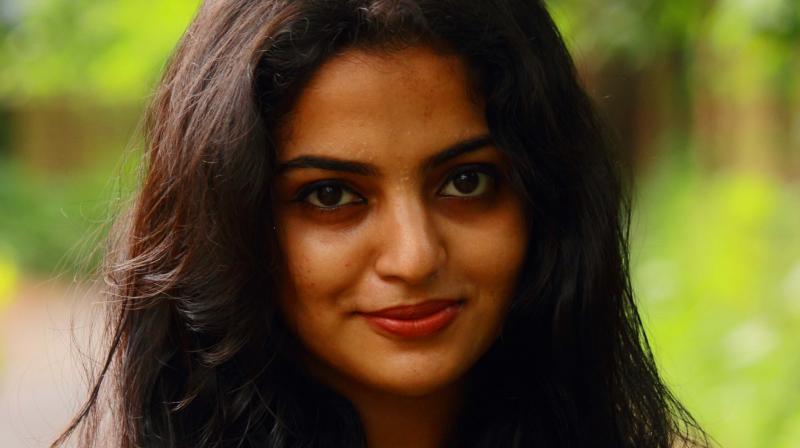
The last time Malayalis saw Nikhila Vimal was as Kabani in the 2015 film Love 24x7. Her growth from the nervous girl to the confident TV reporter in the movie somewhat resembles her real life progress. After making her debut as a heroine with Dileep, Nikhila signed up for a Tamil movie opposite actor-director M. Sasikumar, followed by two more from Tamil and two from Telugu, including the remake of Oru Vadakkan Selfie. Now, after a short while, she is back to Malayalam, playing a classical dancer in Aravindante Athithikal. 

The natural first query is why the break. And she replies, “The break in Malayalam was not something I planned. In fact, movies too came to me out of the blue. I never had dreamt of becoming an actress.” When Kabani got noticed, the first offer came from Tamil and she grabbed Vetrivel. The team took her on board their next project Kidaari, again with Sasikumar. Then happened her first Telugu movie Meda Meeda Abbayi, the Vadakkan Selfie remake, with Allari Naresh. “I have been getting offers from Malayalam in between, but I wasn’t sure I could do justice to mature characters. I am childish and always choose roles in my comfort zone. I can’t do a heavy character that I am not confident of pulling off."

It was the same thought that made her reject the lead role in Ramante Edenthottam. Nikhila surprises saying she has no regrets. “I am glad that I didn’t take it up. Anu Sithara played Malini to such perfection. I wouldn’t have been able to carry it off with grace,” she says. So what made her choose Aravindante Athithikal? “The character Varada is a dancer and I could relate well to her,” she says. Dance, to Nikhila, is a legacy. Her mother Kalamandalam Vimala Devi is a dance teacher who ensured that her daughter got trained in bharatanatyam, kuchipudi and Keralanatanam. “I have learned dance forms but don’t call me a dancer. I don’t perform regularly and I don’t practise like a dancer,” she says. 

In Aravindante Athithikal, directed by M. Mohanan, Varada has come for her arangettam in Mookambika Temple and stays in the lodge run by Vineeth Sreenivasan’s character. “Vijayaraghavan plays my dad and Prem Kumar plays my uncle. It’s an ensemble cast with actors like Urvashi, Shanti Krishna, KPAC Lalitha, Sreenivasan, Sreejaya and Aju Varghese. The shooting was so much fun. It was a great experience. Whenever I was confused about how to express and what to say, Vineeth helped me with suggestions and tips. Such a nice person he is, treating everyone with respect,” she recalls. 

The shooting will wind up in a week and the movie might hit the screens in March or April. Before that she has two film releases coming up — Tamil movie Ranga with Sibiraj and Telugu film Gayathri starring Mohan Babu. Life has never been a planned route for Nikhila. A graduate in Botany, she left studies midway when films came. Now, she has joined the University of Madras for post graduation in Women Studies. “I hope to continue my studies. I have been missing it so much,” she concludes.

 Published in Deccan Chronicle on January 26, 2018


Friday, January 19, 2018

Fashion sans boundaries

Costume designer Abeel Robin is truly the jack of all trades.


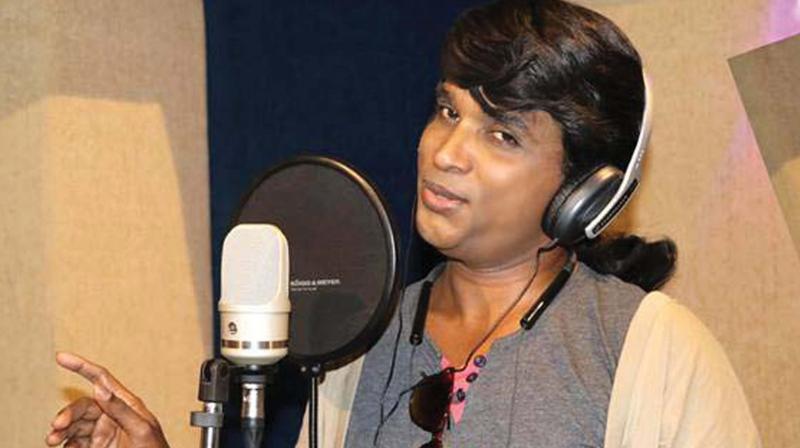
The front door of the apartment was ajar. Chupke Chupke Raat Din…. was flowing out in Ghulam Ali’s magical voice. “I’m here, please come in,” Abeel Robin calls out. A mannequin sporting a green and red outfit stands welcoming in the living room. The windows and shelves are filled with bangles, reminding of a shop in the Hyderabad’s Choodi Bazaar. A smiling Abeel greets you with a handshake. Settling down for a conversation, he switches off the song and says, “Ghulam Ali is my Lord. He always sings in the background as I engage in my activities.” Abeel’s activities can’t be described in one breath. A costume designer, makeup artist, choreographer, graphic designer, photographer, ghazal singer, music composer and an actor, this transgender artist is an all-rounder.

“It’s all God’s grace. That I am blessed with so many talents and the power of both man and woman are all God’s will. It’s not arrogance, but I am proud of what I am,” he says, adding that he wouldn’t want to be known as a member of any community. “I am happy to be addressed as a human being. Being a person who wants to live differently, I am happy that I am different from everyone else. In Kerala, words like queer and transgender have been recognised only in the recent times. Acceptance is something we too need to strive hard for.

People will laugh at us at first, but as they get used to our presence everywhere, they will have no choice but accept us.” A popular name in fashion industry, Abeel calls himself a ‘complete fashion designer’. “There are not many who handle all aspects of fashion designing without even an assistant. I offer a complete package – costumes, makeup, hair, accessories, styling and photography,” he says. Abeel also has to his credit two editions of the fashion show Monsoon Night, which he organised single-handedly. “The costumes included beach wear and nightwear. My collections were noticed, but it turned out to be controversial with the media reporting that there was ‘nude dance’ happening. It hurt me that I wasn’t getting enough support. But now, with Mayaanadhi, it has all changed. Appreciations are pouring in and I am glad to be part of such a great movie. It’s not every day you see people beaming at you at a shopping mall. Thanks to director Aashiq Abu and production controller Benny Kattappana for giving me the chance,” he smiles.

Childhood has been tough for the small town boy from Kannamaly who was ridiculed for his girlish mannerisms. As he grew up, Abeel learnt to ignore prying eyes and jibes. When he confided to his motherwhat he felt, she understood her son and accepted his identity. “Since then, Amma was my only friend and confidante. I never left her side till the day she died. When she was bedridden, it was I who took care of her. She died in my arms after blessing me,” he recalls. His studio in Thoppumpady and his current YouTube channel are both named Monica Fashion Studio, after her. As a tribute to his dad Abel, he added his name to his, tweaking it a bit. 

Not many were aware that Abeel was a very promising singer during his younger days till he uploaded on social media a video of a Christian devotional song he penned, composed and lent voice to. Laughing, he says, “I was trained in Carnatic music for seven years under Yesudas’ guru Ramankutty Bhagavathar, and later in Hindustani music for two years. Back then, I used to sing in choirs and youth festivals and win prizes. Funnily, due to my female voice, I had to sing with the girls in the choral group. Though I loved their company, I hated my voice and tried all means to change it. I gargled with hot water every morning for months and it started showing results. I’m sure that if I hadn’t tried that hard, it would have been a female voice.”

The new voice helped his music career. A ghazal singer at many Mumbai-based troupes, Abeel took part in concerts, worked on devotional songs, music albums, sang track for big names like Sujatha, Minmini, Biju Narayanan, Markose and Kester. He was working as a graphic designer when his pastime activity — designing costumes on paper — was noticed by his colleagues, who encouraged him to pursue it seriously. Abeel was happy to give it a try and soon joined as an assistant to Sanjana Jon. It has been seven years and now, Abeel is a known name in film and fashion fraternity. 

He also shares his talents through makeup seminars, workshops and YouTube tutorials. “At seminars and workshops, people initially laugh seeing me. But once I start demonstrating, I can see their expressions changing from contempt to admiration. Getting a first-hand experience of acceptance is truly amazing,” he says. Abeel has a dream — to be known globally as a complete fashion designer. “I am sure I will, because my parents’ blessings are with me.” Before signing off, he finishes the interrupted ‘Chupke Chupke’, this time, in his heavenly voice.


 Published in Deccan Chronicle on January 19, 2018

Wednesday, January 17, 2018

I am a queen on this throne: Virali Modi

Disability activist Virali Modi was in Kochi recently as part of her #mytraintoo campaign. 


Virali Modi’s is an inspiring, miraculous tale. The beginning is tragic, but then comes the silver lining followed by rays of hope and determination, making a radiant woman out of a little girl had been comatose. A disability activist, motivational speaker, model, adventure junkie and a beauty pageant runner-up, the 26-year-old wheelchair-bound woman was featured among BBC 100 Women 2017. She had come to Kochi all the way from Mumbai recently as part of her #mytraintoo campaign, under which she collects petitions seeking disabled-friendly rail facilities. 

Recalling how the spark for the campaign got ignited, she says, “I was molested three times while trying to board a train in Mumbai. Since our railway stations lacked ramps or lifts or platforms making trains accessible for everyone, I had to be lifted from my wheelchair to the train by luggage porters. All the three times, I was groped, touched and manhandled, like a piece of luggage.” 

The incident made her start the campaign, which she took to former Railway Minister Suresh Prabhu. She is glad that the results are showing. Excited about the permanent and portable ramps for disabled passengers, small wheelchairs to get inside the train, electronic buggy to transport them, disabled-friendly lounges and wheelchair-friendly washrooms at Ernakulam Junction Station, she expressed joy over finding that six stations in Kerala are disabled-friendly. “I am glad that so much progress is happening here. My fight is for accessibility. Even Mumbai is yet to receive complete accessibility at railway stations. I have been actively meeting politicians for that,” says Virali, whose life overturned ten years ago when she contracted malaria. 

Admitted to hospital in a critical condition, Virali suffered a respiratory and cardiac arrest that left her comatose. When the doctors gave up hope and were about the remove her life support system, she suddenly opened her eyes, bouncing back to life. But it wasn’t all happy. She was paralysed down her waist and couldn’t walk again. Her parents— Pallavi and Jithesh — have been very supportive, but society always reminded of her inability. Depressed, she attempted suicide three times. But slowly, she grew out of it, to follow all her dreams — of becoming an actor, of serving people. Everywhere, she was judged for her disability.

A strong woman, Virali could no longer be beaten by bitterness. She fought, became a top writer on Quora, took part in the Miss Wheelchair India beauty pageant and became the runner-up and got over nervousness. Now a motivational speaker and model, she nurses acting dreams. “Having attended theatre workshops and acting classes, I would like to become an actress, not just because of my passion, but to inspire others that you can make it there whatever comes your way,” says Virali, who works for a portal that offers holiday initiatives for the disabled. 


An adventure buff, she did scuba diving four times last year and has travelled all over three continents. According to her, disability doesn’t make a difference to anyone’s life because anything is possible if you have a vision and will power. She also has a message for the disabled. “Never give up; never settle for what life offers. You have every right a normal able-bodied person has. Never take ‘no’ for an answer and never step down. Fight for what you think is right and fight for your rights. Keep smiling because life is beautiful.” 

Aiming at taking the #mytraintoo campaign across India and advocating accessibility for all, Virali wants all disabled people to get out of their homes and enjoy the world. She also strongly objects to labels like specially-abled and differently-abled. “Those terms directly or indirectly mean abnormal. Disabled are rapists, murderers or psychopaths. If in not that sense, disabled is a term applicable to all as everyone is less able that another person. For me, this wheelchair is my throne and I am a queen!”

 Published in The Asian Age on January 17, 2018

Monday, January 15, 2018

Anson's fanboy moment

The actor recalls his joy when Mammootty invited him to the dais and talks about his new projects.


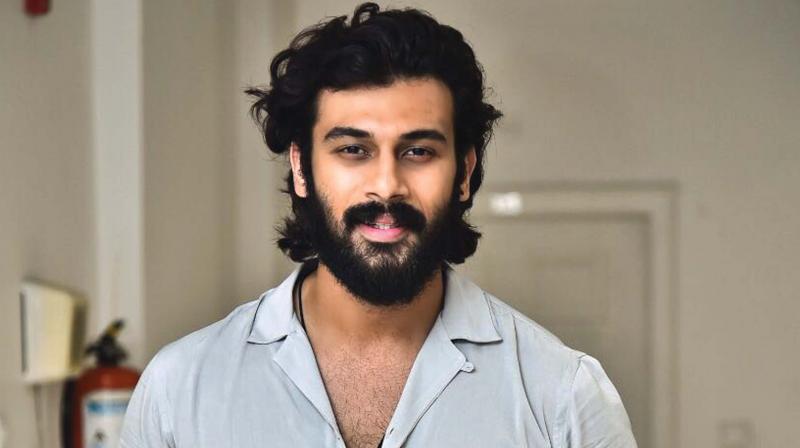
It’s a special year for Anson Paul. His Christmas release Aadu 2, in which he plays the villainous Anali Sabu, is running to packed houses. Kala Viplavam Pranayam that will see him as a guy-next-door is gearing up for release and his Tamil rom-com with Oviya is nearing completion. But the best of all is Abrahaminte Santhathikal, in which he acts as megastar Mammootty’s brother. 
Letting out an excited laugh, Anson says, “It was on New Year’s day that I met Mammookka for the first time. During the audio launch, when he called me on to the dais, it was my fanboy moment. The goosebumps lasted the whole day! For a person who grew up watching his movies and admiring his charisma, it was the best gift in the universe.” Only later did he know that it was Mammootty who suggested him for the role of his brother. The movie has Maria John playing Anson’s love interest. 
Going by his makeover, Anson is no longer the sophisticated, charming guy we are used to. Sporting long hair and rugged beard, he was unrecognisable in Aadu 2. In Kala… too, he maintains the hair and beard. “But both characters are poles apart. Anali Sabu is a ruthless ruffian whereas in Kala…, I play a village simpleton for the first time. As the name suggests, there is art, politics and romance. It’s a light-hearted movie about a middle class guy,” he says. The movie has him romancing Gayathri Suresh. 
When actor-producer Vijay Babu offered him Anali Sabu, Anson didn’t have to think twice. “I was told that I was an antagonist and had to dance, but an Aadu fan myself, I immediately accepted it. Like all the characters who have a background, Sabu too has one. The name Anali, came from his habit of spitting, like the snake. He doesn’t have many dialogues. So, I had to work on my look and body language. My inspiration came from Attakathi Dinesh’s Kabali act, how he carried off the role without much dialogues.” 
As he puts it, “It’s kind of fun breaking the image. If you can’t prove that you’d pull off any type of character, what’s the point in being an actor?” His penchant for perfection is evident from how he insisted on dubbing by sporting the costumes of Anali Sabu and chewing paan. During the making of Solo, a jetlagged Anson hurriedly finished the dubbing in Malayalam and Tamil. But later, when he introspected and realised that he wasn’t ‘in character’, he requested a re-dub and went for it. “What’s the use if you can’t do justice to your character in all realms,” he asks. 
Speaking from the sets of Abrahaminte Santhathikal, Anson says his body is all tired from shooting the fight scene. “But my spirit is not. I am always on the sets as a student, assisting the director and learning from legends. I haven’t committed to any other movie now. Whatever I do, I want to put my heart, soul and body into it.” He won’t reveal much about his look or role. Hope there are more surprises in store.

 Published in Deccan Chronicle on January 15, 2018

Friday, January 12, 2018

Dark is divine!

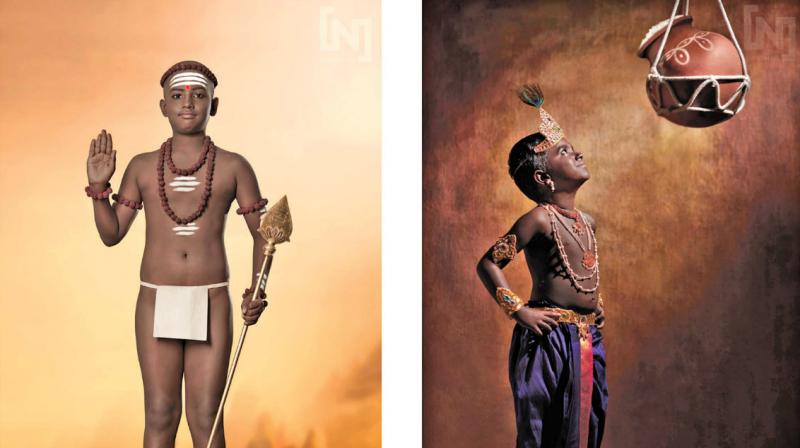
All these years, the popular imagery of Hindu deities has been of fair-skinned model-like figures with chiselled torso sporting a halo.


All these years, the popular imagery of Hindu deities has been of fair-skinned model-like figures with chiselled torso sporting a halo — like the images seen on Sivakasi calendars. When Chennai-based ad film makers Naresh Nil and Bharadwaj Sundar decided to do a different photo series for their personal satisfaction, after myriad ideas and brainstorming sessions, they zeroed in on the subject ‘Dark is Divine’. 

Featuring everyday men, women and children, the photo series showed gods and goddesses as dark-skinned figures. No sooner than they uploaded the photos on Facebook, it broke the Internet; with close to 5,000 shares and over 3,500 likes. 

If you call it a revolutionary act, the duo would correct you, “The photos and idols of gods we have been seeing are in no way close to reality. Of course, no one has seen God, but the images need to be true according to the epics. Ours was an attempt to do it right along with pointing to people’s obsession with fairness.” 

Naresh and Bharadwaj have been friends since college days and their startup firm has been working on ad films, fashion photo shoots and musicals since 2012. At times, in between work pressure time for clients, they do a few works "from their heart". The ‘Dark is Divine’ series is one of those. 

“Earlier, we have done two videos —60 jobs, 60 seconds for May Day and an A cappella version of Jana Gana Mana for Independence Day. This idea came up a couple of months ago and after doing a bit of research, we started working on it,” recalls Naresh, who handled the photography part. Bharadwaj reveals that they had planned it as a 12-photo series and, due to time and budget constraints, narrowed it down to six. “The seventh one - of Sita and Lava-Kusha — was not planned earlier. Our makeup artist Sridevi Ramesh, who is also a plus-size model, was inspired by the work and expressed interest that she be part of it. And so she became Sita,” he says. 

The photos have it all —the grace, aura and divinity; even the postures are maintained in the traditional way. They haven’t attempted to change even the poses. Bharadwaj explains why, “We were already bringing a change and didn’t want to make it more abstract.” 

Both of them agree that before looking into movies for blaming popular culture for inculcating a liking for fairness, one should introspect. “Everything starts from home. Every mother wants their son to marry a fair girl, a ‘Lakshmi’. That’s what needs to change,” Naresh says. 

Bharadwaj adds, “There’s so much negativity associated with dark skin. Lord Ram and Lord Krishna, who are dark-skinned according to Puranas, are portrayed as fair or blue. Even Ganesha is all white-skinned in paintings, movies and idols. Have we ever seen a white elephant?” 

As part of breaking stereotypes, the two preferred normal people over models. Even the children featured belonged to family and acquaintances. While a lot of people have appreciated the work, not all are happy about it. “It’s natural. God is a sentimental subject. When we try to break what people have been seeing for long, they will naturally be upset. But this is our one small step towards making a change,” Bharadwaj says. 

This photo series, they hope, will bring acceptance to all those dark-skinned women who are expected to be like Lakshmi.

 Published in Deccan Chronicle on January 12, 2018

Saturday, January 6, 2018

Home that embraces light

The 3,500 sq ft Chungath House in Kochi is a work of marvel.

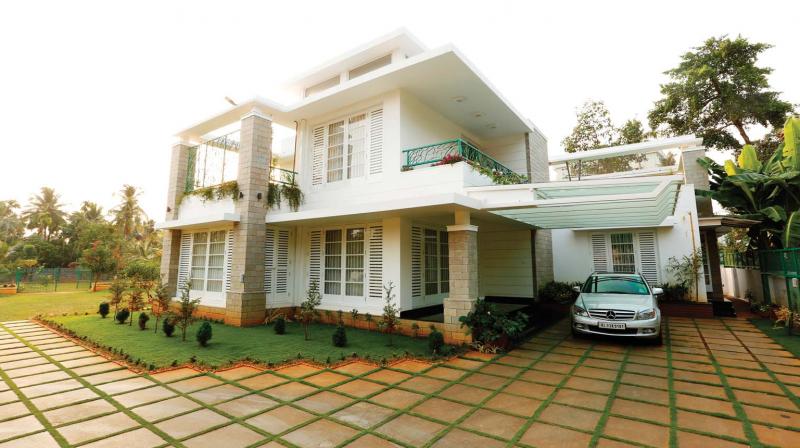
The tall, white Chungath House in Vennala, Kochi, hasn’t still got over the Christmas hangover; the red and white decorations, the Christmas tree and the lightings are all intact. Situated on a 20 cent plot, the 3,500 sq ft house with its French windows and peculiar construction oozes charm. 

Joseph Wilson and family were in Nigeria where he worked as an engineer for several years. When they decided to settle in their hometown, all they wanted was an airy, spacious two-storey home with four bedrooms for the family and ample space to accommodate guests. “It was our architect friend Herman Fernandez who took care of the plan and design. From the basic plan to the furniture for each room, he had a vision about every minute thing, which turned out into this wonderful home,” says Joseph’s wife Reeni. 

The brass work on the door and shelves and the glass details on the walls and showcase give an insight to the architect’s eye for precision. On the doors, windows, walls and false ceiling, there are a lot of horizontal lines, a theme which the house is based on. The front door, which appears as an extension of the French windows opens to a huge mirror where the visitor can see their reflection. The living space, with windows on two sides, offers a view of the whole ground floor. “The position of the bedroom and the kitchen were decided by us according to vaastu. The rest was left to the architect,” she says. 

The ground floor has two bathroom attached rooms – a master bedroom and a guest room. The living room and the dining space are separated by a beautiful showcase decorated with LED lamps. “There are no doors or walls in between. A person sitting on this sofa can see the one in the kitchen,” Wilson says. The grey and beige colour combination of windows, décor and granite flooring are complemented by the wooden doors and cupboards. The false ceiling with LED lamps has a white-brown combination. 

“Automotive paint is used on the doors and the walls to give it a lustrous appearance. Brown colour and wood theme is also used extensively,” he says. Between the dining space and the open kitchen is a small living area with a photo wall in the background. 

On the opposite wall is the huge TV set placed in a proper viewing distance from the grey sofa there. The dining space and the lawn are separated by huge sliding glass doors which offer a great view of the exterior. 

In the kitchen, cabinets are built in a triple-wood combination, countertops are built in glass surface. A six-seater breakfast table and a crockery shelf sporting crystalware is an attraction of the kitchen. The kitchen opens to a work area and then, to the lawn. Another attractive feature of the house is the huge teakwood staircase perched on an elevated wooden laminated space that leads to the first floor. The natural stone-clad wall on the sides goes up to the ceiling with a skylight. The space under the staircase has been converted into a guest’s washroom. 

What awaits one at the first floor is a cozy living room with a mini-library and beautiful art works adorning the walls. The rooms of Joe and Atheena, the Wilsons’ children, are on this floor. The balcony space is bordered by a green grill which matches the white walls. 

The sprawling lawn in the backyard can accommodate over 100 persons. The grass planted in the spaces between perforated terracotta paving blocks adds to the attraction of the lawn. “We can arrange a party in this area. The Mexican grass is well maintained to preserve the beauty of this place even when we are away on vacation,” Reeni adds. 

Apart from a floral garden and a vegetable garden, the backyard also has an outhouse for the servants. While the glass ceilings and huge windows let in ample air and light in the day, the house is all illuminated in the night. Day or night, the ambience is always the best at the Wilsons.


Published in Deccan Chronicle on January , 2018

Friday, January 5, 2018

Feminichis stand up as ratings go down

As Women in Cinema Collective continues to be targeted online, various stakeholders share their opinions about the downrating campaign. 


The online tirade against the Women in Cinema Collective and Parvathy has taken an uglier turn in the past few days with a hatred campaign growing strong every minute. On New Year, the WCC had shared on its Facebook page an article on misogyny in Malayalam cinema, an act that saw immediate repercussions. Social media users were quick to react as they hurled another array of verbal abuses at the Collective members, whom they address as feminichis, and giving a 1-star rating to the page for ‘insulting megastar Mammootty’. 

Similarly, when the first song of year, ‘Pathungi Pathungi’ from My Story, was released on YouTube, there came thousands of dislikes for this song apparently for the reason Parvathy was in it. Though the article was pulled down from the WCC page, the down-rating attack still continues with 35,000-plus reviews and over 26,000 1-star ratings. 


My Story director Roshni Dinaker is sad about the dislike and vitriol campaign. “It is very disheartening. The only thing people are talking about is a statement made by a person. Nobody talks about how differently we have done it and how much effort the actors and technicians have put in. I’m very sad about Shaan Rahman. After the much-lauded ‘Jimikki Kammal’, his song is being degraded. We are being attacked for something that is in no way connected to our movie. I can’t even open my Facebook account. Even my inbox is full of abuses,” she says. 

It seems to be an organised attack and not random fans responding to the hurtful article and the actor’s ‘arrogance’. Jiyas Jamal, a lawyer who runs the startup Talk Loud, which engages in social media campaigns, explains how such campaigns work.

“People believe that what is shared the most is the truth. When a client approaches us to trigger a campaign, we first get to know what the real issue is, to plan how to counter it. We have a tie-up with around 200 active pages all over Kerala. 

“We alert them and they share the content our team creates along with related articles and write ups published on online portals. The rest will be shared and liked by the people and other pages,” he says. Talk Loud, with offices in Kochi and Kozhikode, has a 10-member team in Kochi and several part-time content generators working for them all over Kerala. Jiyas admits that it was they who offered legal support to Printo, who was arrested for the cyber attack on Parvathy, and bailed him out. “He can’t be called a client of our firm because we did it for free. He couldn’t even afford legal services and we helped him gain support on social media. Yes, what he posted came under defamation, but it wasn’t fair to slap all those charges on him. There were many fans who unleashed a very degrading attack on her,” he says. 

Though mass downrating campaign has been seen when the Facebook page of Republic TV and the apps of Snapchat and ScoopWhoop faced the wrath of social media users over many controversies, for the movie industry, it is a new phenomenon. Social media commentator Hiran Venugopalan opines, “It’s a mode of protest and we have seen many of these, but not on an organisational level like this. There’s no other film organisation that is active on social media like WCC, so it can’t be compared with any other entity. 

However, this rating never affects their activities, though there are people who consider it as an impact.” On the ‘immature’ dislike campaign too, he feels it can’t do anything to a movie or an actor. “They are trying to show their strength as fans. But it will have no effect on a movie. People will watch the movie if it is good despite any negative campaign. 

After all, social media users are a very tiny part of the audience crowd. A film like Mayaanadhi could survive such campaigns by running to packed houses even now. If My Story wins over the audience, people will turn up to watch it despite all these slur campaigns,” feels Hiran. Kasaba director Nithin Renji Panicker too echoed similar views. Though the whole controversy began from the character played by Mammootty in his debut movie, Nithin has no complaints. “I consider her comment as the response of an audience who has all the right to love or hate a movie. It will never affect me or my future movies. My character is a person who talks that way; in fact, all the characters in the movie were rough. And I don’t think I can work on my future projects by keeping certain parameters in mind. Regarding the campaigns, I don’t think it would affect a movie’s prospects. Even when Ramaleela released last year, there was a smear campaign, but it went on to be one of the highest-grossing films of last year. If a film is good, people would watch it,” he says. 

Despite the down-rating movement being countered by a 5-star rating campaign with people like litterateur K.R. Meera offering solidarity to the Collective, the WCC explained what went wrong and made it clear that the attacks had little effect on their activities. Their Facebook post read, “We are well-aware that an FB page rating doesn’t decide the credibility of an organisation. We deleted the online article we shared (written by Anand Kochukudy in DailyO) that had named many major male actors in the industry as there was a wide misunderstanding that it was ours. We deleted it as those opinions were not ours. It was not our intention to hurt anyone’s feelings. Such attacks won’t let us backtrack from our principles or activities (sic).” 

Published in Deccan Chronicle on January 5, 2018

Tuesday, January 2, 2018

The story of a storyteller


The Mayaanadhi frenzy is everywhere. Everyone around is seen discussing the movie, its real-life dialogues, everyday characters, soul-touching songs and the scenes that give them déja vu, especially the balcony scene of the girl gang with one of them singing Bawra Mann... When the movie ends, the song lingers, so does the face of the girl who sang it. Darshana Rajendran says she has always been the ‘Bawra’ girl, not just now. 

“It’s my soul song that stuck with me since college days. It was a song I used to sing every time I was asked to,” laughs the Chennai-based theatre activist who made famous the song 'Bawra’, penned and rendered by Swanand Kirkire in the 2003 movie Hazaaron Khwaishein Aisi, yet again, when Leona Lishoy (her co-star in Mayaanadhi) made everyone listen to it and finally script writer Shyam Pushkaran including it in the scene, which turned out to be a masterstroke. 

The girl gang — Darshana, Aishwarya Lekshmi and Leona — felt very relatable and genuine. “That’s because it was real. Since day 1, the three of us were very close. It was never like a film location. The director, writers and actors sat together to discuss what needed to be conveyed. We weren’t given any script. Most of the dialogues were impromptu; it was all rehearsal and improvisations. 

The balcony scene was emotional and intense for us as it was our last day of shooting,” she says. She also admits that she had no idea about their part in the movie. “We just did what we were told. Only when we watched it on the big screen did Leona or Harish Uthaman or I know what all parts we were playing,” she recalls. 

A lot of praise poured in for the movie, the most treasured ones for Darshana are the words of music composer Shahabaz Aman, who put up a long post on his social media about the ‘Bawra’ girl. Without concealing the excitement, she says, “It was so touching and left me teary-eyed. I am a huge fan of his music and work. I’m so happy for his kind words.” 

Darshana had a huge fan following even before movies happened. It’s just that all her admirers are children under six years of age. Holding theatre and storytelling workshops for kids, she has been working with Karadi Tales for some time now. The Kochi apartment where her parents live is always flooded with children who want to listen to her stories. “I love working with children. They have a lot of questions and being in the company of kids is a happy space.” 

Long before theatre, she used to work in the microfinance sector in Chennai. When a friend introduced her to theatre, she was smitten and tried multi-tasking between an 8-6 job and 7-12 rehearsals. “Finally, I called it quits two years ago and fully dedicated myself to theatre,” she adds. In between happened small roles in a few movies, then came Vijay Sethupathi-starrer Kavan, the web series Ctrl Alt Delete and Mayaanadhi. 

Coming up are Irumbu Thirai in which she plays Vishal’s sister and an Anjali Menon movie in which she acts with her mother Neeraja. Darshana wouldn’t call herself a professional in any stream. She says she tried to learn a bit of everything — dance, Carnatic music, Western music, acting, etc. “It’s my family that always encourages and inspires me to give everything a try.” 

Family means her uncle too — late documentary filmmaker C. Sarath Chandran whom she fondly calls ‘Saramman’. “It’s all lovely memories. Saramman always made sure that those he loved knew each other. Wherever I have been, in Chennai or Riyadh or Delhi, he used to send banana chips via his friends and made us travel all the way to collect it. But it was never about the chips; he just wanted people to meet. Now, every day, I come across people who love him. Now I am going through all those books and music CDs he gifted me, all those he has left me with. Only now I am getting to know Saramman.” 

Looking back, Darshana feels that it was a great journey across the ‘mystic river’. “It was a wonderful experience to have at least watched so many geniuses working under one roof.”

 Published in Deccan Chronicle on January 2, 2018

Monday, January 1, 2018

Grab bullies by horns


The year was marked with the cyberspace buzzing with a war of intolerance from fans. From vicious trolling to smear campaigns to vulgar threats, the self-proclaimed warriors went to any extent to ‘defend the honour’ of their idols. Most of the victims of this organised cyber bullying were, interestingly, women, showing how deep misogyny ran and how easily these ‘fans’ were hurt, unable to stand a light comment, a genuine opinion or even a sarcastic reference. The most-viciously-trolled women include actresses Parvathy and Anna Rajan and journalists Shani Prabhakaran and Dhanya Rajendran. 

While it was Parvathy’s mention about the sexist dialogues in Mammootty-starrer Kasaba that triggered the abuse, two-movie-old Anna Rajan faced the wrath of the super star’s fans for her response to a query in a TV show on who she would choose as her hero between Mammootty and Dulquer Salmaan. Her casual response that she’d play Dulquer Salmaan’s heroine if Mammootty played his dad; or if Dulquer played Mammootty’s dad, she would act as the latter’s love interest. In no time, her Facebook page was flooded with a torrent of abuse, forcing the actress to tender a tearful apology to the star and his fans on FB live. Even fans of the other M, ‘showed their strength’ to journalist Shani Prabhakaran after her negative review of Mohanlal-starrer Pulimurugan and unleashed violence on social media for ‘insulting’ their idol. 

Another Malayali journalist, Dhanya Rajendran, too faced the heat after she tweeted that she disliked the SRK-starrer When Harry Met Sejal as much as Vijay’s Sura. 

‘No one has a shield of anonymity’ 

There are people who think ‘what’s wrong in trolling?’ A spontaneous reaction to a tweet from 50 or 500 fans is different from an organised attack by over 5,000 people. They never let an issue die down and trigger it off every day. The same thing happened in my case and Parvathy’s case. Facing cyberattack is a soul-killing exercise. It was really harrowing to go through the most abusive messages to file a police complaint. There are rape threats from persons who you don’t know or might be living around you. It might even be an 18-year-old boy; the thought is very scary. Do these people have any respect towards anybody?

When I filed a police complaint, one of the guys applied for an anticipatory bail at the Madras High Court. His mother called me pleading not to spoil his future and when I talked to him, I found that he had no idea about who I am. He just felt that I was a fan of another Tamil actor and was degrading his idol, a thought that made him take part in the abusive campaign. Fan accounts are managed by several persons who have no idea who all post abusive comments and to what extent they go. Another thing you realise is that there are women who are patriarchal and misogynistic, like the woman named Suja who put up a post against Parvathy. 

The bullies believe that they have the power of anonymity. It’s high time they realise that there’s no such power and that any account can be traced. Only the actors or political figures in whose name this happens can put an end to this. Unless they address their core group and say they would distance themselves for these bullying fans, this is not going to stop. Ajith and Vijay responded after I was trolled, but in Kerala, despite several such instances, our stars have never intervened in the matter strongly. I am a person who advocates for freedom of expression. You can allow Parvathy to criticise and can debate with her. But the moment you descend to threaten a person with sexual harassment, your freedom ends there. 

‘Cusswords can make you cringe only once’ 

Online abuse, be it from fans of political leaders or superstars, has now become a part of my daily life. What’s new this week is the question I face every day. It first began as a fake news that Rs 7 lakh black money is stashed at my home, after my programme on demonetisation was aired. Then came corruption allegations and after the Pulimurugan review, it was profanities and threats all over my social media accounts. It was disturbing at first, but now I can easily laugh about it, because a cussword can make you cringe only once. Then you become insulated. I have found the attacks fall under two categories. One appears serious, laying out seemingly-fact-filled opinions like how I am degrading a noble profession and the other, a stream of expletives. I tried ignoring it all first. But once the tone changed to rape threats, I filed a complaint. Most of those came from fake IDs that could be traced to foreign countries. Later, I realised that I will have to file complaints every day and I stopped. I don’t mind creative criticism; that helps your professional growth. These types of attacks show their standard and I am ready to show mine. Let them say whatever they want; this is never going to affect me. 

Troll victims 

BJP state president Kummanam Rajasekharan was trolled heavily after he, allegedly uninvited, took a Kochi Metro ride with Prime Minister Narendra Modi and other dignitaries during its inaugural run. Union Minister Alphons Kannanthanam's wife Sheela became the butt of jokes on social media after her interaction with a TV journalist resulted in the creation of hilarious trolls, memes and spin-offs. Fr Tom Uzhunnalil, post IS captivity, praising his captors despite them murdering two nuns in front of him, saw him becoming an object of mockery as memes even as Stockholm Syndrome theories did the rounds.

 Published in Deccan Chronicle on January 1, 2018

The actor with an opinion


Eleven years and 19 movies — that’s how long we have all known Parvathy Thiruvoth Kottuvata. But that’s not all about her. An actor who speaks her mind, she is unlike all the onscreen divas we are used to. She is carefree, her words are blunt and she doesn’t want to please anybody and be their girl-next-door; all she cares about is honesty and she proudly announces to the world, “Yes, I am a feminichi.” 

Known to have her priorities and visions clear, Parvathy was one among the female actors to rally behind their colleague, who survived an attack in February. Nearly two months later, she, in a candid interview, let all hell break loose by opening up about casting couch in the Malayalam film industry. In May, she joined the women in the film industry to form the Women in Cinema Collective and launched the #withher campaign offering support to the attacked actor, hailing her as a survivor. 

November saw Parvathy making her Bollywood debut with Irrfan Khan-starrer Qarib Qarib Singlle, followed by her walking away with the Silver Peacock for Best Actress at the prestigious International Film Festival of India, becoming the first actor from M’wood to win the honour. It was in the final leg of 2017 that her comment against the glorified misogyny in movies and her reference to Mammootty-starrer Kasaba, set off a war in cyberspace with fans of the superstar, including those from the film fraternity, unleashing their wrath on the ‘arrogant’ Parvathy. Ironically, all the comments against her were loaded with misogyny and patriarchy. 

When a film director compared her to a monkey, who alleged that its trainer was exploiting it, she responded with a picture of an embroidered cloth that read OMKV (that can be roughly translated into ‘Get lost, loser!’). 

As the year ends, the investigation of her complaint to Cyber Cell has taken a new turn with two abusers being arrested for sexual abuse and rape threat. Call 2017 an eventful year, Parvathy would say it was ‘positive and liberating’. “People keep on saying ‘Ayyo, what a year!’, but for me, it’s ‘Yay, what a year!’,” she says. 

“A lot of unfortunate incidents happened, which led to the unification of people, not just women. There was togetherness even in chaos. While it is deafening silence elsewhere, we, in the Malayalam film industry, decided to at least do some- thing.” 

Was speaking up about casting couch, an issue which people knew, but never dared to mention, intentional? “Not at all. The interview was like a friend-to-friend conversation and me talking about it happened naturally. Now when I think about it, I feel it was coming. A lot had happened and there was no point in living in fear. You do something or not, you could be attacked. To be honest, it was more like a closure for me.” 

The question she faced a lot after the revelation was why she didn’t talk till then and what was she doing when many other things happened. “My answer to them is that, I too was stuck in this toxic social construct, which I am questioning now. I’m freeing myself now and just because it is making a lot of people uncomfortable, they cannot hold me back to my past.” 

Parvathy believes she is opening up not for her, but for the next generation — “I would rather be a change than be a witness to it — we have always had someone who had to be the change. We wouldn’t have had the laws protecting us if there wasn’t a Mathura or a Bhanwari Devi.” 

Her family, her lawyer-parents P. Vinodkumar and T.K. Ushakumari, and brother Karunakaran, like any family, are understandably worried, but they are supportive of her acts. “There’s openness in our relationships; they have never questioned me in terms of gender, studies, work or commitment. They have fully accepted me as I evolved. All they want is that I am happy, safe and sure about what I do. They also want me to realise the importance of social responsibility as a citizen more than an actor, and that’s what I am — a law-abiding citizen who shouldn’t be scared of living in my country,” she says. 

On the career front, Parvathy is what she calls a free-flowing entity, who goes with her intuitions. “It’s always the gut feeling. I like it when things come to me; I choose a movie if I know I need to be a part of it. That’s why I take a break for even say 10 months or a year.” 

She is intuitive in choosing the scripts too. “I know if something unhealthy is standing out. Even in a film like City of God, where my story line has a lot of violence in it, the most regressive and patriarchal scene is underlined as the most regressive and patriarchal scene. There’s no glorifying space in it. And if there is one, I openly discuss it with the director or the writer. Removing it will always be up to them but I’ll give it my best shot to have it removed. I won’t challenge their talent or seniority, but tell them that as an audience, I feel that this film can do well without this particular dialogue.” 

Her grave tone puts it across that she has done it. “It’s not in a rude manner. It might have been 11 years, but I consider myself a newcomer. When you convey your views to the filmmakers with all due respect, though rattled, many people see the point. And those who haven’t been able to, I have said no to such projects,” she reveals. 

It doesn’t mean that films have to be moral or preachy. Parvathy neither does believe that films don’t influence human minds. “A film can be an entertainer/ thriller without plastic humour or sexist jokes. A film like Charlie is a thrilling story about two free-flowing souls without a moral point of view. Take Off made a political statement without being preachy; that’s the beauty of filmmaking. If the audience felt inspired by Charlie and wanted to be like him, negativity in films can also influence them,” she adds. 

For Parvathy, Bollywood innings hasn’t made any difference. “The Qarib team was very energetic with an intimate way of working. The marketing strategy there is very different and interesting. If you are talking about industry, I have never ever restricted myself to Tamil, Malayalam, Hindi or Kannada. Whichever the language is, from Swahili to Marathi or Bhojpuri to Bengali, I would be happy to do it,” she says. 

As the year ends, she takes home several memorabilia, including the word feminichi, coined as a derogatory reference for outspoken women on social media. “#feminichispeaking — lovely, isn’t it? I really like it. It’s got a local flavour and is quite endearing; I might get inked with the word,” she laughs. Looking back, it has been a proud journey. 

She sums up, “The most beautiful thing about 2017 is that there’s no more going back. I can never go back to a workspace where there’s no dignity. But I am not going anywhere else. This is my industry as is anyone else’s. I will demand the respect that all of us deserve. Be it any gender. No more staying numb.”

 Published in Deccan Chronicle on January 1, 2018
Kabita Mukhopadhyay, Political All the Way

She was born in West Bengal and groomed at Santhiniketan during vibrant and turbulent times in Indian politics and culture, but Kabita Mukho...