Friday, June 30, 2017

A road less travelled

Noted oncologist and Dr V.P. Gangadharan reveals how life has changed after a cardiac arrest.
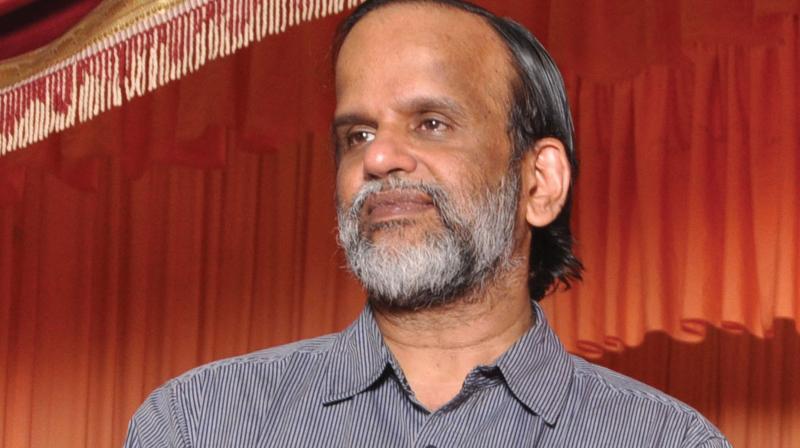


A new month begins with National Doctors Day, a day when people get the opportunity to show their immense gratitude to physicians for their selfless service and unparalleled contribution towards saving lives. The first face that crops up in the minds of Malayalis on the mention of the word ‘doctor’ is that of noted oncologist Dr. V. P. Gangadharan, who is fondly referred to as ‘Saint with a Stethoscope’. Such is his popularity as a loving human being and a compassionate physician that when he suffered a cardiac arrest a few weeks ago, social media was flooded with get-well-soon notes, messages and prayers for his speedy recovery.

What, according to Dr. Gangadharan, should a doctor be? After a few seconds of silence, he speaks, his soft voice embodying the spirit of compassion, “A doctor and a patient are not two beings who communicate sitting across a table. It’s more than a mechanical relationship. Though medical journals teach us not to build emotional attachment with the patients, my life has taught me otherwise. Only if a doctor empathises with the pain and suffering of the patient can he do justice to the treatment. The joy of the doctor-patient relationship is a deep experience.” 

His field — cancer treatment — must have helped him in developing his unique style of treatment. “Perhaps,” he says. “Cancer patients require constant support in all phases of life. The relationship of a doctor and a patient doesn’t end with treatment. Most of them are left alone during and after the treatment as part of blatant social stigmatisation despite several awareness programmes. So, the doctor is their only hope and solace and hence, has a great role in their lives — even while they make crucial decisions regarding education, career and marriage. You become the part and parcel of another person’s life,” says the physician, who believes in the power of smile. 

“All these are based on practical knowledge, not theories,” reasons Dr Gangadharan, adding, “Doctors’ is a profession like teachers’; both enjoy ample love and happiness. For all the support a doctor provides, the patients return love. That’s what I enjoy the most. That’s the richest earning you get out of the profession. Also, you are remembered by your patient’s relatives even if you couldn’t save their lives. Such is the love they shower upon you.” 

In a message to young doctors, he says, “Enjoy the beauty of the job. Once you experience it, you can’t choose materialism over the joy of the doctor-patient relationship. Believe in interactive treatment; it boosts the confidence of the patient and will help speedy recovery.” Dr Gangadharan’s consultation is also very special. He makes his patients at ease: making them sing, talk, warm up and bonds with them easily. With politically-inclined patients, his pep talk starts with political discussions. He explains, “I work by building affinity with them. Along with that, while they sing, I can know if the person has difficulty in holding breath and can indirectly assess the difference in their tones. They think of me as their own family and become confident while sharing everything about them. Recovery too becomes easier with their willpower.” 

The doctor is known for his round-the-clock service apart from his humanitarian initiatives. He is moved by the emotional response from people when he fell ill. Following his belief that love and support help quick recovery, he too was back on his feet in a few weeks. “I know I will never be able to repay the love and affection I am getting from people. I can speak volumes and write books about my experiences, but nothing I do would be adequate to express the love I receive. Being loved by almost 98 per cent of the patients you treat is an experience beyond words,” Dr. Gangadharan says. 

Back to his joyous profession and writing — with the same passion — the doctor has, however adjusted his regime. “I have started exercising in the morning, start work by 10 am and do not work late into night now,” he concludes.


 Published in Deccan Chronicle on July 1, 2017

Wednesday, June 28, 2017

Meet the illusionist

Arjun Guru, who is gearing up for his first mentalism show in Kochi, shares his journey and hopes for future.


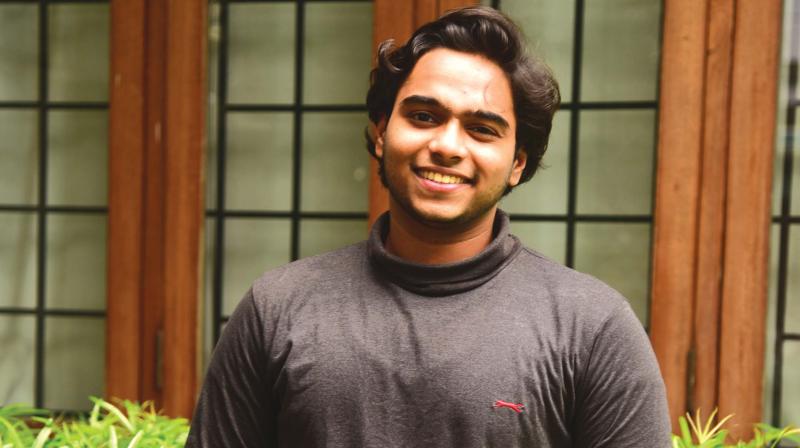
As Arjun Guru walks into the cozy café in Palarivattom, he breaks all notions of a mentalist who has cold, piercing eyes, in a head-to-toe black outfit. Here is a little guy with a childlike face – you hardly believe that he is 20 – in his turtleneck tee and casual jeans speaking with great enthusiasm about his intuitive art. “Mentalism is a combination of psychology, deception and magic. Its objective is to create an illusion in the mind of the audience. Everything happens inside a person’s head,” he begins. 

Born to Malayali parents and brought up in Saudi Arabia, Arjun was smitten by magic as a little boy. His parents encouraged him by getting him a lot of books and initiating him into the magical world. Sinking his teeth further into the art, he started developing his own concepts and impressed everyone with his tricks. Inspired by the likes of Derren Brown, after class XII, he declared that he wanted to take up mentalism as his profession, but that didn’t impress his parents much. “If it’s a successful career, why aren’t there many mentalists in India?” was what his dad asked. 

“Following your dream is the most difficult thing here. But once I started getting shows and earned a bit, my parents became happy and supported me,” says Arjun, who, along with mindreading, is also doing his graduation in Economics and Finance at ISBF, Delhi, affiliated to the London School of Economics. He has heard about mentalists Adarsh Aathi and Nipin Niravath from Kerala and has watched their videos as well. The only show he has experienced in person is that of Karan Singh, the psychological illusionist. A self-taught mentalist, Arjun has developed a style of his own which reflects in his shows. “It’s more like an entertainment show. Though it is an extension of magic, people are the integral part of the show as it incorporates psychology,” he says. 

For the past two years, he has been doing college and corporate shows in Delhi. His first show in Kochi – Intuitions: Random musings of a Mentalist – is happening on Sunday at the Ledhi Art Café and he is quite excited and a bit nervous about it. “I have no idea about the market here. It’s a test for me. It’s a series of two shows with 25 attendees in each. The bookings are almost over and I hope it will come out well,” he adds. 

Usually, it happens that after his show, people claim that it is a setup. This time too, random people will attend the show and Arjun foresees a similar result but he is positive about the outcome. The seats are all full that it is learnt that he might go for a third show. So, as the movies say, can he talk to ghosts? To this, he laughs, “I personally don’t believe in ghosts. And no, there are no paranormal elements in my show. My performance is based on logic, something I believe in. It’s an interactive show, like a movie with a twist towards the end. It’s hard to explain. To know more, you have to experience it.” The youngster dreams to be an inspiration to people who wants to pursue their passion. Through his vlog and a YouTube channel, he plans to take the mission forward. The photo session ended with applause as he levitated the eyeglasses of the photographer and surprised everyone. Stressing on his dream, Arjun says, “I want everyone to be happy. For that, firstly, I need to be successful and show the world that everyone can follow their heart and stay happy.”


 Published in Deccan Chronicle on June 29, 2017

Tuesday, June 27, 2017

A song that shaped destiny

Aswin Ram's Malayalam mashup of Ed Sheeran's Shape of You has gone viral with over 1 million views.


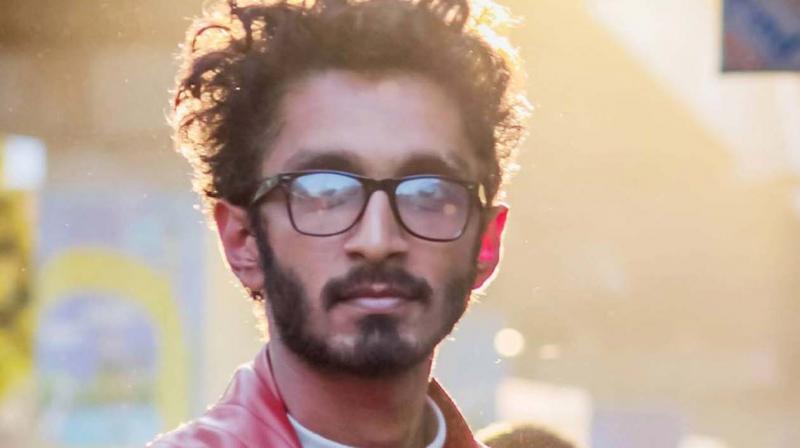
Those unkempt messy curls and beard give him the appearance of a carefree youngster, but when Aswin Ram begins to sing, you tap your feet and watch in wonder as he breaks into groovy dance moves. As if reading your thoughts, he confesses, “I am a diehard MJ fan.” Aswin’s mashup of Ed Sheeran’s Shape of You by combining 15 songs — 14 of them Malayalam — has earned him over a million views, something he had never expected. An avid YouTube follower, he has earlier uploaded 10 of his works — both original creations, covers and mashups —with his compositions and vocals, but none of those has been such a huge hit. “There are endless versions of Shape of You, but none in Malayalam. I thought of giving it a try and the response was unbelievable! Mine was not at all a famous YouTube channel with much hits; all my viewers were my friends and college mates, until this happened!,” says a surprised Aswin. 

An active member of Resonanz Dance Crew, the dance team of his college — NSS Engineering College, Palakkad, this 22-year-old says his pillar of strength is his friends and his government employee parents and violinist brother. Such strong supporters are they that a room at their home in Thenkurissi village has been converted into a studio for the boys. “My village is a small one and people there have not much connect to social media or YouTube. It’s my mom who shows everyone the video,” laughs the Computer Science student, who is happy to have made them proud. 

The making of the video has all been the idea of his childhood buddies — Arjunan who directed it, Sujith who was his associate and Danish Mackenzie who handled the camera and did the editing. Danish came up with the idea of a dual role appearance. Aswin’s part was ‘just’ the appearance, vocals and mash-up. They shot it at a cousin’s place and after all the edits, uploaded it and the rest, as they say, is history. The humble lad says that he plays ‘a little bit of guitar, violin and chenda’ and dreams of making it big one day as a music-dance performer -like his idol, but he is too amateurish now. “It’s a long way to go and I have a lot more to learn,” he signs off.


 Published in Deccan Chronicle on June 28, 2017

Thursday, June 22, 2017

It has been a great destiny: Prayaga Martin

Prayaga Martin has turned a year old in Malayalam cinema. She goes gung-ho about her role in Viswasapoorvam Mansoor.


Prayaga Martin sounded exactly like the chirpy Parvathy from Oru Murai Vanthu Paarthaya — full of vigour, gusto and naughtiness. Her M-town innings has just turned one, but it feels like she has always been our girl-next-door. The release of her latest movie, P.T. Kunju Mohammad’s Viswasapoorvam Mansoor is just a day away and Prayaga shares the excitement. “I have been very, very lucky,” she begins. “The moment I was offered the role, I knew it was my chance to prove myself as an actor. I immediately blocked my dates and literally grabbed it. Bagging a role in a serious movie directed by a stalwart is not something that happens always, especially for a newcomer like me.” 

Despite her pairing with Aanandam-fame Roshan Mathew, she had apprehensions about the movie. “It is a very heavy script with deep emotions, be it love, suffering or friendship. Though I had been longing for a role that demanded exploration as an artist, I was initially worried if I could do justice to the role.” “Asked why he chose us, PT sir said that though it was not a movie youngsters expected, he wanted youth to be the tool to pass on the message he intended to say. And when the shoot began, I understood what he had said. You too will, when you watch the movie,” says the pretty actress. 

Her movies — be it Pisaasu, Pa Va or Kattappanayile Rithwik Roshan — prove how carefully she chooses performance-oriented roles. Mumtaz in Viswasapoorvam Mansoor too is one such character. “Mumtaz is not a role I had expected to play in this age. Such a deep, wounded, struggling and strong character she is. This is a once-in-a-lifetime opportunity, a blessed chance. As a beginner, I couldn’t have been luckier,” she repeats. All praise for her hero Roshan, Prayaga says, “Roshan belongs to the rare category of actors who are both talented and knowledgeable. Coming from a theatre background, Roshan is so focused and dedicated. I can foresee a great future for him.” 

She also doesn’t forget to mention the dedication of her co-stars which helped her pull off the role well. “It was more like a competition. Everyone tried to bring out their best by supporting, complementing and inspiring each other. Acting with Zarina Wahab, who plays Mumtaz’s mother, was a dreamlike experience. In fact, my mom was more excited than me. Zarina ma’m, for her generation, is their dream girl. She is very professional and at the same time, so much fun; she played all sorts of pranks on us. She is someone who gets younger day by day. Asha (Sarath) chechi was like a mom for me and Roshan. A gem of a person, she was the sweetest one on the sets. All of us shared a great chemistry and were cent per cent devoted to our roles,” recalls the beauty, who makes hearts flutter with her broad smile. Prayaga has two more upcoming releases —Ramaleela with her favourite actor Dileep and Pokkiri Simon with Sunny Wayne. Looking back at the journey from her first role as a lovelorn ghost in Mysskin’s Pisaasu to a Vijay fan in the upcoming Pokkiri Simon, she says, “It has been a great destiny.”

Published in Deccan Chronicle on June 23, 2017

Wednesday, June 21, 2017

Yours faithfully, Roshan

Roshan Mathew, who plays the title role in P.T. Kunju Mohammed'sVishwasapoorvam Mansoor, shares his shooting experiences.


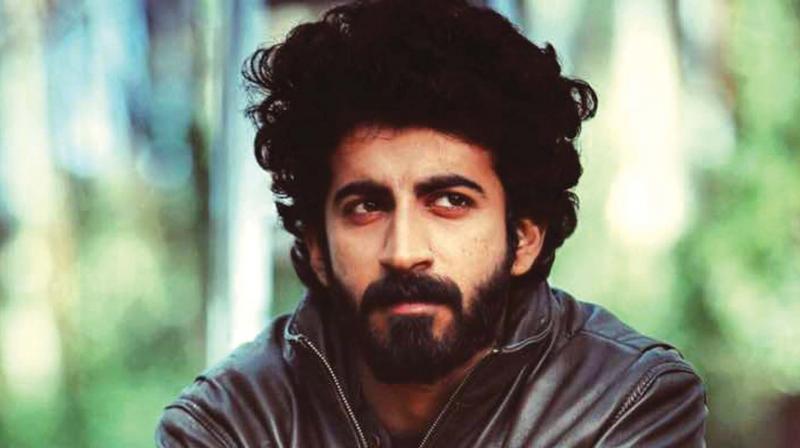
At the centre of P.T. Kunju Muhammed's films is always empathy. At some point in the film, the boundaries between actors and viewers disappear and everything becomes one single reality — you weep, smile and burst out with the characters. It's the dream of any actor to star in the movie of one of the finest directors of parallel cinema. Three-films-old Roshan Mathew, who portrays the titular role in the director's upcoming movie Vishwasapoorvam Mansoor, says he could identify with his character of Mansoor, a wannabe filmmaker, very well.

Roshan finds it his most satisfying role. “I had expected a serious atmosphere on the sets, but PT sir had a very inclusive style of working. He considers everyone's opinion and gives his inputs before deciding on any shot or scene. It was a great learning platform,” says Roshan, who has earlier acted in Puthiya Niyamam, Adi Kapyare Koottamani and the most lauded role of Varun in Anandam. 

The movie saw him sharing screen space with senior artistes Zarina Wahab and Asha Sharath, who acts as Mansoor's mother Fathibi. “Asha chechi is the most positive and cheerful person I have met. Playing the mother and son, we shared a great chemistry both on and off screen. It was great working with her. For Zarina ma'm, it's my personal regret that we didn't have many scenes together. A brilliant actress, she knows exactly what the scene requires. It was much fun with her around. Though very professional, she can transform into a complete prankster if she wants to,” laughs the actor, who romances Prayaga Martin in the movie. “Prayaga and I got along really well. Being the one with more experience before camera, she used to give suggestions for improvisations during rehearsals,” he recalls. 

The trailer gives a peek into the theme of the movie — there's drama, romance, politics, violence and religion. What exactly is the film all about? “The movie is about how the beautiful, small world of a young man and his mother changes as two guests come into their life. It also deals with the aftermath of communal violence. There is no antagonist. It's not a conventional movie, but is not serious and dark too. I will call it a realistic film,” opines Roshan, who is also awaiting the release of Kadam Katha and Matchbox. 

P.T Kunju Muhammed had, in an interview, stated that Roshan had immense potential of becoming a super star. “Coming from a director of his stature, I am humbled by those words.I could bring out my best because of his support. We used to engage in discussions till I got the hang of Mansoor. P.T sir's characters are well-defined and have proper background. He also communicates very gently and has an exact idea of what he wants from each person in the cast and crew,” he says. The movie will hit the screens on Saturday. “I'm definitely tensed about the movie getting due attention among the commercial entertainers, but I have no doubt about its quality. It's an excellent one.”

Published in Deccan Chronicle on June 22, 2017

Thursday, June 15, 2017

Nomad's guide to happiness

 Ansh Mishra, 28 on his zero-budget all-India tour.


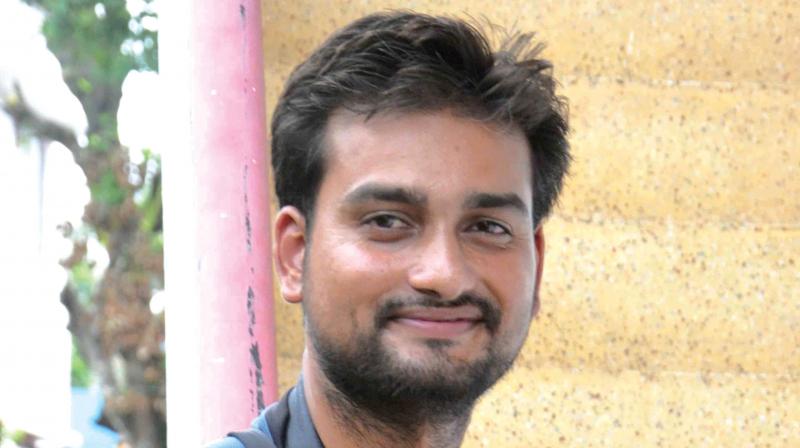
His eyes shone as he spoke hastily and laughed. It was Ansh Mishra's first time in Kerala — far, far away from his hometown Allahabad and he was penniless, but ecstatic because he was proving a point. The 28-year-old is on an all-India trip on a zero budget to show the world that one shouldn't stop dreaming even if one has no money. “This is my quest to explore humanity, which can't be bought by money — just like happiness, memories, relationships and experience,” begins Ansh, a former software engineer who prefers to be called a nomad. He started off from Delhi 132 days ago — on February 3, thumbed rides in trucks, bikes, cars and carts, and has reached Kochi covering Uttar Pradesh, Rajasthan, Gujarat, Maharashtra, Goa, Karnataka and now Kerala, where he has been for almost a fortnight. He made sure that wherever he went, he had no family or friends. He just acquainted himself with strangers, who became part of his one, big family! “Think of me as a lost kid,” he smiles.

Equipped with a camera, mobile phone, laptop and bare essentials, Ansh spent his nights in mandirs, gurudwaras, mosques, churches, tribal hamlets and at the homes of people he befriended on the way. He eats whatever people offer him and never 'begs' for food; nor does he opt for ticketless travel on bus or train. Your eyes pop out when you hear that he once went hungry for 48 hours waiting for a lift. He recalls, “I was travelling from Jodhpur to Jaisalmer and had covered 46 km across the desert. It was my second day without food. I had just one bottle of water. When the sun set, I collapsed in fatigue. For the first time, I felt that I couldn't do it anymore. But then, at almost 8 pm, a car appeared and halted. The driver Badal Khan, an employee at Hotel Tokyo, offered me a lift to Jaisalmer. He offered me stay and took me to a party happening at the hotel after which I could get transportation. That man who earned Rs 3,500 per month had the heart of a millionaire! On what could have been the last day of my life, I found humanity in that desert.”
Explaining how it all began, Ansh says, “I was in Amritsar with my friends and were having food from a dhaba when we saw a man abusing a truck driver after he rammed his own car into the truck by mistake. Later, the truck driver told us that people had no respect for those on the road. They were not rogues and deserved dignity. Those words prompted me to go on a solo journey, interact with people and discover humanity which makes the whole world a happy place.” His family wasn't happy at first. His dad — an Army man — was unhappy about the idea and his mom — like everyone's — was worried, but his brother convinced them. The journey has evolved Ansh into a better person. “I'm not the person I was before starting this trip. I do things I have never attempted and have become more open-minded. I'm no longer bothered about what people will think of me. I am happier.”

Does he have memorabilia from the journey? “Yes,” Ansh says. “I collect memories. Like the tastiest food I have ever had from the impoverished family in Rajasthan who served me a simple meal of bajra roti and lasoon ki chutney.” And he hasn't had a single bad experience. “No one has tried to hurt me. Everyone I met was like God. All have helped me, offered me food, shelter and even money, but the latter I denied. I want to be honest to myself.” Ansh’s stay ranged from a mansion of a millionaire builder in Rajkot to a tribal hamlet in Wayanad. He fell ill during the journey, but kind souls whom he has never met before took good care of him. Everywhere, he picked up bits of languages and learned the basic words for survival. In Kochi, Seban and Jith of St. George Academy are taking care of Ansh. They came to know of him through social media. Ansh keeps updating his travelogue on his Facebook page ‘Let's Roam’. He has plans to compile the videos to make a series of documentaries that speak for the voiceless, unorganised lot like truck drivers. And that's not all. “My dream is to focus on hospitality sector, to open a chain of resorts for travellers who have no money. That's my payback plan for all the love I receive now. I might open one in Payyannur too. That's one place I really loved,” says Ansh. “These are the best days of my life. I won't forget a single person I have met. I just want to live in the present and be happy instead of worrying about the future we may or may not enjoy,” he winds up.

Published in Deccan Chronicle on June 16, 2017

Monday, June 12, 2017

Hilarious but open to serious roles: Nirmal Palazhy


Fukri-fame comedian Nirmal Palazhy about his change of track to serious roles and moving from short films to movies.


Movie buffs always have a penchant for comedians who speak in their native dialect. The comic characters played by actors Innocent, Mamukkoya or Kuthiravattom Pappu would be incomplete without their slang. Nirmal Palazhy, the latest addition to the league, is happy to have made a mark by tickling many a funny bone with his Kozhikodan dialect in Fukri and Puthan Panam. But treading a different path, Nirmal has been showcasing his lesser-known serious act in the much-acclaimed Avni and Prabhullas’ Buhari Saloon, which has been winning awards since its release in April.
No one who has watched Avni could forget the painful, haunting act of Nirmal. But that was not all. With Buhari Saloon, he has taken performance to a different level. Nirmal says, “Buhari Saloon is a very timely political satire on Islamophobia — about a barber named Bavukka, a peace-loving, kind person who is asthmatic and allergic even to beedi fumes. He is jailed for having terror links after he allegedly shaves the beard of a terrorist! What begins on a humorous note ends raising serious questions.”
The short film has bagged various awards at the Blossom Shortfilm Fest, Solidarity Youth Spring Festival and Chaithram Film Society Festival. His performance as Bavukka has also been praised a lot, but a humble Nirmal owes it all to the crew. “It’s not just me. The theme, Prabhullas’ direction, technical team and everything had great potential, which made it such a wonderful work,” says Nirmal, a native of Palazhy in Kozhikode. Post Buhari Saloon, Nirmal’s prospects too have increased. 
“Being a person with a mimicry background and with my Kozhikodan slang, I am naturally chosen for comic roles. I thoroughly enjoy it and am open to serious acts as well. Now, I have bagged a serious role in Angane Njanum Premichu, quite different from what I have done so far,” reveals Nirmal, who is also part of the upcoming Captain, Lava Kusa, Sunday Holiday and Aabhaasam. Not many know that Nirmal has lent his voice to the animation series Minnaminni and Manjadi. He has also dubbed for B. M. Gafoor’s cartoon show Kunjamman. “Participating in reality shows as part of ourtroupe Kali-kattans landed me in big screen with Guinness Pakru directorial Kutteem Kolum. Later, I went on to do small roles in North 24 Kaatham, Salala Mobiles, Hello Namasthe and Ben. Replying to the query he faces everywhere he goes — Is he related to Hareesh Kanaran, Nirmal says, “No, I am not. We are just very good friends who hail from the same place.”


Published in Deccan Chronicle on June 13, 2017

Saturday, June 10, 2017

Look before you eat


Steaming pakodas and piping hot tea from a roadside eatery seem welcome on a rainy day! But wait, look closely at the newspaper the pakodas are wrapped in, and the wax-coated paper cups in which the tea is served. Not just tasty, these delicacies may be layered with slow poison too. Some of our methods to deal with food might not be the safest,” cautions Dr. Saurabh Arora, founder, FoodSafetyHelpline.com, as he enlists a few dangerous situations people tend to overlook.

Newspaper wrappings and wax cups 
The dye and solvents used for printing can be toxic. The contents include chemicals and heavy metal ingredients, which lead to toxicity after a long-term accumulation in the body and might cause paralysis, allergies, DNA damage, cancer and affect your immunity. Food grade wax cups are safe, but one can’t just tell the safe ones apart. It is best to use glass or stainless-steel cups.

Rat droppings, urine... 
There are high possibilities of canned food stock being rummaged by rodents and cockroaches, while being stocked in storage, exposing them to rat droppings, urine and hair. Such food products, if tested positive for uric acid, indicate rodent infestation, which might cause viral infections, allergies and could affects one’s immunity. Make sure the cans are washed before breaking the seal.

Microwave cooking 
Some food like instant noodles, go straight into the microwave oven without being transferred to a safe cookware. One never knows if the container that comes with the product is suitable for microwave. It might leach chemicals as it gets heated, and spread the poison. Good quality glass, and silicon vessels are ideal for ovens. Even for cookware, low-quality teflon-coated pans that crack and get mixed in your food need to be discarded. Toxic chemicals from utensils are a threat to the functioning of your central nervous system and might cause mental, reproductive and developmental issues.

Cleaning agents 
While cleaning utensils, especially mixer grinders, ensure that no soapy smell remains. Also, rub your fingers on the surface to ensure that it is clean without residues. The effects of chemical poisoning depend on the strength of the cleaning agent. Simple soap residues can be digested, but stronger synthetic detergents can affect the gastrointestinal system.

Fungus in pickles 
The ‘normal’ practice of scooping out the fungal layer from pickles and cutting off the moulds from vegetables like tomatoes before consuming it, is dangerous and not recommended at all. Moulds go deeper than what meets the eye. It can affect your digestive and gastrointestinal functions if toxins have accumulated in the food. The moulds can produce aflotoxin and other mycotoxins which are known carcinogens.

Metal utensils and aluminium foil 
Metal containers made of copper or brass should not be used to store salt, imli, lemon juice, curd or anything acidic in nature. It reacts with the metal and contaminates the food. Ensure that quality stainless steel containers are used for storage. Many aluminium foils contain a plastic coating which is unsafe. Aluminium however, doesn’t react with anything and is preferred for storage, unless it is an alloy with lead, cadmium or other heavy metals, which contaminate food and cause retarded mental growth, stunted physical growth, liver damage, renal failure and nervous issues.

Plastic bottles 
To know how poisonous your container is, just check the smell. The strong smell from your new bottle shows how much toxin leaches into the water you drink. There is a regulated ‘overall migration limit’ for plastic to food and anything that violates it is dangerous. The monomers in plastic can cause DNA damage and even cancer.

Ants and insects 
Ants and insects can transport bacteria from drainage to food and cause infections. Any food touched by insects should therefore be chucked out. 

Human hair 
Presence of human hair in food is an indication of lack of hygiene. Though hair by itself is not toxic, it can have bacteria or fungus growing on it resulting in infection of digestive or pulmonary functions. So, stay alert and ensure that what you cook and eat are safe, healthy and toxin-free.

(Published in Deccan Chronicle on June 10, 2017)

Thursday, June 8, 2017

Introspective hues


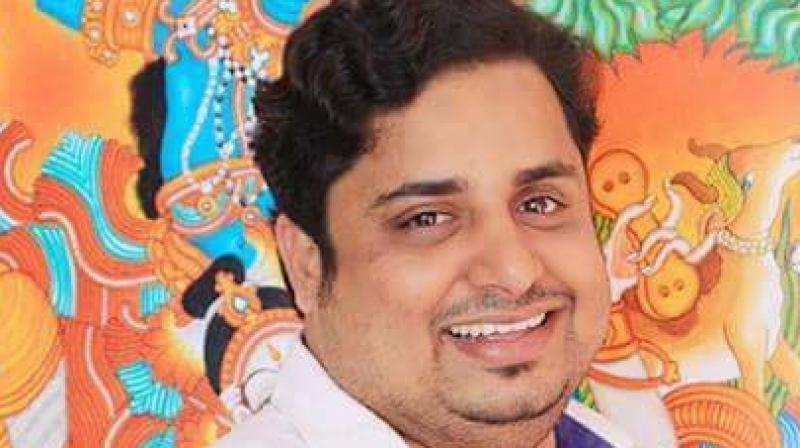
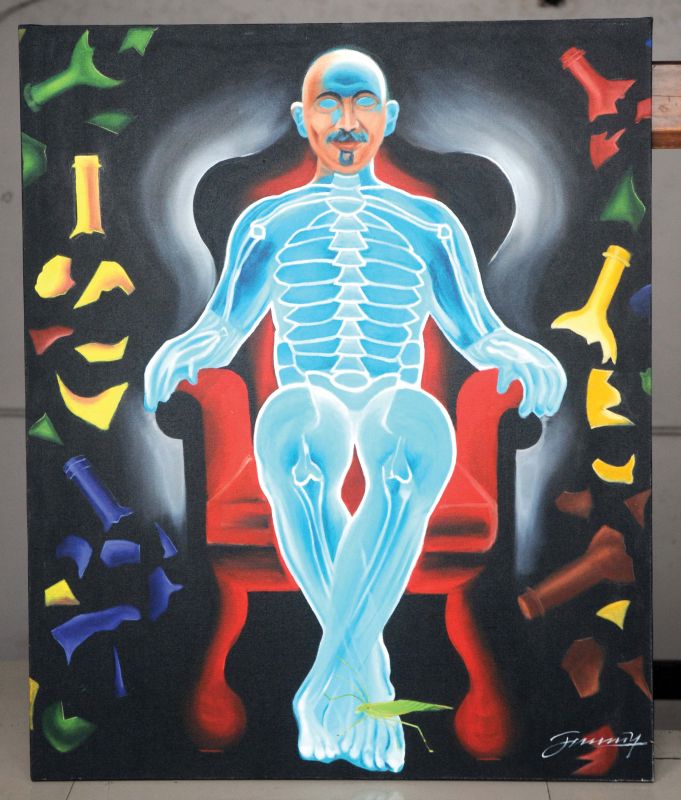
 It's me, says Jimmy Mathew, pointing to his abstract work. A cross-legged figure in turquoise blue – his favourite colour – reclines on a red throne set against a black and white background. A grasshopper rests on the figure’s feet while broken bottles can be seen flying all around. “This – Retrospective of an Artist – was done six years ago while I was recovering from severe alcoholism. This grasshopper is my luck, my saviour from the dark past,” begins Jimmy as his voice echoes in the big hall of Indian Institute Architects in Kochi, where his 35 works are on display.


Admitting that he is a self-taught artist, this Kottayam resident says that art has been so alive in him since childhood that he couldn’t settle in any other job. The paintings prove that his decision to turn full-time artist was right. Nature, spirituality and abstractness are what he captures on canvas.

In fact, teaming up with a few architecture friends changed the course of his career. “Since then, I have been mostly working for interior designs. Such works range from landscapes, floral designs and abstracts. I discuss with the interior designers before beginning the work. Sometimes I visit the site and plan according to the furniture, theme of the place, background colour and the client’s taste,” elaborates Jimmy, whose paintings – mostly acrylic –adorn the walls of more than 50 houses and motels.


Also a graphic artist, Jimmy feels that artists never get enough respect from people. “I do not have any formal training and hence is not part of huge art circles. But I think people consider artists as those with nothing to do. Of course it doesn’t offer you fat paychecks, but creativity is not given its due.”

He has the luck of being part of the first edition of the Kochi-Muziris Biennale in 2015 where he assisted noted Chinese artist Zhang Enli. “Working with him was a great experience. His style has influenced me in becoming a better person and artist,” Jimmy says, adding the international platform has been a boon to artists in Kerala. 

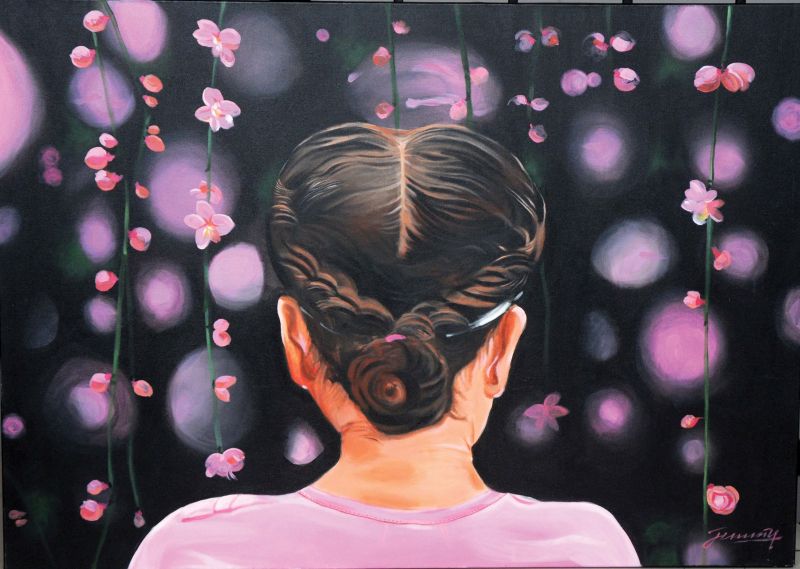
As the conversation winds to a close, Jimmy stands facing his art, very much like his painting Blossom, in which a 12-year-old girl is seen watching pink cherry blossoms – reflecting her budding life and her hopes for future.

(Published in Deccan Chronicle on June 8, 2017)

Tuesday, June 6, 2017

Below the Surface


He spoke from miles away, but the concern, uneasiness and distress were evident in Nishan Nazer's quivering voice. “I can't sleep at times thinking about what will happen to the world due to global warming,” he confesses. Call him emotional, eccentric and like some others do, crazy, but this 25-year-old is nothing short of a genius. When most of his peers dream of high-paying white collar jobs, this architect, straight after passing out from the prestigious NIT Calicut walked into rural service. As part of the NGO Gram Vikas that focuses on sanitation, Nishan, an SBI Youth for India fellow, went to Odisha with an aim to make a change in the lives of the people through housing projects. But what greeted him there was acute poverty, lack of resources and an unimaginable plight. “My life took a U-turn,” he says.

The 10 months in Odisha — first in the tribal Rudhapadhar and then Kankia village in Berhampur — led him to the thought that he had to act fast. “I can't even imagine the condition of the schools in Rudhapadhar. Children walk kilometres through the forest to come to school just to have midday meals. They had no benches, desks, or even teachers. They just came to the cramped classrooms, had food, played, read, slept and left,” he recalls. As the next step, Nishan filed an RTI; the response was all the more shocking — 45,000 schools in Odisha had no furniture. Apparently, basic infrastructure in primary schools is not mandatory under the Right to Education Act. “Little ones were sleeping on the floor. Often, they were bitten by snakes or bugs crawled into their ears. They had no cots or chairs. The government just didn't care,” Nishan's voice cracked. However, he decided to do his little part. The schools or houses had no space for furniture, nor could the people afford it. Nishan built a prototype of multi-utility furniture which could serve as a cot, recliner, table and an art board and named it Surface.

He started crowd-funding and with the help of his family and friends back in Kerala, he could raise '1 lakh. Aided by local welders and carpenters, 40 pieces of Surface materialised. He is now planning to give it to schools for free and to households at a subsidised rate. “Each piece is made by spending '1,400 — '1,500 based on the availability of iron and plywood. The furniture is built in such a way that repair is minimum. You will just have to replace a screw with the help of a welder. We have been getting great response and more orders are being placed. But funding is an issue,” he says. Surface is not the only contribution Nishan has made. Teaming up with the children, whom he calls ente makkal (my kids), he staged a mime on water conservation in the village. “Even I had no idea that children were such a powerful tool. When I came here, broken Hindi was what I knew. But after learning Oriya, communication became easy and I started hanging out with children. These villages are reeling under acute water scarcity and people have no awareness about conservation. Mime was totally new for them. But the children learnt it in less than a week and when it was staged, the response was very emotional. Many parents broke down and teachers gifted us a '100-note. It was a proud moment for the kids. We bought chowmein with the money and had it together,” a joyous Nishan says.
His awareness initiatives are paying off well. “Many kids made their parents promise that they would conserve water. Before going on vacation, children elaborated their vacation plans — that they would plant trees, save water and so on. It is very satisfying to know that my efforts are working.” Nishan has more dreams — to do more ‘meaningful’ work by focusing on pure green housing techniques. “Concrete is comparatively recent here. Concrete houses have been coming up here only for less than 10 years in the wake of frequent cyclones. Though houses are becoming stronger, the temperature inside is going up. I have plans to work on the walls using ancient cooling techniques like cow dung and soil. Convincing people will be difficult, but not impossible,” he sounds optimistic. Back home in Calicut, his parents—Abdul Nazir and Shameela—and little sister Zeba are proud of Nishan. “Their only wish now is that Odisha should have been somewhere in South India,” he laughs.

(Published in Deccan Chronicle on June 6, 2017)

Sunday, June 4, 2017

Santhy Balachandran's lucky stars


Santhy Balachandran calls herself lucky. From being a child prodigy who used to spend time with artworks and artists like T. Kaladharan and P. Gopinath, she has grown into a talented actress, who shot to fame with just one play. Her lucky streak continued as she got two back-to-back film offers — an independent movie and Tharangam, in which she was paired opposite Tovino Thomas. And the luckiest part — Tharangam is produced by Kollywood superstar Dhanush's Wunderbar Films.


“I was on a vacation during my Oxford stint as a PhD scholar when I came across this audition call for Harold Pinter's play The Lover directed by Sanal Aman. I got selected and meanwhile, got an offer to the play the lead in an independent movie directed by Prem Shankar. The shoot was to happen in Bengaluru,” recalls Santhy, who has been active in art and theatre scenario since school days. An artist, she has conducted six solo exhibitions in various cities and has been part of various group exhibitions.

When The Lover was staged in Kochi, Santhy got noticed and soon, she was approached by an impressed Tharangam director Arun Dominic, who was looking for a new face for his debut movie. But Santhy almost lost Tharangam as she was shooting in Bengaluru then. However, luck favoured her again as her video sent to the casting crew was approved. “Later, when I was back, I gave a live audition of some scenes in the movie and got chosen for the role,” she says.

So, what's her character like? “Tharangam is a black comedy with a lot of situational humour. I play a bold, independent guest lecturer who is quite a bossy type and is very serious, but ends up being funny,” she reveals.

For Santhy, the shoot was a great learning platform as the crew comprised both seniors — like Manoj K. Jayan and Vijayaraghavan and new-generation actors — like Tovino and Balu Varghese. “The 45-day shoot was tedious, but we had lots of fun. Most of us being youngsters, we got along really well. Also, I got to learn the various aspects of film making — mostly, the technical part,” says Santhy, who has already joined the team of A Pregnant King, an Indian English movie directed by T K Rajeev Kumar, as the dialogue writer.

After completing the dubbing of Tharangam, which she thoroughly enjoyed, Santhy is now awaiting the release of the movie in August, hoping to continue her lucky journey.

 (Published in Deccan Chronicle on June 4, 2017)

Kabita Mukhopadhyay, Political All the Way

She was born in West Bengal and groomed at Santhiniketan during vibrant and turbulent times in Indian politics and culture, but Kabita Mukho...